
About the Standard
Scope title: safety of household and similar electrical appliances
IEC 60335 is a standard published by International Electrotechnical Commission (IEC). It publishes international standards for electrical, electronic and related technologies; it is the foundation of the EMC and electrical safety body of work. CISPR publications belong to a special committee within the IEC.
See the other 102 codes from IECCoverage areas
What Is IEC 60335?
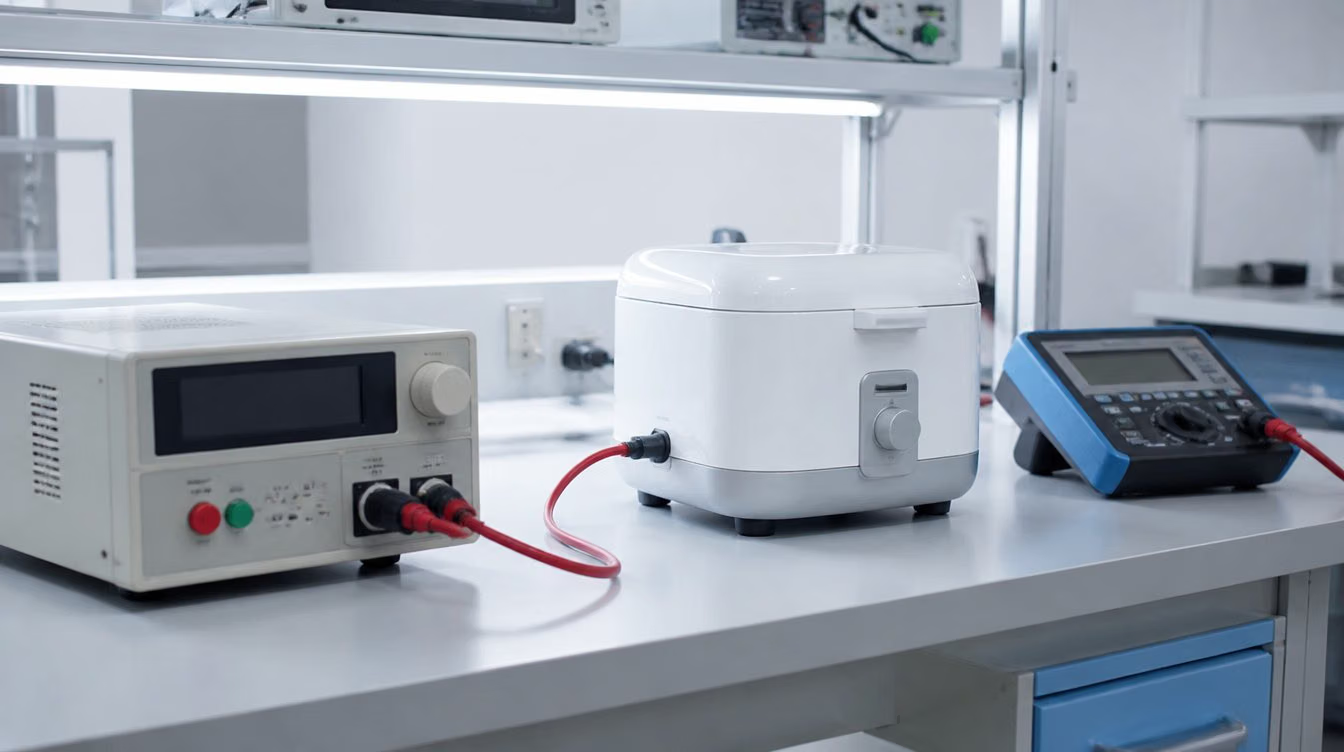
IEC 60335 is the series of safety standards for electrical appliances used in the home and similar places. It is the electrical safety body with the widest application in industry: hundreds of product types, from refrigerators to drills and from hair dryers to heat pumps, fall within its scope.
The series has a two-layer structure and that structure governs how it is used. Part 1 (IEC 60335-1) carries the general requirements applying to ALL appliances: protection classes, insulation coordination, heating, leakage current, mechanical strength, constructional requirements and component selection. Each part under Part 2 (IEC 60335-2-x) addresses a particular appliance type and modifies, supplements or disapplies the general requirements.
not applicable to this appliance type
Assessment is not purely electrical, and this explains the volume of the series. It also addresses foreseeable MISUSE of the product: tipping, water ingress, overloading, access by children, contact with moving parts, hot surfaces, defeating of interlocks and staying safe under fault conditions. An iron not igniting the carpet when it tips over, and a washing machine door not opening while the drum spins, fall within this scope.
Why Does This Standard Exist?
The logic of the series comes from the USER of household appliances. An industrial machine is operated by a trained operator and maintained by authorised personnel. A household appliance, by contrast, is used by someone with no technical training; children can reach it, it may be handled with wet hands, the manual may not have been read and the appliance may run for years without maintenance.
This assumption sets the standard apart from other safety standards. IEC 60335 accepts that the user will make mistakes and builds its safeguards accordingly. A dishwasher not spraying water when its door is opened, a mixer bowl that cannot be removed while running, and a fryer that does not spread oil over a wide area even when tipped are products of this approach.
The second determining factor is that appliances operate over a LONG LIFE. A refrigerator runs continuously for fifteen years; insulation ages, connections loosen, dust builds up and the door seal deteriorates. The series therefore considers not only a new appliance but an aged one: ageing tests, durability cycles and component life requirements arise from this.
The number of particular parts has grown over time because each new appliance type brought its own risks. Heat pumps added refrigerant risk, robot vacuum cleaners autonomous movement risk and electric vehicle chargers high-power risk. The two-layer structure of the series made this expansion possible: the general part stayed fixed and new particular parts were written for new appliances.
Structure of the Standard
IEC 60335-1
General safety requirements for all appliances; the basis of every assessment. Protection classes, insulation, heating, leakage current, mechanical strength and component selection.
IEC 60335-2-x
Particular parts specific to an appliance type. They modify, supplement or disapply the general requirements.
Example particular parts
-2-2 vacuum cleaners, -2-5 dishwashers, -2-7 washing machines, -2-9 grills and toasters, -2-14 kitchen machines, -2-24 refrigerating appliances, -2-40 heat pumps and air conditioners.
Which Products Require It
- White goods: refrigerators, washing machines and dishwashers, ovens, cooker hoods
- Small domestic appliances: food processors, vacuum cleaners, irons, personal care appliances
- Heating, cooling and ventilation appliances; heat pumps and air conditioners
- Electric hand tools and garden tools
- Commercial kitchen and hotel equipment (under the relevant particular parts)
- Electric vehicle chargers and similar new appliance types
Related Legislation and Schemes
- It is used as a harmonised standard under the Low Voltage Directive (2014/35/EU)
- Depending on the product group, the Ecodesign and Energy Labelling regulations apply in addition
- On the EMC side, CISPR 14-1 (emissions) and CISPR 14-2 (immunity) are the corresponding standards
- A CB certificate is issued through the IECEE CB scheme and opens the door to national approval in many markets
- For appliances containing refrigerants, obligations under the F-Gas regulation come into play
How the Assessment Runs
- 1Determining the scope and particular partWhich particular part the product falls under is determined. For borderline products (commercial or household) the decision is justified.
- 2Constructional examinationInsulation distances, protective barriers, the earthing arrangement, accessibility and critical components are examined.
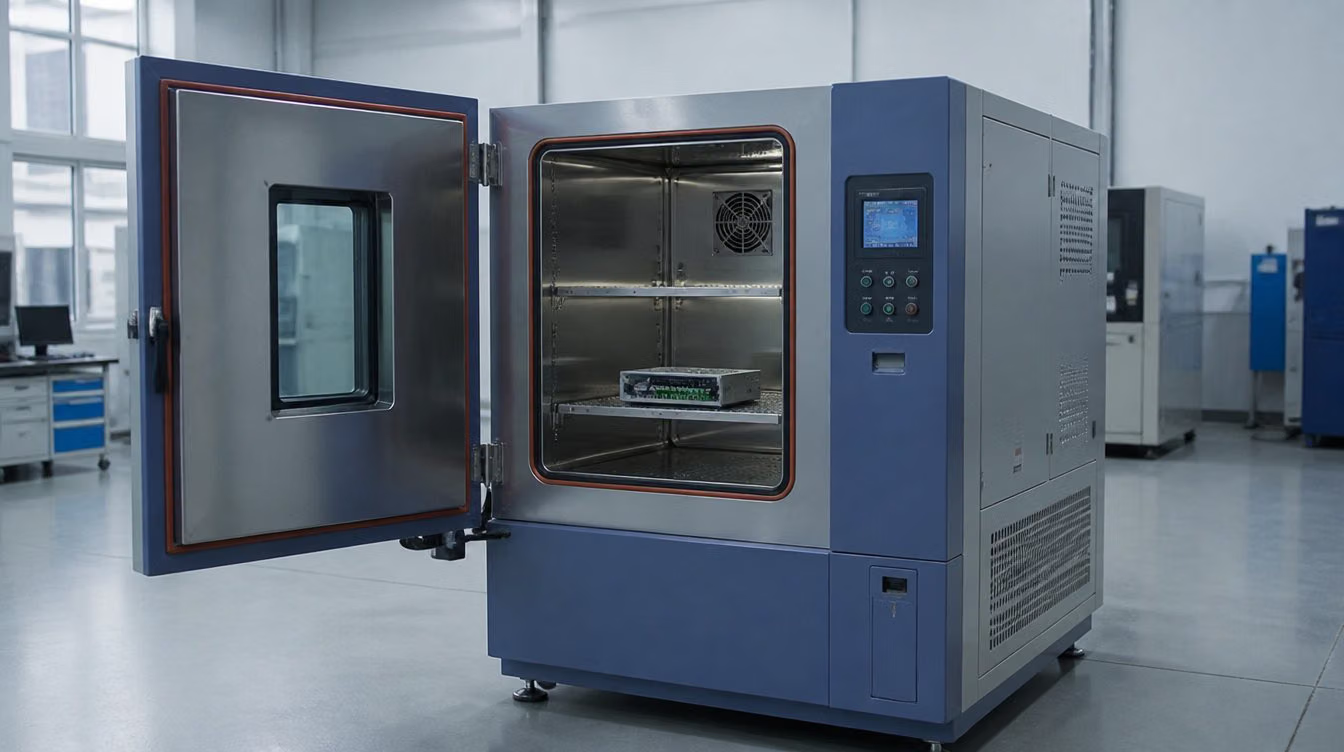
- 3Heating testsTemperatures of windings, components and accessible surfaces are measured in normal and abnormal operation.
- 4Electrical testsDielectric strength, leakage current, insulation resistance and behaviour after humidity treatment are assessed.
- 5Fault condition testsComponents are deliberately short-circuited or open-circuited; the appliance is expected not to cause a fire and not to make a hazardous part accessible.
- 6Mechanical and durabilityImpact, stability and tipping, cord strain relief, door interlocks and durability cycles.
Neighbouring Standards and the Differences
IEC 62368-1
Audio/video and information technology equipment. If a product has the character of both IT and a household appliance, which standard applies is determined by the intended use.
IEC 61010-1
Measurement, control and laboratory equipment. It establishes a different risk framework on the assumption that the user is trained.
IEC 60204-1
Electrical equipment of machines. This standard comes into play for products with the character of industrial machinery.
CISPR 14-1 / 14-2
The EMC counterparts for the same product group. Safety and EMC are separate files and both are required.
What the Report Must Contain
To be usable, a report must carry the information below. An incomplete report may not be accepted in the supply chain or in an inspection even when its result is correct.
- The parts applied: IEC 60335-1 and the relevant particular part number
- Appliance classification: protection class, IP degree, mode of operation
- The critical component list and the certification status of each component
- Heating test results and measurement points
- The list of fault condition tests and the observations
- The editions of the standards applied and any national differences
Commonly Confused Points
- A particular part is not sufficient on its own; it is applied together with IEC 60335-1.
- Whether the product is household or professional changes the scope; commercial use may bring different particular parts or separate standards into play.
- A CB certificate is not a CE declaration. CB is the output of a mutual recognition arrangement that eases national certification; the CE declaration is made by the manufacturer under its own responsibility.
- A change of critical component (motor, thermostat, fuse, cable supplier) requires the safety file to be reviewed.
- Safety conformity does not cover energy efficiency requirements; ecodesign and energy labelling are a separate file.
Structure of the Code
- Published by
- IEC
- Serial number
- 60335
- Part
- without partition
Codes in the library without release year is kept. The current version changes over time; If the year is specified in your specification, that version is taken as basis, if not specified, the most current version is applied.
Scope
- Test
- Electrical Safety
Related Tests and Services
Of the 32 pieces of content this code is referenced in, the 16 with their own published page are listed below.
Test · 16
- Dielectric Strength – IEC 60335 / IEC 62368 / IEC 61010
- Hipot – IEC 60335 / IEC 62368 / IEC 61010
- Insulation Resistance – IEC 60335 / IEC 62368 / IEC 61010
- Leakage Current – IEC 60335 / IEC 62368 / IEC 61010
- Ground Bond – IEC 60335 / IEC 62368 / IEC 61010
- Earth Continuity – IEC 60335 / IEC 62368 / IEC 61010
- Touch Current – IEC 60335 / IEC 62368 / IEC 61010
- Temperature Rise – IEC 60335 / IEC 62368 / IEC 61010
- Abnormal Operation – IEC 60335 / IEC 62368 / IEC 61010
- Overload – IEC 60335 / IEC 62368 / IEC 61010
- Short Circuit – IEC 60335 / IEC 62368 / IEC 61010
- Creepage & Clearance – IEC 60335 / IEC 62368 / IEC 61010
- Glow Wire – IEC 60335 / IEC 62368 / IEC 61010
- Needle Flame – IEC 60335 / IEC 62368 / IEC 61010
- Ball Pressure – IEC 60335 / IEC 62368 / IEC 61010
- CTI/PTI – IEC 60335 / IEC 62368 / IEC 61010
Technical Requirements
Standard texts are copyright of the relevant organization; test condition, sample and acceptance criteria cannot be fitted here.
Basis: The two-layer structure of the IEC 60335 series in the IEC catalogue (Part 1 general, Part 2 appliance-specific) and the numbering of particular parts; the CISPR 14 series and IECEE CB scheme references. Test parameters and acceptance criteria are defined in the edition in force.
Technical requirements specific to your product, once we clarify the scope At offer stage shared in writing.
Relevant Product Groups and Legislation
This code is included in the standard tag of the product pages below.
These product pages carry notes for the following markets: European Union, United Kingdom, USA, Saudi Arabia. Whether the standard is mandatory in the relevant market varies depending on the product group and the applicable legislation.
Regulations published with this code on the same product pages:
- 2014/35/EULVDThe Low Voltage Directive. Governs the electrical safety of equipment operating in the 50–1000 V AC range; the manufacturer makes the declaration, with no notified body involvement.
- 2014/30/EUEMCThe Electromagnetic Compatibility Directive. Covers both the interference a device emits into its environment (emission) and its resistance to interference from outside (immunity).
- (AB) 666/2013EcodesignEcodesign requirements for vacuum cleaners. Sets minimum thresholds for annual energy consumption, dust pick-up and emission.
- (AB) 665/2013Energy LabelEnergy labelling for vacuum cleaners. The label class is based on measurement and is one of the first points examined in market surveillance.
- 2011/65/EURoHSRestriction of certain hazardous substances in electrical and electronic equipment; an integral part of the CE declaration.
- 2012/19/ABWEEEWaste electrical and electronic equipment. Requires product marking and registration with the collection system.
- (EC) 1907/2006REACHRegistration, evaluation, authorisation and restriction of chemicals. Creates a notification obligation for SVHC substances in the product's content.
- (AB) 206/2012EcodesignEcodesign requirements for air conditioners and comfort fans. Sets minimum thresholds and a declaration obligation for seasonal efficiency and sound power level.
- (AB) 626/2011Energy LabelEnergy labelling for air conditioners. The class on the label is based on measurement and is one of the first points examined in market surveillance.
- (EU) 2024/573F-GasThe Fluorinated Greenhouse Gases Regulation. The refrigerant type and its GWP value directly affect the product's placement on the market and labelling obligation.
- 2000/14/ATOutdoor NoiseNoise emitted into the environment by outdoor equipment. Whether the outdoor unit falls within scope is assessed according to product type.
- (AB) 2019/2019EcodesignEcodesign requirements for refrigerating appliances. Sets conditions for energy efficiency, climate class and spare-parts availability.
- (AB) 2019/2016Energy LabelEnergy labelling for refrigerating appliances. An A–G scale class and EPREL registration are mandatory.
- (AB) 2019/2023EcodesignEcodesign requirements for washing machines and washer-dryers. Sets thresholds for energy and water consumption and washing/rinsing effectiveness.
- (AB) 2019/2014Energy LabelEnergy labelling for washing machines. Class, water consumption and programme duration are declared on the label; EPREL registration is mandatory.
Other Parts of the Same Series
IEC 60335 series is also present in the library with the following parts.
- IEC 60335-2-2safety of household and similar electrical appliances
- IEC 60335-2-5safety of household and similar electrical appliances
- IEC 60335-2-7safety of household and similar electrical appliances
- IEC 60335-2-9safety of household and similar electrical appliances
- IEC 60335-2-14safety of household and similar electrical appliances
- IEC 60335-2-24safety of household and similar electrical appliances
- IEC 60335-2-25safety of household and similar electrical appliances
- IEC 60335-2-40safety of household and similar electrical appliances
Related Standards
Frequently Asked Questions About IEC 60335
How do we determine which particular part applies?
The function and intended use of the product are decisive. The decision is made by reading the scope clauses of the particular parts; for borderline products it is justified and documented in the technical file.
Can we sell a household appliance for use in a workplace?
Your statement of intended use is decisive. For appliances designed for professional use, different particular parts or separate standards may apply; a household approval does not automatically cover commercial use.
We changed our motor supplier — is retesting required?
A change of critical component reopens the safety assessment. The scope is determined by the effect of the change on heating, fault behaviour and insulation coordination; a repeat of all tests is not always necessary.
Is there a difference between IEC 60335 and EN 60335?
The EN version is the European adoption and may carry national annexes or EU-specific modifications. The EN version is used in a CE file.
Frequently Asked Questions
Is this standard mandatory for my product?
Whether it is mandatory depends on the product group, the target market and the applicable legislation. Once you tell us your product and market, we clarify in writing whether this standard is required.
How long does the test process take?
Duration depends on the scope of the standard, the number of specimens and current capacity. The exact duration is shared, together with the specimen and scope details, at the quote stage.
Do you issue certification against this standard?
Which activity is carried out under which accreditation scope is separately confirmed at the application stage. Up-to-date scope information is published on our corporate page.
What happens if the standard I need is not here?
The library is based on a continuously growing inventory. If you cannot find the code you are looking for, you can send it through the quote form; we will assess the relevant scope and get back to you.