
About the Standard
Scope title: safety of electric vehicle batteries
UL 2580 is a standard published by UL Standards & Engagement / UL Solutions (UL). It publishes product safety standards for the North American market and carries out product safety certification.
See the other 11 codes from ULCoverage areas
What Is UL 2580?
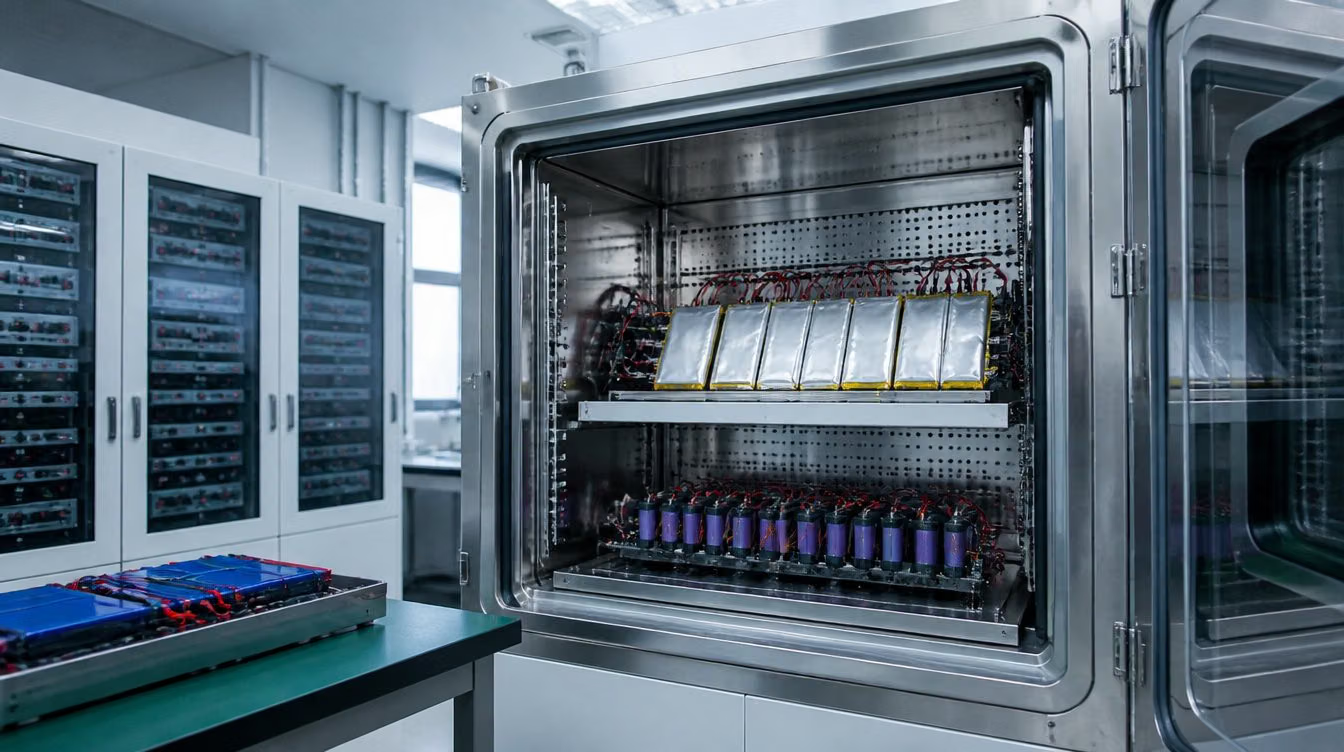
UL 2580 is the safety assessment standard for battery packs and systems used in electric vehicles. It is the publication most often used as safety evidence for electric vehicle batteries in the North American market; its type approval counterpart in Europe is UNECE R100.
The assessment is at PACK AND SYSTEM level, and this is the most important feature of the standard. Cell safety is treated as a precondition, but the standard's question concerns the pack: does the pack behave safely under mechanical damage, electrical abuse, thermal exposure and the failure of a single cell?
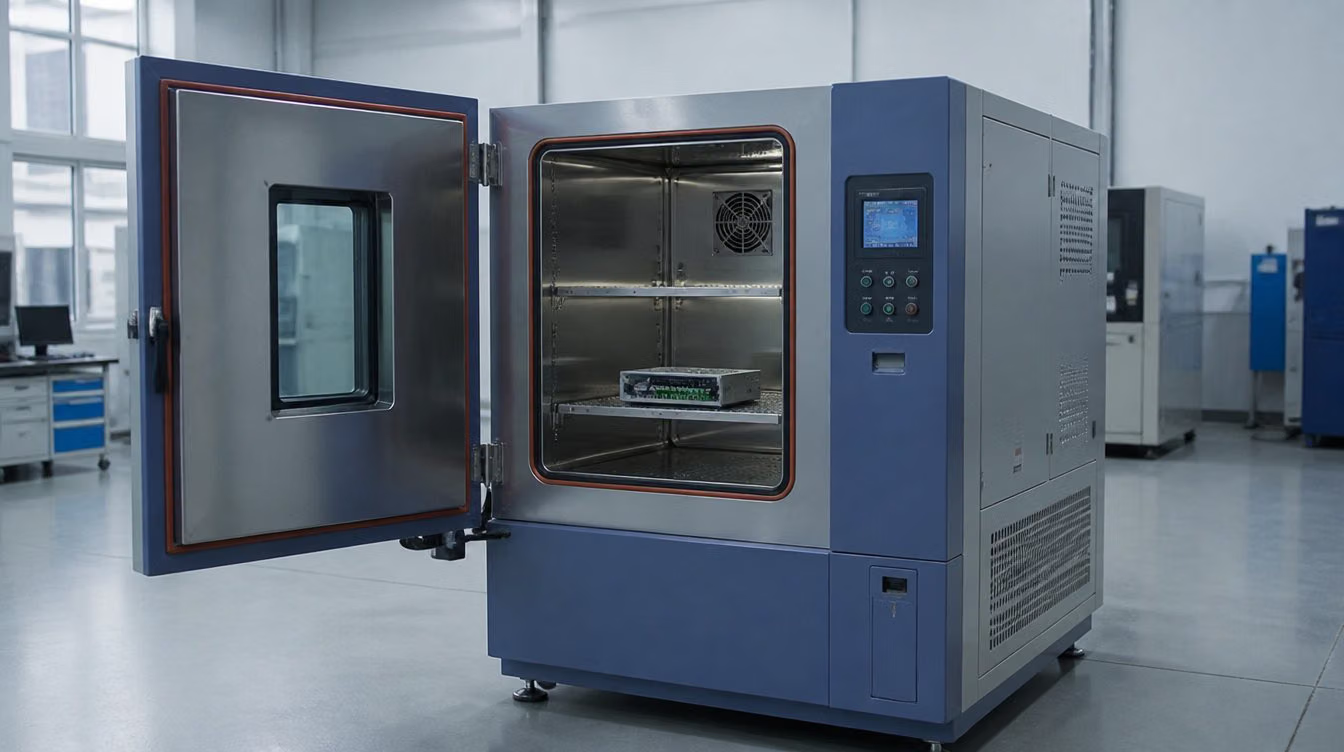
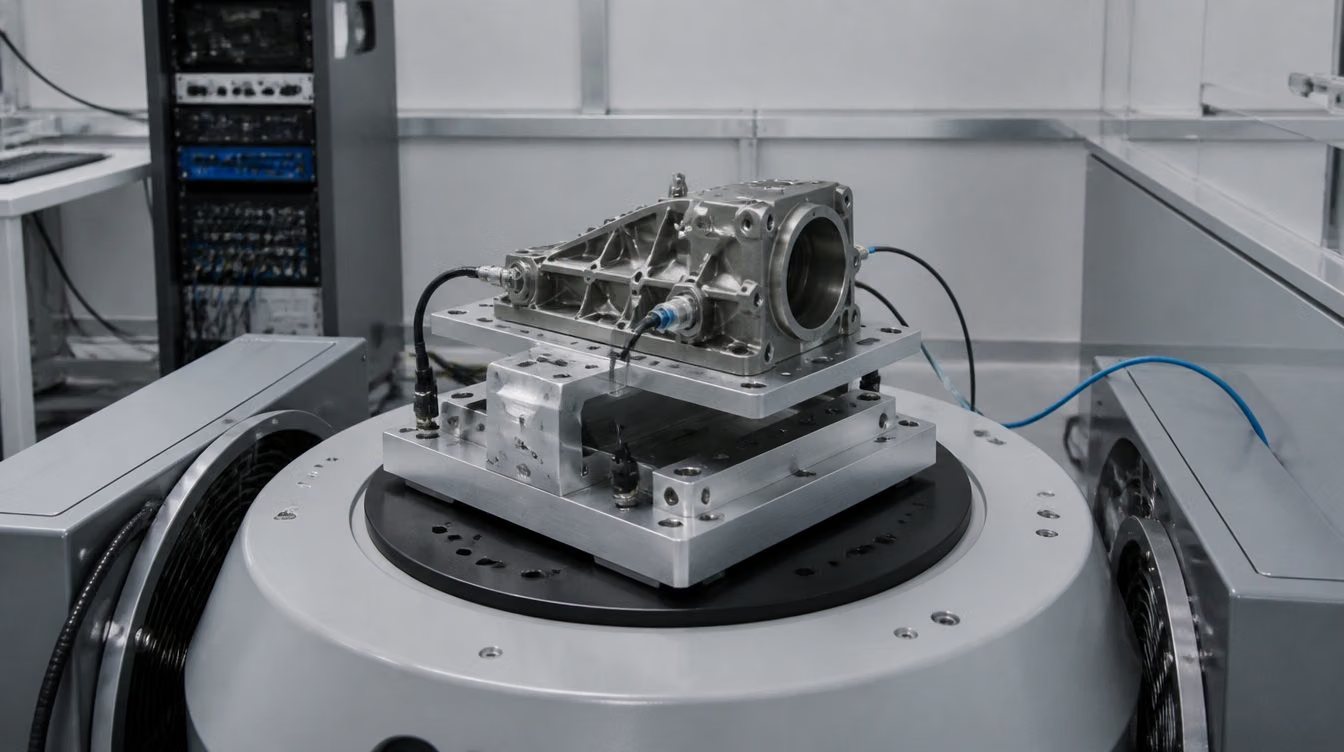
The test groups are built along four axes. On the electrical axis, overcharge, overdischarge, short circuit and unbalanced charging; on the mechanical axis, vibration, shock, crush, penetration and immersion; on the thermal axis, temperature cycling, thermal shock and fire exposure; on the environmental axis, humidity, salt spray and altitude. Verification of the battery management system's protection functions is added to these.
One of the subjects the standard emphasises is THE PROPAGATION OF THERMAL RUNAWAY. Thermal runaway of a single cell is treated as an unavoidable fault scenario; the assessment focuses on whether that event propagates to neighbouring cells, what effect it releases outside the pack and how much time remains for occupants to evacuate.
UL 2580 IS NOT A TYPE APPROVAL REGIME. It is a standards assessment and its output results in a report or an NRTL listing. Registering a vehicle for road use in Europe requires UNECE R100 type approval, and a UL 2580 report does not take its place.
Why Does This Standard Exist?
The reason an electric vehicle battery requires a separate standard is THE AMOUNT OF ENERGY. A laptop battery carries a few hundred watt-hours; a vehicle battery can exceed a hundred kilowatt-hours. That is more than two hundred times the energy, and when released uncontrollably the scope for intervention is limited.
The second factor is that the battery sits INSIDE THE VEHICLE STRUCTURE. The battery lies beneath a body that may deform in a collision, takes continuous vibration in road conditions, is exposed to stone impact and passes through standing water. These are loads a portable battery never sees.
Thermal runaway propagation moved to the centre through field experience. What vehicle battery fires had in common was that the event started in a single cell and propagated to its neighbours. Once propagation begins the pack enters a chain reaction and extinguishing becomes almost impossible; even when extinguished it can reignite hours later.
Modern design has therefore shifted from cell quality to SYSTEM ARCHITECTURE: heat barriers between cells, gas venting paths, cooling design and module separation. UL 2580 examines the effectiveness of these design decisions by testing.
Second-life applications are a new subject in the field. A vehicle battery can be used in stationary energy storage after losing part of its capacity; but that means a new usage profile and a new safety assessment. An assessment made for a vehicle does not carry over directly.
Which Products Require It
- Traction batteries for electric and hybrid vehicles
- Battery modules and pack-level subsystems
- Batteries for heavy commercial vehicles, buses and construction machinery
- Vehicle batteries moved into second-life applications (depending on scope)
- Batteries for electric motorcycles and light electric vehicles
Related Legislation and Schemes
- It is used as the basis of NRTL listing in the North American market
- In Europe, UNECE R100 type approval and the ISO 12405 and ISO 6469 series are the corresponding frameworks
- On the transport side, UN 38.3 is also required
- For batteries moved into stationary energy storage, UL 1973 and UL 9540 come into play
- Battery Regulation (EU) 2023/1542 introduces obligations for placing on the market
How the Assessment Runs
- 1Defining the scope and configurationThe pack architecture, cell type, BMS, cooling and mechanical structure are defined; the test set is built accordingly.
- 2Electrical abuseOvercharge, overdischarge, short circuit and unbalanced charging conditions are applied; the protection functions are verified.
- 3Mechanical testsVibration, shock, crush, penetration and immersion; structural integrity and the formation of internal short circuits are monitored.
- 4Thermal testsTemperature cycling, thermal shock and fire exposure are applied.
- 5Thermal runaway propagationRunaway is triggered in a defined cell; propagation to neighbouring cells, gas venting and the effect outside the pack are assessed.
- 6BMS verificationProtection thresholds, fault responses, cell balancing and communication functions are examined.
Neighbouring Standards and the Differences
UNECE R100
The European type approval regime. A UL 2580 report does not take the place of that approval; the two are different kinds of document.
The ISO 12405 series
A performance and safety test specification; it defines how the measurement is made.
UL 1973 / UL 9540
Stationary energy storage applications; they come into play for second-life batteries.
UN 38.3
Transport safety; also required if the pack is to be shipped.
What the Report Must Contain
To be usable, a report must carry the information below. An incomplete report may not be accepted in the supply chain or in an inspection even when its result is correct.
- Pack configuration: cell type, series/parallel arrangement, nominal voltage and capacity
- BMS description, protection thresholds and fault responses
- Description of the cooling system and mechanical protection
- The tests applied, the levels and the observations
- The scope and result of the thermal runaway propagation test
- The edition of the standard applied and any additional OEM requirements
Commonly Confused Points
- A UL 2580 report does not take the place of UNECE R100 approval; one is a standards assessment, the other a type approval regime.
- A cell certificate does not demonstrate pack conformity; the pack is assessed with its own architecture.
- Second-life applications carry a different usage profile; an assessment made for a vehicle does not carry over directly.
- A change to BMS software affects the safety assessment; it is not a silent update.
- The scope of the thermal runaway propagation test is determined by the system architecture; it is not the same in every project.
- Transport conformity is outside the scope of this standard; UN 38.3 is required separately.
Structure of the Code
- Published by
- UL
- Serial number
- 2580
- Part
- without partition
Codes in the library without release year is kept. The current version changes over time; If the year is specified in your specification, that version is taken as basis, if not specified, the most current version is applied.
Scope
- Test
- Environmental and Climatic Testing
- Vibration and Shock
- Battery Testing
- Battery Testing
- Automotive Testing
Related Tests and Services
Of the 46 pieces of content this code is referenced in, the 22 with their own published page are listed below.
Test · 22
- Kapasite – UL 2580
- Charge-Discharge – UL 2580
- Cycle Life – UL 2580
- Calendar Life – UL 2580
- Internal Resistance – UL 2580
- Overcharge – UL 2580
- Overdischarge – UL 2580
- External Short Circuit – UL 2580
- Crush – UL 2580
- Impact – UL 2580
- Nail Penetration – UL 2580
- Thermal Abuse – UL 2580
- Thermal Runaway – UL 2580
- Thermal Propagation – UL 2580
- Fire Resistance – UL 2580
- Vibration – UL 2580
- Mechanical Shock – UL 2580
- Altitude – UL 2580
- Thermal Cycling – UL 2580
- Immersion – UL 2580
- Drop – UL 2580
- BMS Functional – UL 2580
Technical Requirements
Standard texts are copyright of the relevant organization; test condition, sample and acceptance criteria cannot be fitted here.
Basis: The UL 2580 scope statement and the pack/system-level test axes together with the emphasis on thermal runaway propagation; the UNECE R100, ISO 12405, ISO 6469, UL 1973 and UL 9540 references; the scope distinction from UN 38.3.
Technical requirements specific to your product, once we clarify the scope At offer stage shared in writing.
Relevant Product Groups and Legislation
This code is included in the standard tag of the product pages below.
These product pages carry notes for the following markets: European Union, United Kingdom, USA, China. Whether the standard is mandatory in the relevant market varies depending on the product group and the applicable legislation.
Regulations published with this code on the same product pages:
- (EU) 2023/1542Batteries RegulationCarbon footprint declaration, recycled content and the battery passport for batteries; the performance class for EV batteries took effect in August 2026.
- UN Manual of Tests and CriteriaUN 38.3Transport safety of lithium cells and batteries; the T1–T8 series is applied in the defined order.
- (AB) 2018/858Vehicle Type-Approval FrameworkApproval and market surveillance of motor vehicles. The battery system is assessed as part of vehicle type-approval.
- UNECE R100UNECE R100Vehicle and battery system approval under requirements specific to electric drivetrains.
- 2011/65/EURoHSRestriction of hazardous substances in electrical and electronic equipment.
Related Standards
Frequently Asked Questions About UL 2580
Should we obtain UL 2580 or R100?
Your target market determines it. North America requires UL 2580 and NRTL listing; road registration in Europe requires R100 type approval. If you sell into both, you need both.
Our cell supplier has a certificate — is it sufficient for the pack?
It is not. Pack safety is determined, alongside the cells, by the BMS, cooling, mechanical structure and interconnection arrangement.
Is the thermal runaway propagation test mandatory?
The scope depends on the system architecture and the customer specification; in electric vehicle applications it has increasingly become a standard expectation.
We will use our battery in energy storage — is the same report valid?
It is not. The usage profile changes; UL 1973 and, at system level, UL 9540 come into play.
Frequently Asked Questions
Is this standard mandatory for my product?
Whether it is mandatory depends on the product group, the target market and the applicable legislation. Once you tell us your product and market, we clarify in writing whether this standard is required.
How long does the test process take?
Duration depends on the scope of the standard, the number of specimens and current capacity. The exact duration is shared, together with the specimen and scope details, at the quote stage.
Do you issue certification against this standard?
Which activity is carried out under which accreditation scope is separately confirmed at the application stage. Up-to-date scope information is published on our corporate page.
What happens if the standard I need is not here?
The library is based on a continuously growing inventory. If you cannot find the code you are looking for, you can send it through the quote form; we will assess the relevant scope and get back to you.