
About the Standard
Scope title: safety of portable lithium cells and batteries
IEC 62133-2 is a standard published by International Electrotechnical Commission (IEC). It publishes international standards for electrical, electronic and related technologies; it is the foundation of the EMC and electrical safety body of work. CISPR publications belong to a special committee within the IEC.
See the other 102 codes from IECCoverage areas
What Is IEC 62133-2?
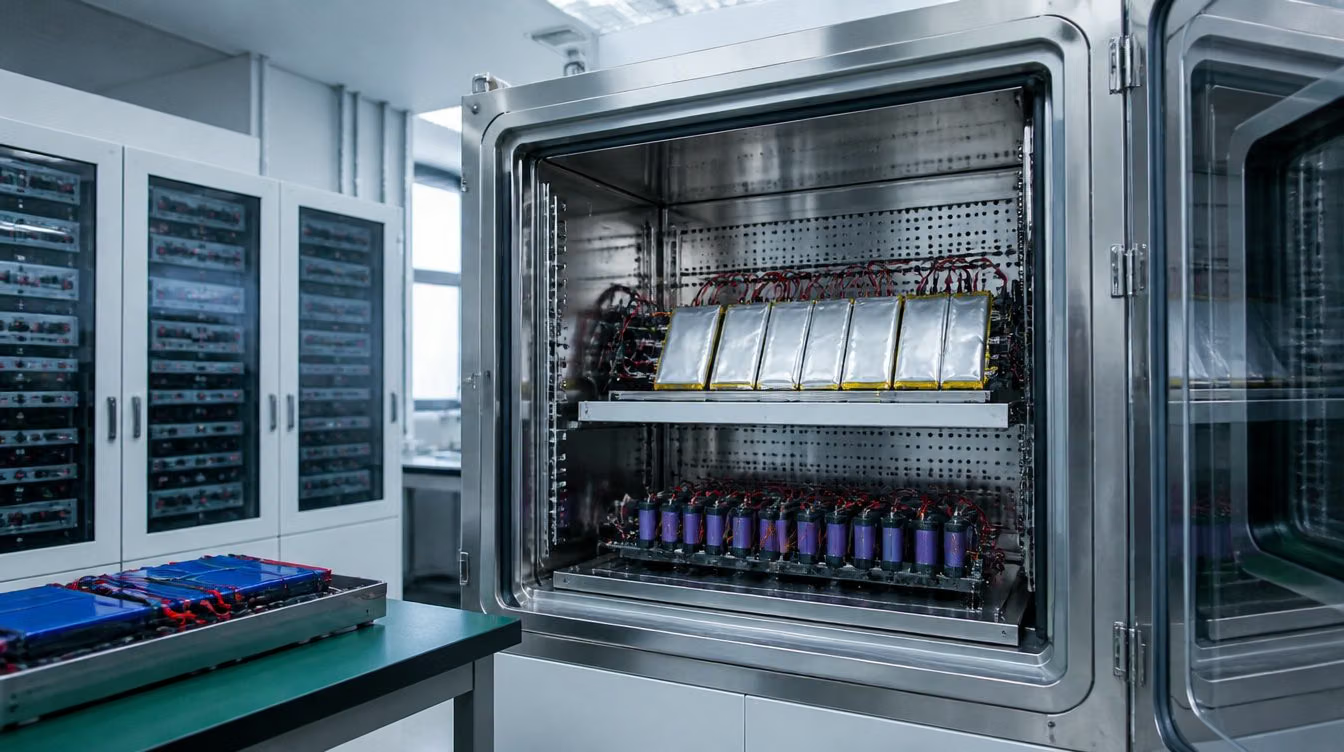
IEC 62133-2 is the safety standard for sealed lithium cells and batteries used in portable applications. Against the transport question of UN 38.3, this standard answers the USE question: is the battery safe under intended use and reasonably foreseeable misuse?
The standard was split into two parts in 2017: IEC 62133-1 for nickel systems and IEC 62133-2 for lithium systems. What was previously the single text IEC 62133 now stands as the series title; if a specification does not state a part number, which chemistry is meant must be clarified.
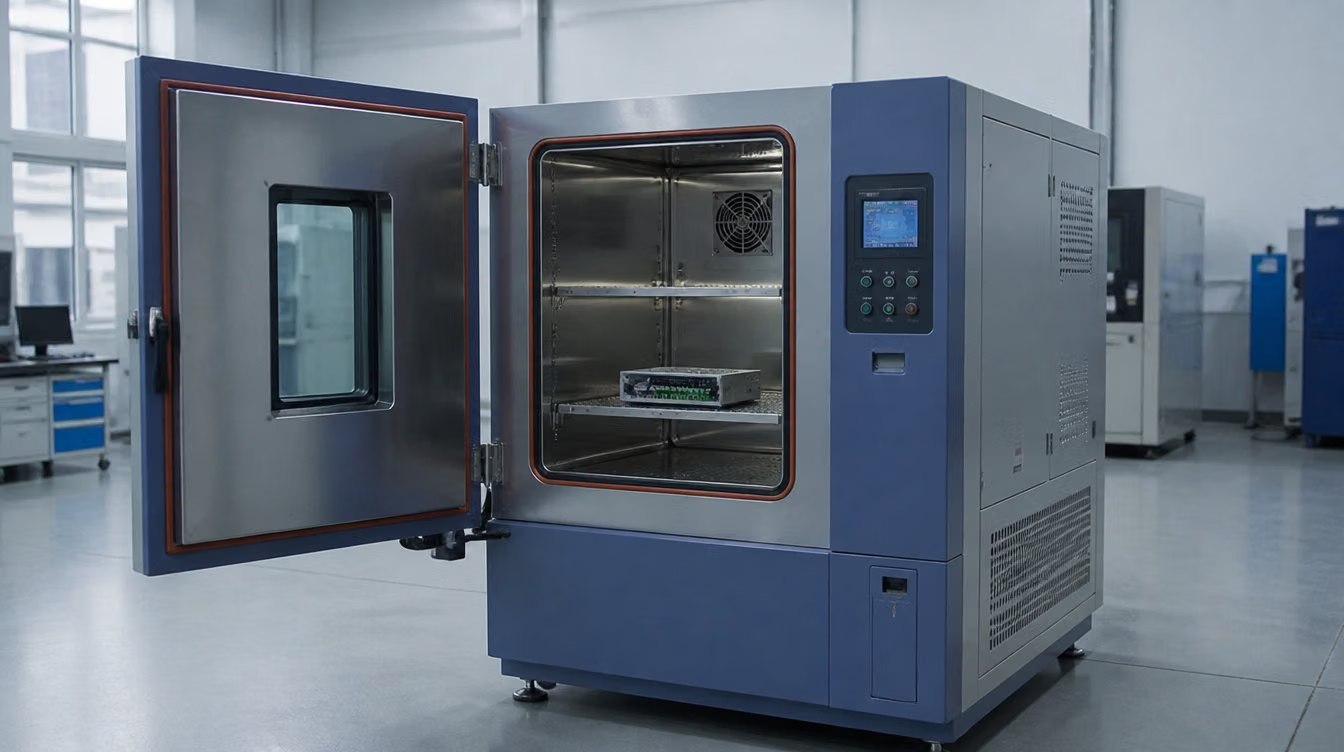
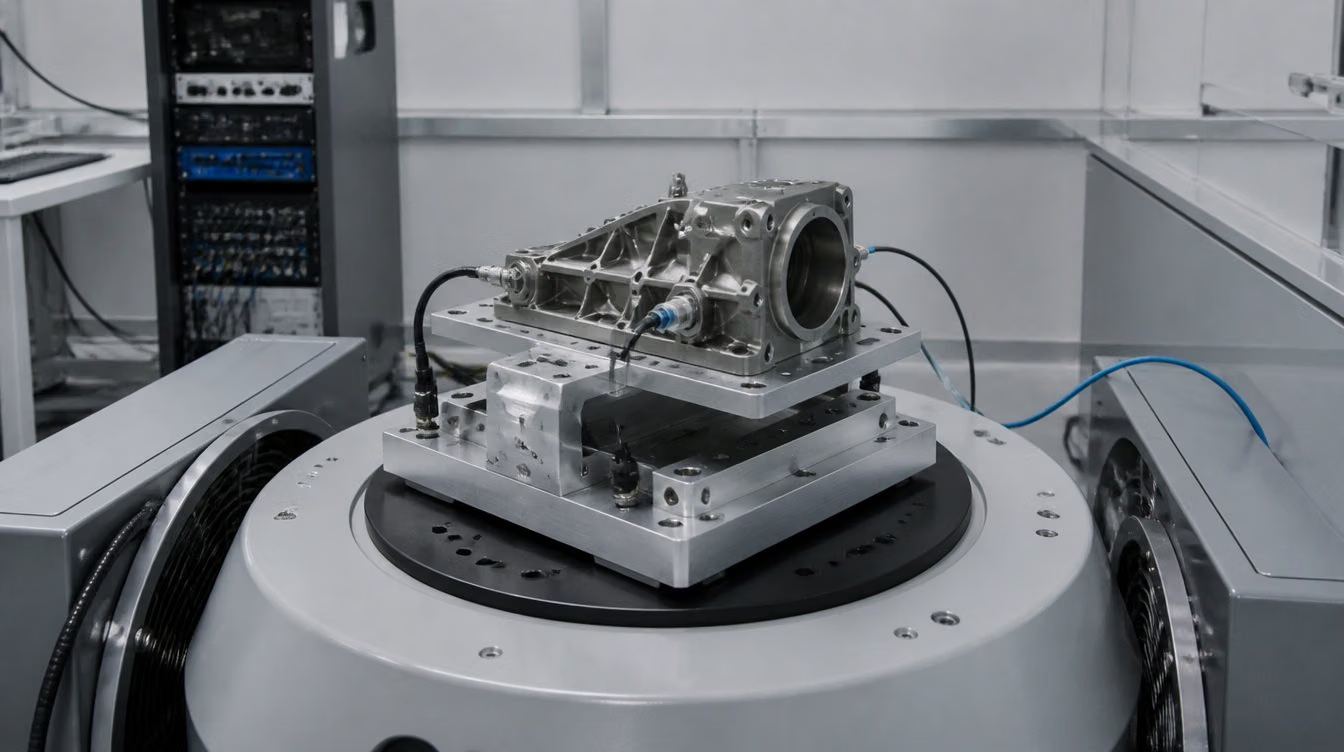
Assessment runs along two axes. On the electrical axis, charge/discharge management, overcharge, overdischarge, external short circuit and cell imbalance are addressed. On the mechanical and environmental axis, free fall, vibration, shock, temperature cycling, high temperature storage and crush are examined.
The key concept of the standard is FORESEEABLE MISUSE. A user may charge the battery with the wrong charger, carry it in a pocket with a metal coin, drop it or leave it in the sun. The assessment covers these scenarios; the battery may be damaged under them but must not catch fire, explode or release hazardous substances.
Why Does This Standard Exist?
The rise of the portable lithium battery began in the 1990s and brought a new class of risk with it. A lithium-ion cell holds its high energy density behind a thin separator layer; if that layer is damaged, anode and cathode touch, an internal short circuit forms and the cell can enter a self-sustaining heating cycle.
In the early years, field events — swelling, overheating and burning laptop and phone batteries — led to major recalls. What these events had in common was this: a cell defect alone was not enough; the event grew when it combined with failure of the protection circuit, mechanical damage or a wrong charging condition.
IEC 62133 arose from that experience and established a two-layer approach. At cell level, basic safety features (pressure relief, thermal cut-off, separator integrity) are assessed. At pack level, it is shown that the protection circuit actually works and that a single fault does not escalate the event.
The 2017 split arose from a technical need. Nickel-metal hydride and lithium-ion systems have different failure mechanisms; governing two chemistries in one text left it both complicated and incomplete. Splitting it clarified the requirements for each chemistry.
The standard is one of the publications most frequently certified under the IECEE CB scheme. The commercial reason is clear: a product with a portable battery enters almost every market, and a CB certificate avoids repeating tests in national certifications.
What It Covers
- Sealed lithium cells used in portable devices
- Battery packs and protection circuits built from those cells
- Outside the scope: industrial applications (IEC 62619), electric vehicle traction batteries (ISO 12405, UL 2580, UNECE R100)
Which Products Require It
- Mobile phone, tablet and laptop batteries
- Power banks and portable chargers
- Electric hand tool and garden tool batteries
- Batteries for wearables, headphones and smartwatches
- Batteries for portable medical and measuring devices
Related Legislation and Schemes
- It is used as safety evidence for products within the scope of the Low Voltage Directive (2014/35/EU)
- It is used for the safety requirement of Article 3.1(a) of the Radio Equipment Directive (2014/53/EU)
- Battery Regulation (EU) 2023/1542 — removability and safety of portable batteries
- A CB certificate issued through the IECEE CB scheme opens the door to national certification in many markets
- In North America, UL 2054 and UL 62133-2 are the corresponding assessment frameworks
How the Assessment Runs
- 1Determining the level and scopeWhether the cell, the pack or both will be assessed is determined. A pack assessment includes the protection circuit and the mechanical design.
- 2Component and design reviewThe cell data sheet, protection circuit design, charge management, temperature monitoring and mechanical protection are reviewed.
- 3Electrical testsOvercharge, overdischarge, external short circuit, high current and cell imbalance conditions are applied.
- 4Mechanical and environmental testsFree fall, vibration, shock, temperature cycling, high temperature storage and, where required, crush are applied.
- 5Protection circuit fault analysisProtection components are deliberately disabled and the behaviour under a single fault condition is assessed.
Neighbouring Standards and the Differences
UN 38.3
Transport safety. It does not cover use safety; most projects require both.
IEC 62619
Industrial applications. The classification is determined by the intended use rather than the size of the product.
IEC 62133-1
The other part of the same series, for nickel systems.
IEC 63056
Additional safety requirements for energy storage applications.
What the Report Must Contain
To be usable, a report must carry the information below. An incomplete report may not be accepted in the supply chain or in an inspection even when its result is correct.
- The level of assessment: cell, pack or both
- Cell description: manufacturer, model, chemistry, nominal voltage and capacity
- Description of the protection circuit and the protection thresholds
- The tests applied, sample quantities and cycling history
- Charging conditions and pre-test conditioning
- The part and edition of the standard applied
Commonly Confused Points
- IEC 62133-2 and UN 38.3 do not substitute for one another: one addresses use safety, the other transport safety.
- A cell certificate does not cover the pack. A pack built from certified cells is assessed separately because of its protection circuit and mechanical design.
- IEC 62133
- If the protection circuit supplier or the threshold values change, the assessment is reopened.
- A CB certificate is not a CE declaration; the CE declaration is made by the manufacturer under its own responsibility.
- The removability and labelling obligations under the Battery Regulation are outside this standard.
Structure of the Code
- Published by
- IEC
- Serial number
- 62133
- Part
- 2
The last "2" is the section number of the standard. Chapters organize different coverages of the same series; The requirements of whichever section is written in the specification are applied.
Codes in the library without release year is kept. The current version changes over time; If the year is specified in your specification, that version is taken as basis, if not specified, the most current version is applied.
Scope
- Test
- Environmental and Climatic Testing
- Vibration and Shock
- Battery Testing
- Battery Testing
Related Tests and Services
Of the 45 pieces of content this code is referenced in, the 22 with their own published page are listed below.
Test · 22
- Kapasite – IEC 62133-2
- Charge-Discharge – IEC 62133-2
- Cycle Life – IEC 62133-2
- Calendar Life – IEC 62133-2
- Internal Resistance – IEC 62133-2
- Overcharge – IEC 62133-2
- Overdischarge – IEC 62133-2
- External Short Circuit – IEC 62133-2
- Crush – IEC 62133-2
- Impact – IEC 62133-2
- Nail Penetration – IEC 62133-2
- Thermal Abuse – IEC 62133-2
- Thermal Runaway – IEC 62133-2
- Thermal Propagation – IEC 62133-2
- Fire Resistance – IEC 62133-2
- Vibration – IEC 62133-2
- Mechanical Shock – IEC 62133-2
- Altitude – IEC 62133-2
- Thermal Cycling – IEC 62133-2
- Immersion – IEC 62133-2
- Drop – IEC 62133-2
- BMS Functional – IEC 62133-2
Technical Requirements
Standard texts are copyright of the relevant organization; test condition, sample and acceptance criteria cannot be fitted here.
Basis: The IEC 62133-2 scope statement in the IEC catalogue and the 2017 split (-1 nickel, -2 lithium); the IECEE CB scheme and (EU) 2023/1542 references. Test parameters and acceptance criteria are defined in the edition of the standard in force.
Technical requirements specific to your product, once we clarify the scope At offer stage shared in writing.
Relevant Product Groups and Legislation
This code is included in the standard tag of the product pages below.
These product pages carry notes for the following markets: European Union, United Kingdom, USA, China. Whether the standard is mandatory in the relevant market varies depending on the product group and the applicable legislation.
Regulations published with this code on the same product pages:
- (EU) 2023/1542Batteries RegulationSustainability, safety and transparency for batteries. Carbon footprint declaration, recycled content and the battery passport apply on a staged timetable.
- UN Manual of Tests and CriteriaUN 38.3Transport safety of lithium cells and batteries. The T1–T8 test series is applied in the defined order; shipment cannot proceed without a report.
- 2014/35/EULVD / SafetyIf the charging circuit connects to the mains, it falls under the Low Voltage Directive; for DC-input-only models, the general product safety framework applies.
- 2014/30/EUEMCThe Electromagnetic Compatibility Directive. Emission and immunity are covered together.
- 2011/65/EURoHSRestriction of certain hazardous substances in electrical and electronic equipment; an integral part of the CE declaration.
- 2012/19/ABWEEEWaste electrical and electronic equipment. Requires marking and registration with the collection system.
- (EU) 2023/988GPSRThe General Product Safety Regulation. Establishes a safety framework for aspects not covered by sector-specific legislation.
- 2014/53/EUREDThe Radio Equipment Directive. Spectrum, EMC and electrical safety are assessed together on the radio interface; the 3.3(d)(e)(f) cybersecurity articles apply from 1 August 2025.
- (EU) 2024/2847CRAThe Cyber Resilience Act. Cybersecurity requirements for products with digital elements; reporting from 11 September 2026, full application from 11 December 2027.
- (AB) 2022/2380Common Charging InterfaceA common charging solution for certain radio equipment. A USB-C interface and declaration of charging information on the label are mandatory.
- (AB) 2023/1670Ecodesign (smartphones)Ecodesign requirements for smartphones and tablets. Sets requirements for durability, repairability, spare parts and software-update duration.
- (AB) 2023/1669Energy Label (smartphones)Energy labelling for smartphones and tablets; battery life, drop resistance and a repair score are declared on the label.
- (AB) 617/2013Ecodesign (computers)Ecodesign requirements for computers and servers. Includes requirements for annual energy consumption, standby mode and power management.
Other Parts of the Same Series
IEC 62133 series is also present in the library with the following parts.
Related Standards
Frequently Asked Questions About IEC 62133-2
Our cell is certified — is testing required for the pack?
Yes. The pack is a separate product together with its protection circuit and mechanical design; a cell certificate does not demonstrate the conformity of the pack.
What is the difference between IEC 62133 and IEC 62133-2?
IEC 62133 is now the series title. For lithium systems the current counterpart is part -2; -1 covers nickel systems.
In which markets is a CB certificate useful?
In IECEE member countries it opens the door to national certification and avoids repeating tests. National differences are met separately.
We changed our cell supplier — what should we do?
A change of cell reopens the safety assessment. The scope is determined by the chemistry, size and protection requirements of the new cell.
Frequently Asked Questions
Is this standard mandatory for my product?
Whether it is mandatory depends on the product group, the target market and the applicable legislation. Once you tell us your product and market, we clarify in writing whether this standard is required.
How long does the test process take?
Duration depends on the scope of the standard, the number of specimens and current capacity. The exact duration is shared, together with the specimen and scope details, at the quote stage.
Do you issue certification against this standard?
Which activity is carried out under which accreditation scope is separately confirmed at the application stage. Up-to-date scope information is published on our corporate page.
What happens if the standard I need is not here?
The library is based on a continuously growing inventory. If you cannot find the code you are looking for, you can send it through the quote form; we will assess the relevant scope and get back to you.