
About the Standard
Scope title: electric vehicle and battery safety
UNECE R100 is a standard published by United Nations Economic Commission for Europe (UNECE). It publishes vehicle type approval regulations (the R series under the 1958 Agreement); it is the legal basis of automotive homologation.
See the other 25 codes from UNECECoverage areas
What Is UNECE R100?
UNECE R100 is the type approval regulation for vehicles with an electric power train. It is not a test method but an APPROVAL REGIME: when a vehicle or component meets the requirements of the regulation, an approval number is issued by the approval authority and the vehicle can be registered for road use.
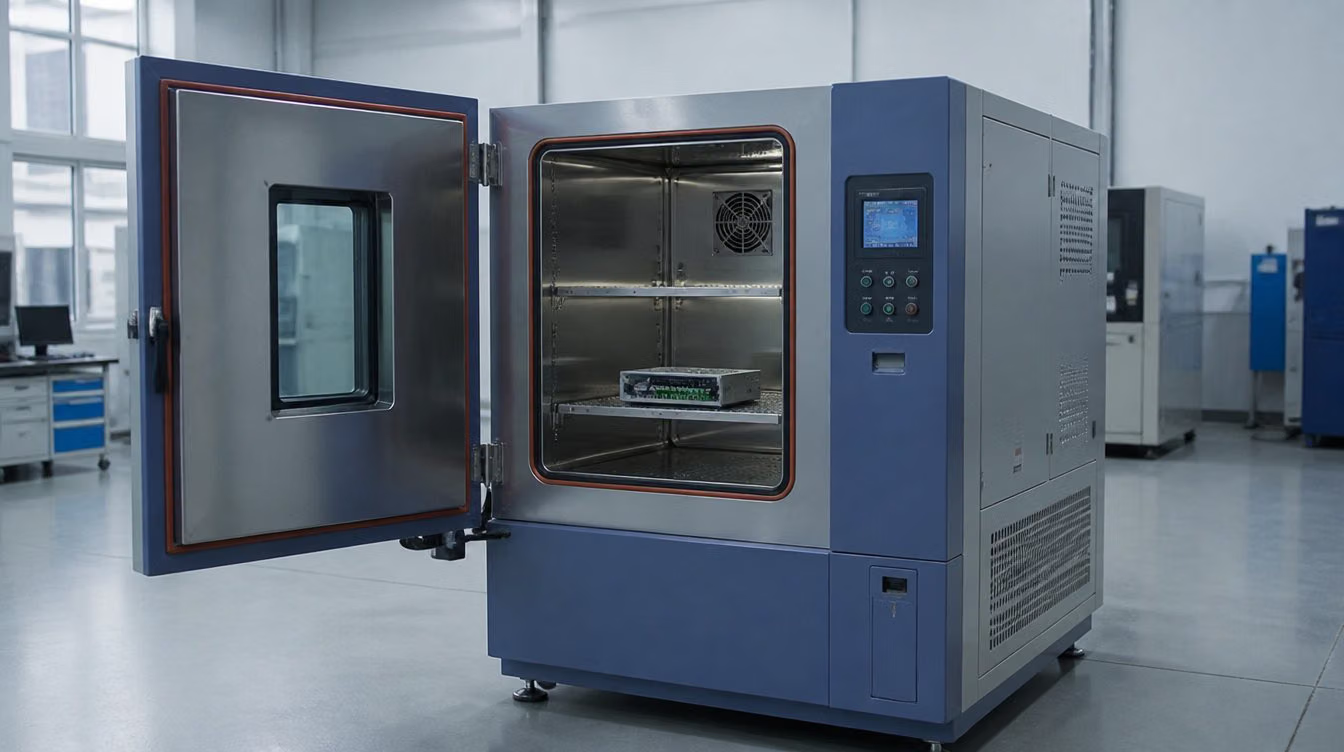
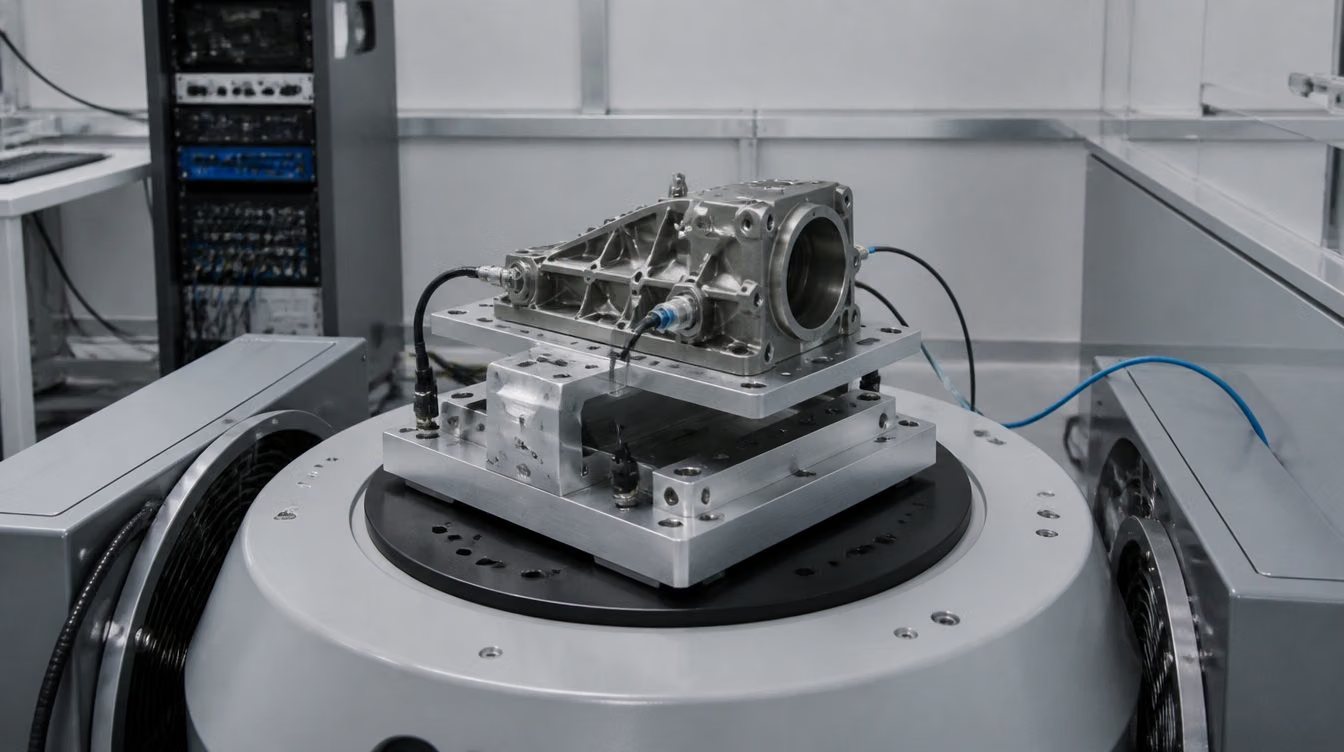
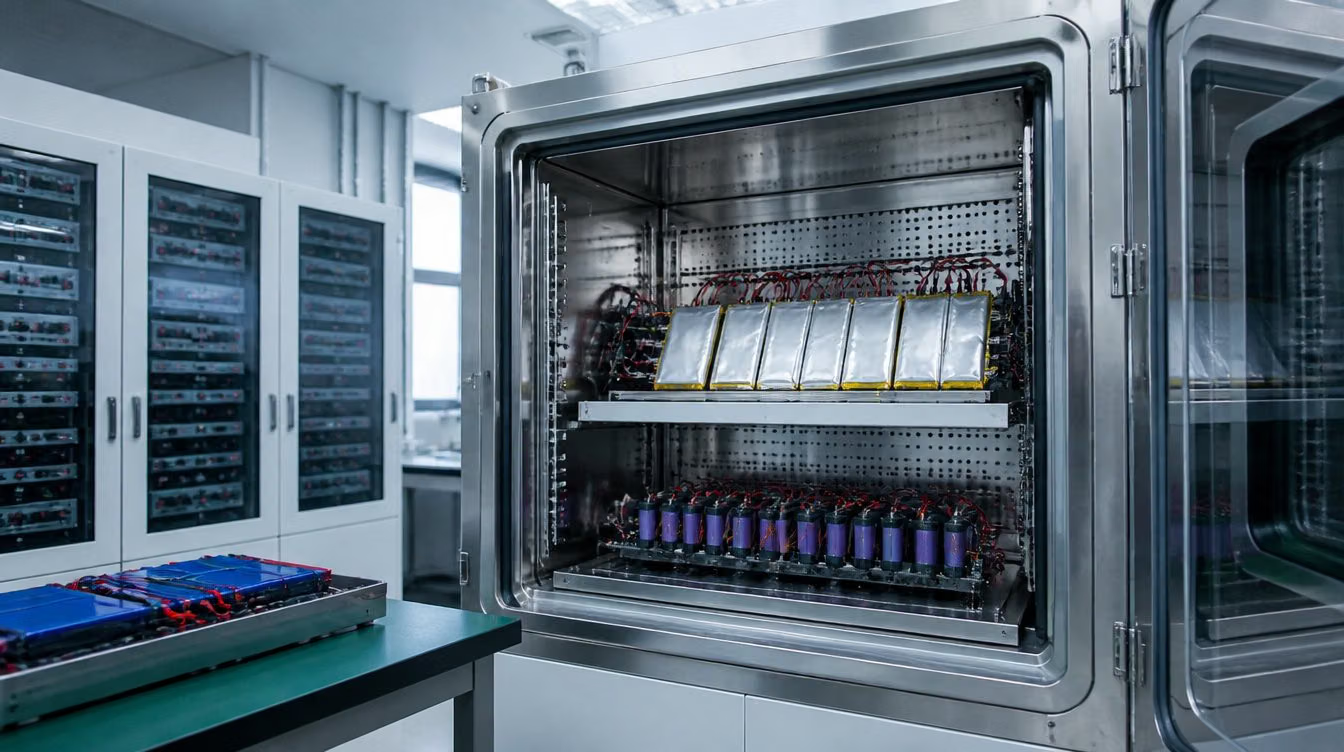
The regulation consists of two parts. Part I addresses the vehicle: protection against electric shock, insulation resistance, potential equalisation, degree of protection, prevention of unintended movement during operation, regenerative braking behaviour and user warnings. Part II addresses the rechargeable electrical energy storage system (REESS): vibration, thermal shock and cycling, mechanical impact and crush, fire resistance, external short circuit, overcharge, overdischarge and overtemperature.
R100 assesses battery safety AS PART OF THE VEHICLE, and this is what distinguishes it from standards-based assessments. The same cell or pack is addressed through IEC 62133-2 in a portable application, IEC 62619 in an industrial one, and R100 with its ISO/UL counterparts in an electric vehicle; each regime carries its own acceptance framework.
Approval can be obtained at two levels, and this distinction is critical for the supply chain. Approval at vehicle level covers the whole vehicle. A REESS can also be approved at component level and carry the approval mark; a vehicle manufacturer using an approved REESS eases the vehicle approval. But component approval does not automatically make the vehicle approved.
Why Does This Standard Exist?
The spread of electric vehicles brought new risks that existing vehicle safety regulations could not answer. A conventional vehicle has no high voltage; in an electric vehicle a system of hundreds of volts sits inside a structure that may deform in a collision. Even a rescue team touching the vehicle after a crash becomes a risk.
The second new risk is the battery itself. A traction battery carries thousands of times more energy than a portable one, and if that energy is released uncontrollably the scope for intervention is limited. Extinguishing the fire can take hours and it can reignite afterwards.
R100 addresses these two risks together. Part I ensures that the vehicle stays electrically safe in normal use and after a crash: insulation resistance must be maintained, high voltage parts must be inaccessible and the system must be de-energised automatically after a crash. Part II requires the battery to behave safely under mechanical, electrical and thermal abuse.
Regulations are revised in series and each series comes with transitional provisions. New type approvals apply the current series, while existing approvals remain valid for a defined period. If a series number is stated in the specification, that series is what governs.
Alongside R100, UNECE R10 (electromagnetic compatibility) and other regulations for electric vehicles apply together; the type approval file of a vehicle carries approvals under dozens of regulations.
Which Products Require It
- Category M and N electric and hybrid vehicles
- Rechargeable electrical energy storage systems (REESS) fitted to a vehicle
- Battery packs and modules approved as components
- High-voltage power train components (inverter, DC/DC, charging unit)
- Second-hand and converted electric vehicles (depending on scope)
Related Legislation and Schemes
- It is part of the E-Mark type approval issued under the 1958 Geneva Agreement
- It forms part of the EU type approval file under framework Regulation (EU) 2018/858
- On the electromagnetic compatibility side, UNECE R10 applies in addition
- In Türkiye, vehicle type approval processes are administered under the authority of the Ministry of Industry and Technology
- On the transport side UN 38.3 and on the placing on the market side Battery Regulation (EU) 2023/1542 apply
How the Assessment Runs
- 1Determining the scope and level of approvalWhether approval will be obtained at vehicle level or at REESS component level is determined; the two require different files and different sets of tests.
- 2Preparing the technical fileThe high voltage architecture, insulation coordination, protection strategy, BMS functions and user warnings are documented.
- 3Part I testsInsulation resistance, potential equalisation, accessibility, degree of protection and operational safety tests are applied.
- 4Part II testsVibration, thermal cycling, mechanical impact/crush, fire resistance, short circuit, overcharge/overdischarge and overtemperature tests are carried out on the REESS.
- 5Approval authority assessmentTechnical service reports are submitted to the approval authority; if found satisfactory, an approval number is issued and the mark is applied.
Neighbouring Standards and the Differences
UL 2580
The electric vehicle battery assessment standard in North America. It is not a type approval regime and is not treated as equivalent to R100.
The ISO 12405 series
A performance and safety test specification. It grants no approval; it defines how the measurement is made.
The ISO 6469 series
Safety requirements for electric vehicles; it addresses electrical safety at vehicle level.
UNECE R10
Electromagnetic compatibility type approval; it also covers emission and immunity in charging mode.
What the Report Must Contain
To be usable, a report must carry the information below. An incomplete report may not be accepted in the supply chain or in an inspection even when its result is correct.
- The level of approval: vehicle or REESS component approval
- The regulation series applied and any amendment number
- Description of the high voltage architecture and the protection strategy
- The tests applied, the levels and the observations
- REESS description: cell chemistry, capacity, voltage, BMS information
- The approval number and marking information
Commonly Confused Points
- An R100 approval and an ISO 12405 or UL 2580 report are not the same thing. R100 is a type approval regime and the others are test specifications; depending on the target market, one, the other or both are required.
- REESS approval can be obtained at component level but the vehicle's own approval is also required; component approval does not automatically make the vehicle approved.
- Regulations are revised in series (02, 03 and so on). Transitional provisions may prescribe different series for new registrations.
- A change of cell supplier or BMS requires the approval to be reviewed.
- An approval is valid for a defined type; a configuration outside that type requires a new approval.
- Transport conformity (UN 38.3) is outside the scope of this regulation and is required separately.
Structure of the Code
- Published by
- UNECE
- Serial number
- R100
- Part
- without partition
Codes in the library without release year is kept. The current version changes over time; If the year is specified in your specification, that version is taken as basis, if not specified, the most current version is applied.
Scope
- Test
- Environmental and Climatic Testing
- Vibration and Shock
- Battery Testing
- Automotive Testing
Related Tests and Services
Of the 48 pieces of content this code is referenced in, the 23 with their own published page are listed below.
Test · 23
- Kapasite – UNECE R100
- Charge-Discharge – UNECE R100
- Cycle Life – UNECE R100
- Calendar Life – UNECE R100
- Internal Resistance – UNECE R100
- Overcharge – UNECE R100
- Overdischarge – UNECE R100
- External Short Circuit – UNECE R100
- Crush – UNECE R100
- Impact – UNECE R100
- Nail Penetration – UNECE R100
- Thermal Abuse – UNECE R100
- Thermal Runaway – UNECE R100
- Thermal Propagation – UNECE R100
- Fire Resistance – UNECE R100
- Vibration – UNECE R100
- Mechanical Shock – UNECE R100
- Altitude – UNECE R100
- Thermal Cycling – UNECE R100
- Immersion – UNECE R100
- Drop – UNECE R100
- BMS Functional – UNECE R100
- UNECE R100 Conformity Tests – UNECE R100
Technical Requirements
Standard texts are copyright of the relevant organization; test condition, sample and acceptance criteria cannot be fitted here.
Basis: The UNECE vehicle regulations reference: Regulation No. 100, the Part I (vehicle) and Part II (REESS) structure; the relationships with the 1958 Agreement and (EU) 2018/858. The approval series, levels and transitional dates vary with the text in force.
Technical requirements specific to your product, once we clarify the scope At offer stage shared in writing.
Related Standards
Frequently Asked Questions About UNECE R100
Is obtaining REESS approval sufficient for vehicle approval?
It is not. Component approval eases vehicle approval but the vehicle's own approval is obtained separately.
We have a UL 2580 report — is it sufficient for Europe?
It is not. UL 2580 is a standards assessment; registration for road use in Europe requires R100 type approval.
Which series applies?
If a series is stated in your specification, that series is applied. New type approvals use the current series; transitional provisions allow time for existing approvals.
We changed our battery cell — is the approval still valid?
A change of cell requires the approval to be reviewed. The scope is determined by the effect of the change on safety behaviour.
Frequently Asked Questions
Is this standard mandatory for my product?
Whether it is mandatory depends on the product group, the target market and the applicable legislation. Once you tell us your product and market, we clarify in writing whether this standard is required.
How long does the test process take?
Duration depends on the scope of the standard, the number of specimens and current capacity. The exact duration is shared, together with the specimen and scope details, at the quote stage.
Do you issue certification against this standard?
Which activity is carried out under which accreditation scope is separately confirmed at the application stage. Up-to-date scope information is published on our corporate page.
What happens if the standard I need is not here?
The library is based on a continuously growing inventory. If you cannot find the code you are looking for, you can send it through the quote form; we will assess the relevant scope and get back to you.