
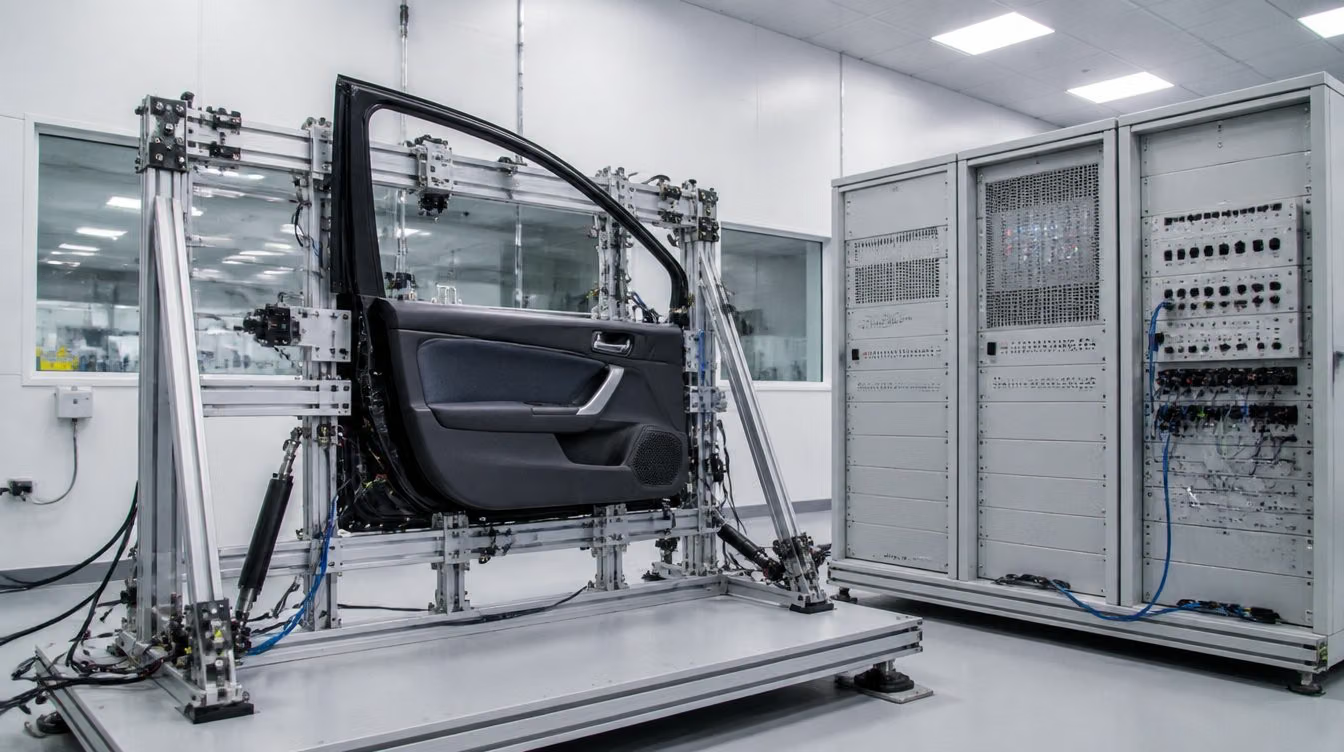
About the Standard
Scope title: electromagnetic compatibility of vehicles
UNECE R10 is a standard published by United Nations Economic Commission for Europe (UNECE). It publishes vehicle type approval regulations (the R series under the 1958 Agreement); it is the legal basis of automotive homologation.
See the other 25 codes from UNECECoverage areas
What Is UNECE R10?
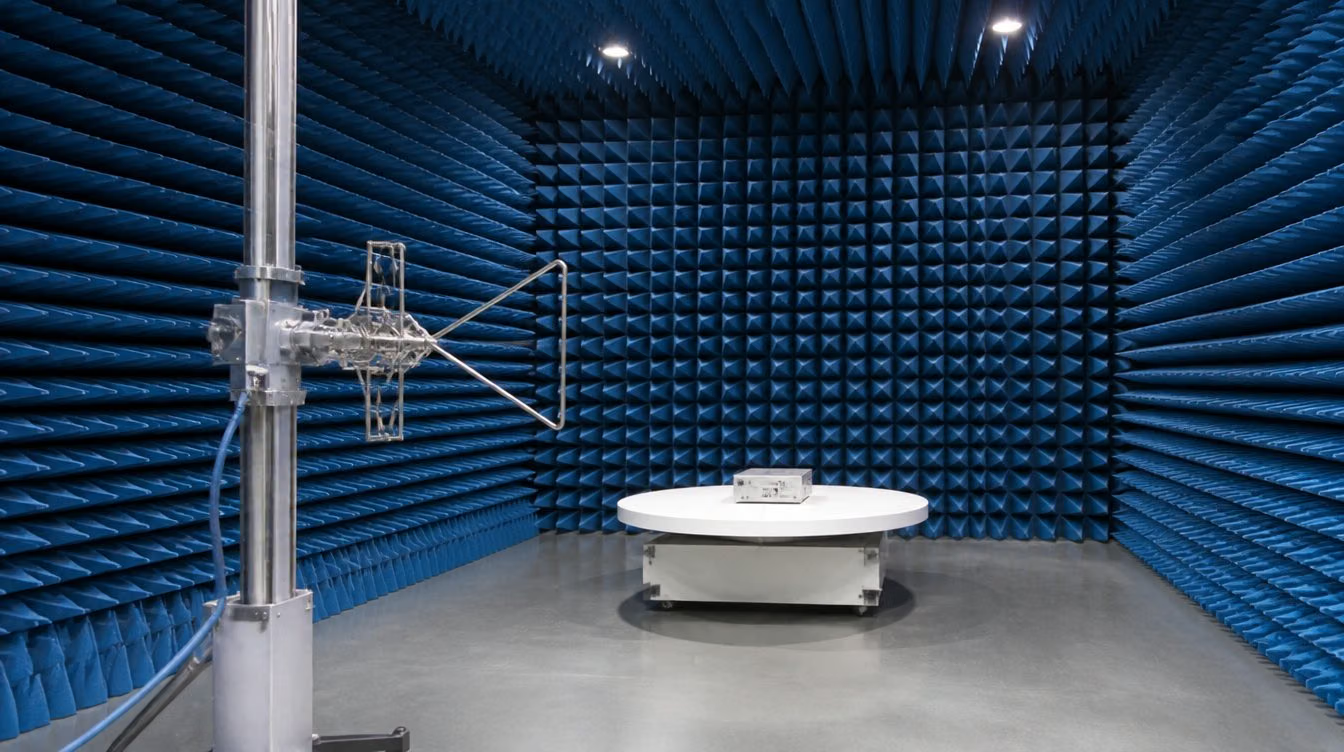
UNECE R10 is the electromagnetic compatibility type approval regulation for vehicles and electrical/electronic sub-assemblies. It is one of the E-Mark approvals required for a vehicle to be registered for road use; it is the vehicle-world counterpart of the civil EMC directive.
The regulation grants approval at two levels. At vehicle level, the emission and immunity behaviour of the whole vehicle is assessed. At electrical/electronic sub-assembly (EEA) level, a component is approved on its own and carries the approval mark; a vehicle manufacturer using such approved components eases the vehicle approval.
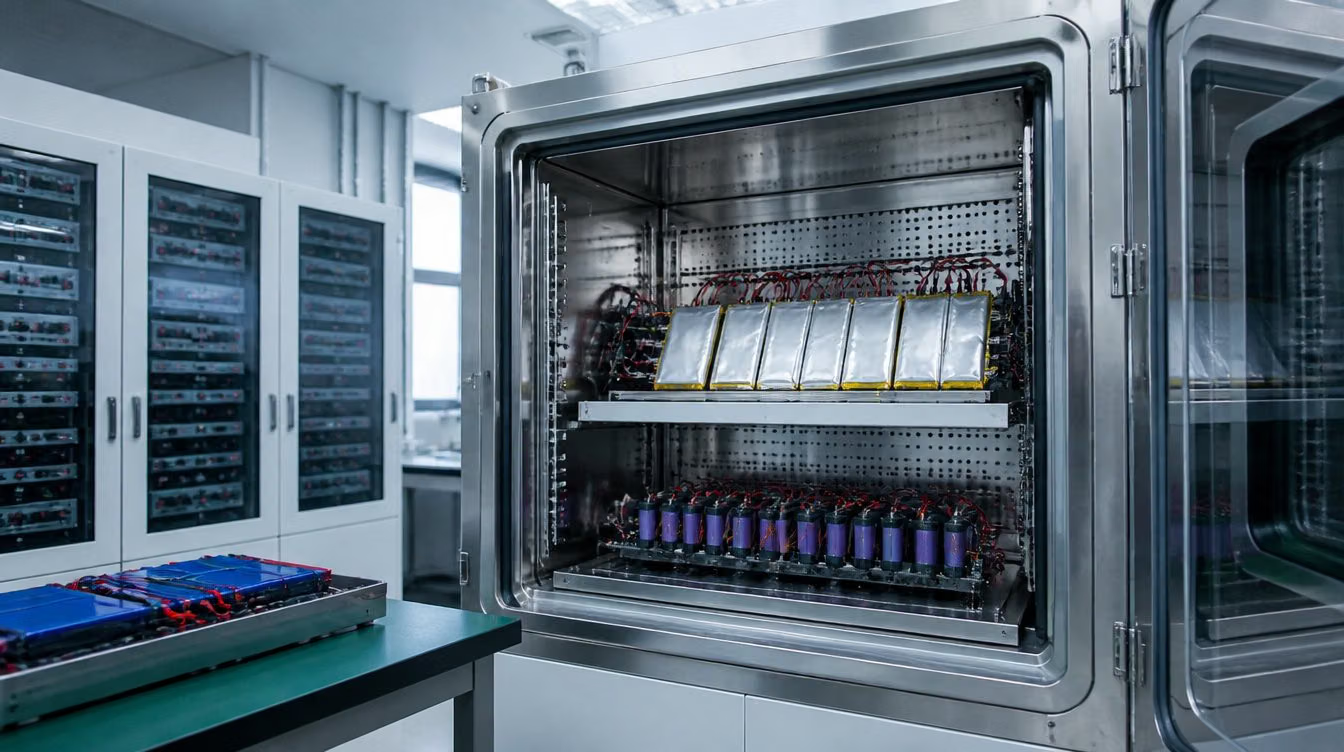
The scope is not limited to classical EMC. With the spread of electric and hybrid vehicles, the regulation has come to cover emission fed into the supply network during CONDUCTIVE CHARGING and immunity in charging mode. This makes R10 directly relevant to battery, charging unit and power electronics manufacturers too.
The measurement methods are defined in the regulation's own annexes and refer to CISPR publications; an R10 file is therefore usually built together with CISPR 12, CISPR 25, ISO 11452 and ISO 7637 reports. The regulation combines these publications into an approval framework.
Why Does This Standard Exist?
The reason vehicle EMC requires a separate regime is that a vehicle is an electromagnetic environment of its own. In a modern car, dozens of electronic control units, several radio receivers, a keyless entry system, GPS and a cellular modem operate inside the same body, parallel within the same wiring harness. The interference generated by one module can disturb a radio receiver two metres away.
The second reason is the vehicle's effect on the outside world. The ignition system and power electronics generate broadband noise that can affect radio and television receivers outside the vehicle. The historical origin of the regulation rests on this second problem — radio disturbance radiated from the vehicle.
Electric vehicles changed the picture. High-voltage, high-current switching is a far more powerful source of interference than in conventional vehicles. During charging the vehicle also connects to the supply network and starts behaving like a household appliance: the harmonics and interference it feeds into the network come within the scope of assessment.
Its relationship with the EMC Directive is often confused. The EMC Directive (2014/30/EU) EXCLUDES vehicles from its scope; in vehicles the E-Mark regime applies rather than CE. Specifications requiring both CE and E-Mark for a vehicle component are missing this distinction.
The regulation series (04, 05, 06) are revised and each series adds new requirements; the provisions concerning electric vehicles and charging in particular have become more prominent in the recent series.
Which Products Require It
- Category M, N and O vehicles
- Electrical/electronic sub-assemblies (EEA) fitted to a vehicle
- Charging units, inverters and electric power train components
- Aftermarket-fitted electronic equipment
- The charging interface of electric vehicles and conductive charging systems
Related Legislation and Schemes
- E-Mark approval is granted under the 1958 Geneva Agreement
- It forms part of the EU type approval file under framework Regulation (EU) 2018/858
- On the electric power train safety side, UNECE R100 applies in addition
- The measurements rest on the CISPR 12, CISPR 25, ISO 11452 and ISO 7637 series
- On the cyber security and software update side, UNECE R155 and R156 are separate regulations
How the Assessment Runs
- 1Determining the level of approvalWhether approval will be obtained at vehicle or EEA level is determined; the two require different sets of tests.
- 2The test planThe emission and immunity tests to be applied, their levels and the vehicle/component operating modes are defined.
- 3Emission measurementsBroadband and narrowband radiated emission; conducted and radiated emission at component level.
- 4Immunity measurementsRadiated field immunity, conducted transients, electrostatic discharge and immunity in charging mode.
- 5The approval fileTechnical service reports are submitted to the approval authority; an approval number is issued and the mark is applied.
Neighbouring Standards and the Differences
CISPR 25
Emission limits and measurement methods at component level; it forms the technical basis of an R10 file.
ISO 11452 series
Component immunity tests; the vehicle counterpart of radiated field immunity.
The ISO 7637 series
Conducted transients on the vehicle supply line; surges arising from switching.
The EMC Directive (2014/30/EU)
It EXCLUDES vehicles from its scope; in vehicles the E-Mark regime applies rather than CE.
What the Report Must Contain
To be usable, a report must carry the information below. An incomplete report may not be accepted in the supply chain or in an inspection even when its result is correct.
- The level of approval: vehicle or EEA
- The regulation series applied
- The tests applied, levels and frequency ranges
- The vehicle/component operating modes and whether charging mode was included
- Description of the wiring harness and supply arrangement
- The approval number and marking information
Commonly Confused Points
- The EMC Directive excludes vehicles from its scope; in vehicles the E-Mark regime applies instead of CE. Specifications requiring both should be reviewed.
- EEA approval does not make the vehicle approved; vehicle approval is obtained separately.
- The regulation series is revised; transitional provisions may require a different series for new type approvals.
- In electric vehicles, charging mode is a separate operating mode; a file that does not include charging mode is incomplete.
- The wiring harness arrangement determines the measurement result and must be documented in the report.
- accessory
Structure of the Code
- Published by
- UNECE
- Serial number
- R10
- Part
- without partition
Codes in the library without release year is kept. The current version changes over time; If the year is specified in your specification, that version is taken as basis, if not specified, the most current version is applied.
Scope
- Test
- Standard-Based Tests
- Automotive Testing
Related Tests and Services
Of the 4 pieces of content this code is referenced in, the 2 with their own published page are listed below.
Technical Requirements
Standard texts are copyright of the relevant organization; test condition, sample and acceptance criteria cannot be fitted here.
Basis: UNECE Regulation No. 10 scope and approval levels (vehicle / EEA); the CISPR and ISO measurement series it refers to; the exclusion of vehicles from the EMC Directive and the relationship with the 1958 Agreement.
Technical requirements specific to your product, once we clarify the scope At offer stage shared in writing.
Related Standards
Frequently Asked Questions About UNECE R10
Does our vehicle component need CE or E-Mark?
For an electrical/electronic sub-assembly to be fitted to a vehicle, the E-Mark regime applies; the EMC Directive excludes vehicles from its scope.
We have a CISPR 25 report — does that count as R10 approval?
It does not. CISPR 25 is a measurement standard; R10 is an approval regime granted by an approval authority.
Is R10 required for our charging unit too?
Charging systems integrated into the vehicle and behaviour in charging mode fall within the scope. External charging stations are subject to a different regime.
Is our after-sale accessory within scope?
Electronic equipment fitted to a vehicle may fall within the scope; an assessment is needed based on your product's function and how it is installed.
Frequently Asked Questions
Is this standard mandatory for my product?
Whether it is mandatory depends on the product group, the target market and the applicable legislation. Once you tell us your product and market, we clarify in writing whether this standard is required.
How long does the test process take?
Duration depends on the scope of the standard, the number of specimens and current capacity. The exact duration is shared, together with the specimen and scope details, at the quote stage.
Do you issue certification against this standard?
Which activity is carried out under which accreditation scope is separately confirmed at the application stage. Up-to-date scope information is published on our corporate page.
What happens if the standard I need is not here?
The library is based on a continuously growing inventory. If you cannot find the code you are looking for, you can send it through the quote form; we will assess the relevant scope and get back to you.