
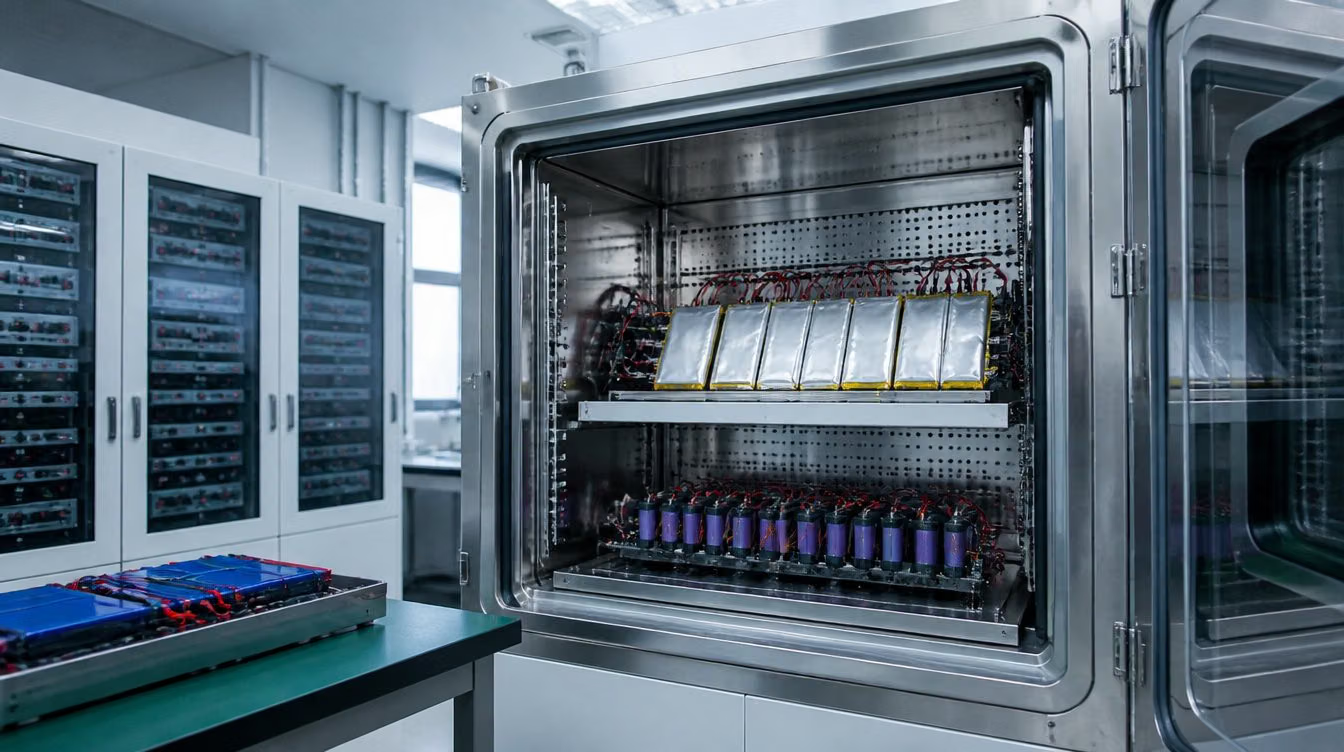
About the Standard
Scope title: transport safety testing of lithium batteries
UN 38.3 is held in the library in code form; it may be a market access mark, a sector scheme or the name of a piece of legislation — entries of this kind are not tied to a single standards organisation.
Coverage areas
What Is UN 38.3?
UN 38.3 is the sequence of tests determining whether lithium cells and batteries are fit for transport. It is not a product standard: it does not assess the performance, service life or everyday use safety of a battery. The question it answers is single and clear — does this cell or battery give a hazardous reaction when exposed to the physical conditions of road, air, rail and sea transport?
The text is a sub-section of the Manual of Tests and Criteria attached to the United Nations Model Regulations on the Transport of Dangerous Goods. That position matters: UN 38.3 is not a certification scheme but evidence of conformity required by every link in the transport chain (carrier, airline, port, customs). Without that evidence, shipping lithium batteries is effectively impossible; the shipment stops at the cargo acceptance desk.
The testing consists of eight items applied in sequence from T1 to T8. The first five tests are carried out consecutively on the SAME group of samples. Breaking the sequence invalidates the result, because each test also examines the cumulative effect left by the previous one: a seal loosened in altitude simulation, a casing expanded in thermal cycling and a joint fatigued in vibration enter the short circuit test as a different sample.
The level at which the battery is tested determines the scope of the result. Cell, module and battery pack are assessed separately; a result obtained for a cell does not demonstrate the conformity of a pack built from those cells. Alongside the cells, the behaviour of the pack is determined by the protection circuit, the mechanical structure, the interconnection arrangement and the thermal design.
Why Does This Standard Exist?
There are concrete events behind the regulation. In the early 2010s, fires caused by lithium batteries occurred on cargo aircraft with severe consequences. A lithium cell, when damaged or short-circuited, can enter a chemical reaction that generates its own oxygen; this means classical fire suppression methods are ineffective in a cargo hold.
Progressive tightening in air transport followed: a ban on carrying lithium-ion batteries on their own in passenger aircraft, a state-of-charge limitation and packaging requirements. UN 38.3 is the technical backbone of that framework — the threshold determining which battery may enter the transport chain.
Since 2020 the document required in the transport chain is not the test report itself but the TEST SUMMARY published by the manufacturer. The summary presents the findings of the report in a standard form and can be given to every link in the supply chain; the report stands behind it and is produced on request. This distinction is commercially functional too: the report carries competitively sensitive detail while the summary does not.
Structure of the Standard
T1 — Altitude simulation
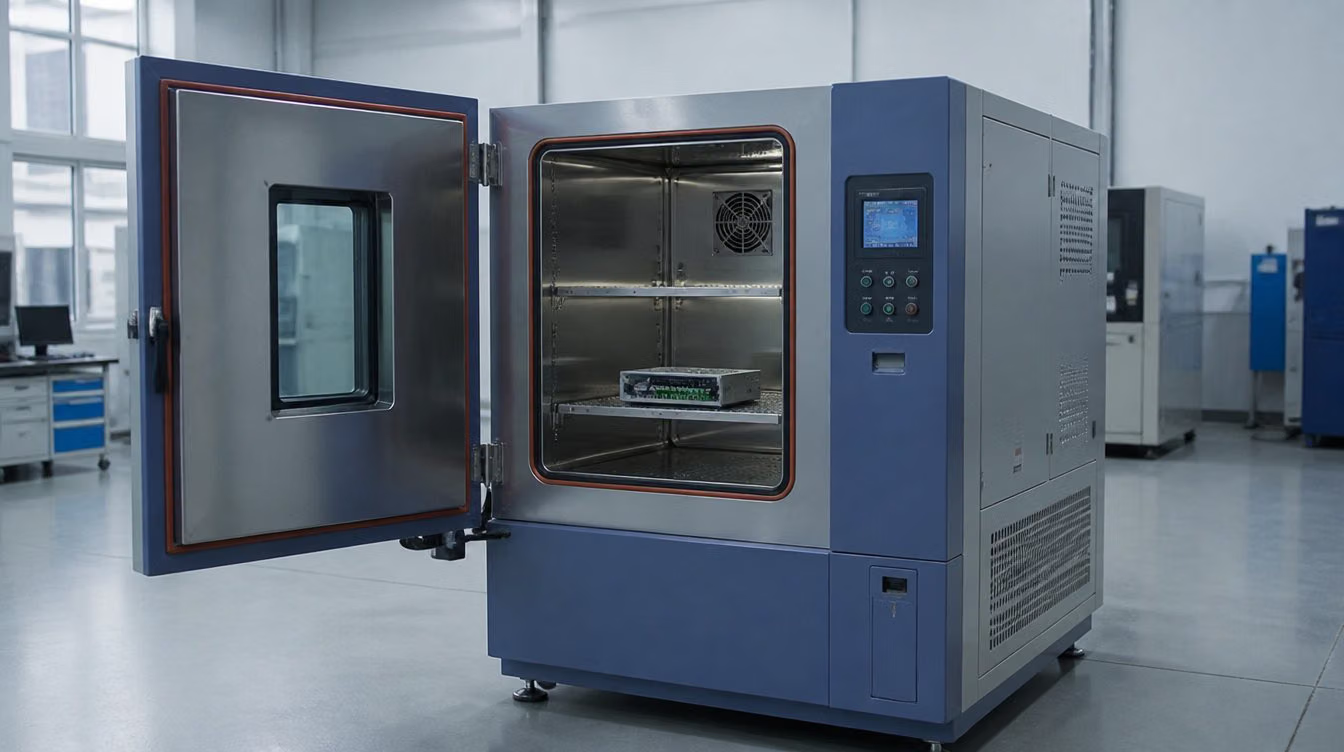
The low pressure environment of an unpressurised aircraft cargo hold is simulated. The aim is to see whether a cell whose internal pressure rises maintains its seal.
T2 — Thermal test
Cycling between extreme temperatures is applied. Repeated expansion and contraction creates a cumulative effect on sealing elements and weld points.
T3 — Vibration
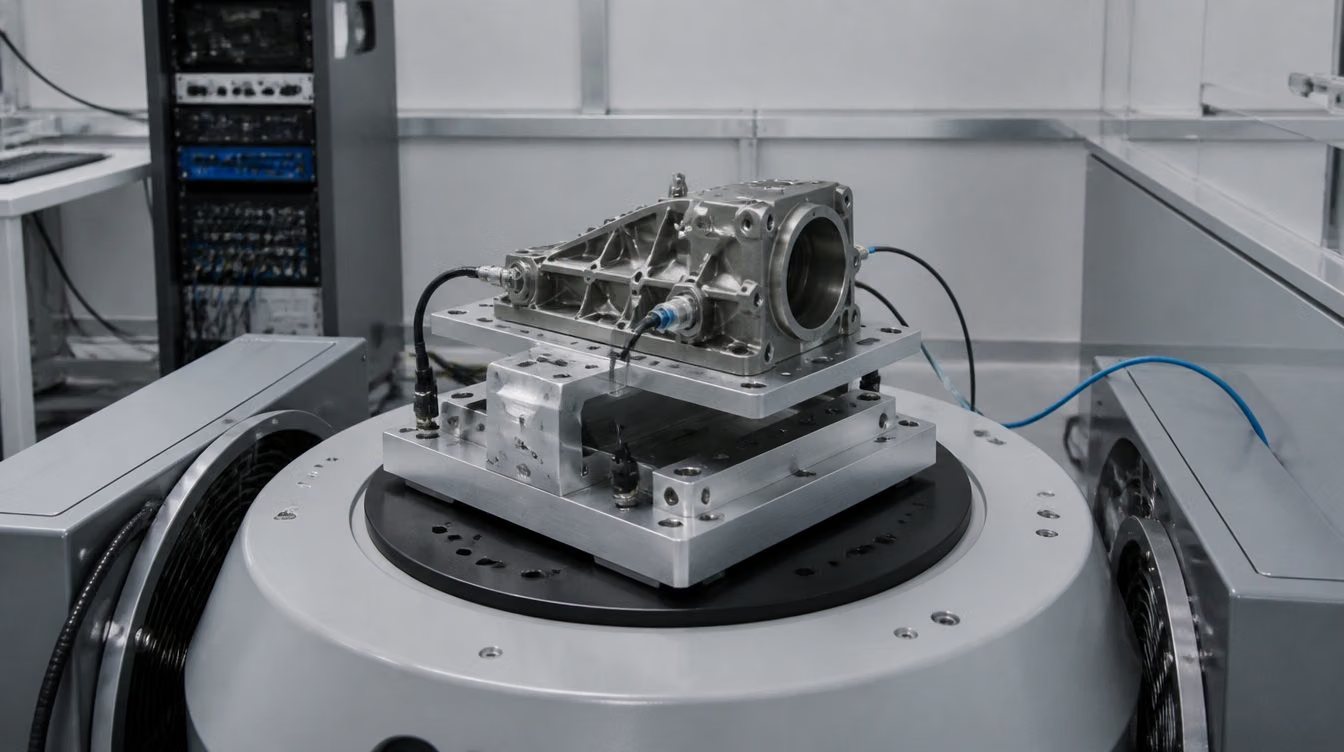
The vibration profile encountered during transport is applied. Fatigue of internal connections and movement of the electrode stack are the failure modes sought.
T4 — Shock
Mechanical impact arising from handling and transport is applied. It is a different phenomenon from vibration: instantaneous and at high acceleration.
T5 — External short circuit
A short circuit condition is created between the terminals and the cell's response to that condition is monitored.
T6 — Impact / crush
Applied according to cell type: impact for cylindrical cells, crush for prismatic and pouch cells. It simulates an internal short circuit condition.
T7 — Overcharge
Applied only to rechargeable batteries. The scenario in which charge control fails is examined.
T8 — Forced discharge
A forced discharge condition is created by driving current through the cell in reverse; this is what happens to a weak cell in a series-connected group.
Which Products Require It
- Cells, modules and battery packs transported on their own
- Batteries installed in equipment or packed together with equipment
- Batteries for portable electronics, power banks and electric hand tools
- Electric vehicle traction batteries and spare modules
- Batteries for stationary and portable energy storage systems
- Batteries for medical devices and military equipment
Assessment Approach
The number and condition of samples are determined by cell type, capacity and cycling history. Alongside fresh samples, a defined number of cycled samples are also tested; the aim is to see that the battery is safe not only as it leaves the factory but also once used.
Acceptance is assessed on the basis of there being no mass loss, leakage, venting, disassembly, rupture or fire at the end of the test and of the voltage remaining within a defined band relative to its pre-test value. The thresholds are defined in the revision in force.
A change in design may require new testing: changes in cell chemistry, casing material and thickness, seal design, protection circuit, intra-module interconnection arrangement and nominal capacity fall within this scope. The assessment runs through a design change notification and not every change requires the whole sequence to be repeated.
The state of charge (SoC) is part of the pre-test conditioning; the charge level at which testing took place appears in the report.
Related Legislation and Schemes
- IATA Dangerous Goods Regulations — air transport; state of charge and packaging rules apply in addition
- The IMDG Code — sea transport
- ADR — road transport in Europe; RID is the rail counterpart
- Battery Regulation (EU) 2023/1542 — makes the transport safety evidence part of the file for placing on the market
- In the United States, the hazardous materials regulations under 49 CFR refer to the same test sequence
Neighbouring Standards and the Differences
IEC 62133-2
USE safety in portable applications. UN 38.3 addresses transport and 62133-2 use; most projects require both.
IEC 62619
Use safety in industrial applications; the corresponding standard for energy storage and forklift batteries.
UNECE R100 / UL 2580
The approval and assessment frameworks for electric vehicle batteries. UN 38.3 does not replace them; it stands alongside them.
The IEC 62660 series
Performance and reliability testing of electric vehicle cells.
What the Report Must Contain
To be usable, a report must carry the information below. An incomplete report may not be accepted in the supply chain or in an inspection even when its result is correct.
- The level tested: cell, module or battery pack
- Sample description: model, nominal voltage, capacity, chemistry, manufacturer
- The tests applied and the parameters of each
- Sample quantities and cycling history
- Observations and voltage/mass measurements for each test
- The revision applied (edition of the Manual)
Commonly Confused Points
- A UN 38.3 report is not a PRODUCT SAFETY certificate. Placing the product on the market also requires product standards and the relevant CE legislation; telling a customer "we have a battery certificate" often leads to misunderstanding.
- The test report and the test summary are different documents. What the transport chain requires is the summary; sending the report means sharing unnecessary technical detail.
- A test passed at cell level does not mean the module or pack built from those cells has passed. Each level is assessed separately.
- The cell supplier's report is not sufficient for your pack. A supplier report evidences the cell level; the pack is your design.
- The Manual is revised. A report obtained under an old revision may not satisfy the additional requirements of the current one.
Structure of the Code
- Published by
- UN
- Serial number
- 38.3
- Part
- without partition
Codes in the library without release year is kept. The current version changes over time; If the year is specified in your specification, that version is taken as basis, if not specified, the most current version is applied.
Scope
- Test
- Environmental and Climatic Testing
- Vibration and Shock
- Battery Testing
- Standard-Based Tests
- Battery Testing
- Packaging Testing
Related Tests and Services
Of the 49 pieces of content this code is referenced in, the 23 with their own published page are listed below.
Test · 23
- Battery Vibration – UN 38.3
- Kapasite – UN 38.3
- Charge-Discharge – UN 38.3
- Cycle Life – UN 38.3
- Calendar Life – UN 38.3
- Internal Resistance – UN 38.3
- Overcharge – UN 38.3
- Overdischarge – UN 38.3
- External Short Circuit – UN 38.3
- Crush – UN 38.3
- Impact – UN 38.3
- Nail Penetration – UN 38.3
- Thermal Abuse – UN 38.3
- Thermal Runaway – UN 38.3
- Thermal Propagation – UN 38.3
- Fire Resistance – UN 38.3
- Vibration – UN 38.3
- Mechanical Shock – UN 38.3
- Altitude – UN 38.3
- Thermal Cycling – UN 38.3
- Immersion – UN 38.3
- Drop – UN 38.3
- BMS Functional – UN 38.3
Technical Requirements
Standard texts are copyright of the relevant organization; test condition, sample and acceptance criteria cannot be fitted here.
Basis: The UN Manual of Tests and Criteria, Part III, sub-section 38.3 scope and test sequence reference; the references to that sequence in the IATA, IMDG and ADR transport regimes. Numerical acceptance thresholds, sample quantities and state of charge conditions vary with the revision in force and are shared in writing at the quotation stage.
Technical requirements specific to your product, once we clarify the scope At offer stage shared in writing.
Relevant Product Groups and Legislation
This code is included in the standard tag of the product pages below.
These product pages carry notes for the following markets: European Union, United Kingdom, USA, China. Whether the standard is mandatory in the relevant market varies depending on the product group and the applicable legislation.
Regulations published with this code on the same product pages:
- (EU) 2023/1542Batteries RegulationCarbon footprint declaration, recycled content and the battery passport for batteries; the performance class for EV batteries took effect in August 2026.
- UN Manual of Tests and CriteriaUN 38.3Transport safety of lithium cells and batteries; the T1–T8 series is applied in the defined order.
- (AB) 2018/858Vehicle Type-Approval FrameworkApproval and market surveillance of motor vehicles. The battery system is assessed as part of vehicle type-approval.
- UNECE R100UNECE R100Vehicle and battery system approval under requirements specific to electric drivetrains.
- 2011/65/EURoHSRestriction of hazardous substances in electrical and electronic equipment.
Related Standards
Frequently Asked Questions About UN 38.3
Is it required for a battery installed inside equipment too?
Yes. Even inside equipment or packed with it, the battery is subject to transport rules; the packaging and labelling requirements differ but test evidence is required.
Does the report have a period of validity?
The standard defines no expiry date. Its validity depends on the design not having changed and the report having been obtained under the revision in force.
Is testing repeated for every shipment?
No. Testing is done on the product design, not repeated per shipment. If the design changes, reassessment is required.
Are small cells outside the scope?
The exclusion criteria are defined in the Manual in terms of capacity and lithium content; there is no general rule such as "exempt because it is small". An assessment must be made for your product.
Frequently Asked Questions
Is this standard mandatory for my product?
Whether it is mandatory depends on the product group, the target market and the applicable legislation. Once you tell us your product and market, we clarify in writing whether this standard is required.
How long does the test process take?
Duration depends on the scope of the standard, the number of specimens and current capacity. The exact duration is shared, together with the specimen and scope details, at the quote stage.
Do you issue certification against this standard?
Which activity is carried out under which accreditation scope is separately confirmed at the application stage. Up-to-date scope information is published on our corporate page.
What happens if the standard I need is not here?
The library is based on a continuously growing inventory. If you cannot find the code you are looking for, you can send it through the quote form; we will assess the relevant scope and get back to you.