
About the Standard
Scope title: safety of measurement, control and laboratory equipment
IEC 61010 is a standard published by International Electrotechnical Commission (IEC). It publishes international standards for electrical, electronic and related technologies; it is the foundation of the EMC and electrical safety body of work. CISPR publications belong to a special committee within the IEC.
See the other 102 codes from IECCoverage areas
What Is IEC 61010?
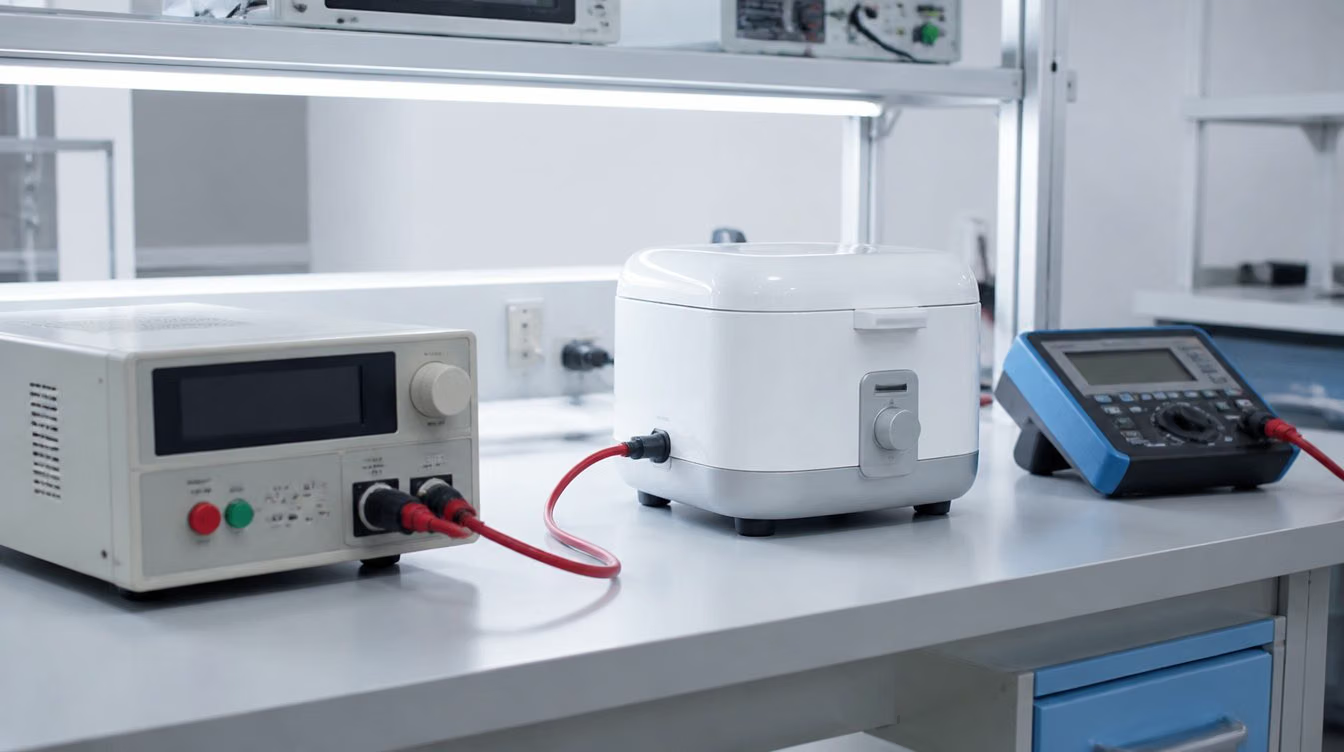
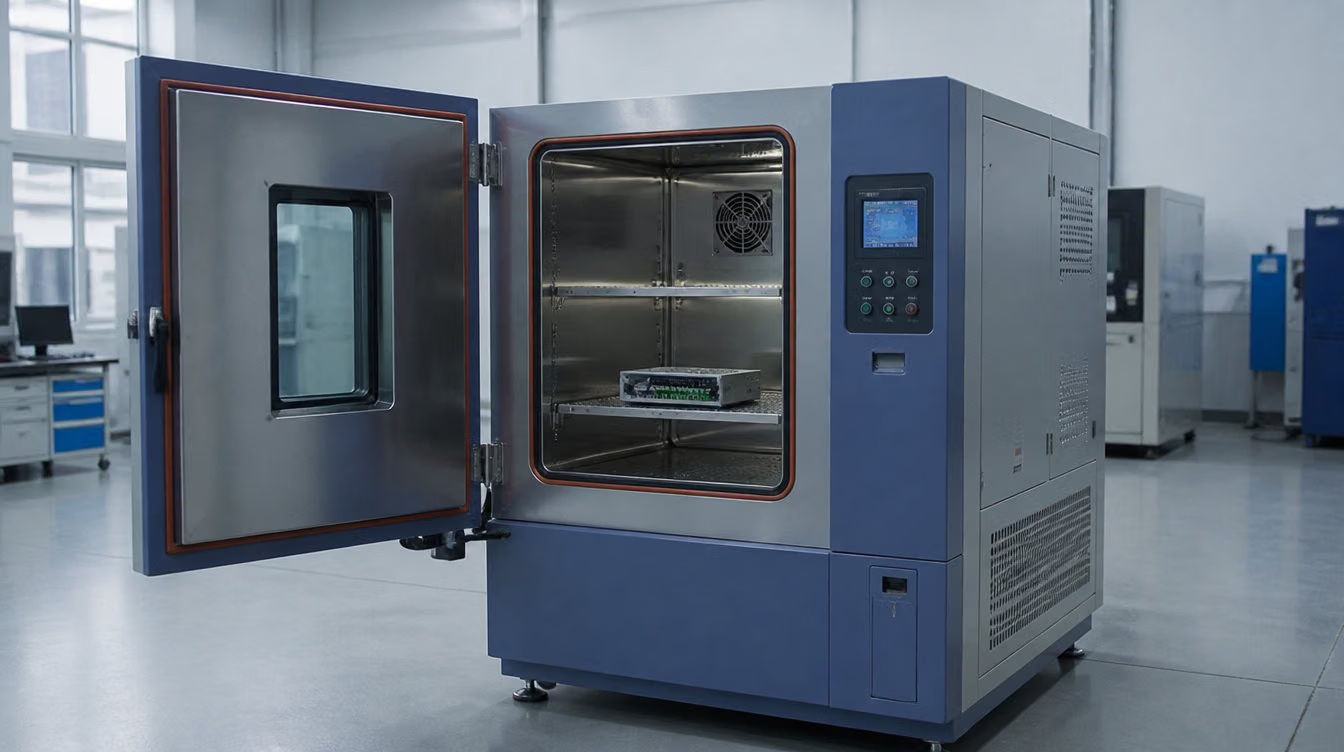
IEC 61010-1 is the safety standard for electrical equipment for measurement, control and laboratory use. While household appliances fall under IEC 60335 and information technology products under IEC 62368-1, oscilloscopes, multimeters, autoclaves, centrifuges, spectrometers, pH meters and process control instruments fall within the field of this standard.
What distinguishes the standard is that it works on the assumption that the user is TRAINED — but that assumption does not relax the safeguards, it changes the scope. On a laboratory instrument a measurement probe may be connected directly to the mains, a sample may be at high temperature, a rotating part may run exposed and a vessel under pressure may be heated. Such conditions would be unacceptable in a household appliance but are inherent to laboratory work.
The standard therefore focuses on making risk MANAGEABLE rather than eliminating it: it establishes a risk framework through measurement categories, overvoltage categories and pollution degrees, and makes mandatory the information (marking, category declaration, manual) that allows the user to make informed decisions.
THE MEASUREMENT CATEGORY (CAT II, III, IV) is the most practical concept in the field. It determines where a multimeter may be connected: CAT II is the socket outlet level, CAT III the building distribution installation and CAT IV the mains connection point. As the category rises, the expected transient overvoltage grows and the insulation coordination of the instrument is designed accordingly. For an instrument with no category declaration, where it may be connected in the field remains undefined, and that is a direct hazard to the user.
Alongside electrical safety, hazards specific to the laboratory are addressed separately: temperature, mechanical hazards, radiation, sound pressure, liquid and gas pressure, flammable substances and biological risk. This second part is developed further in the particular parts of the series.
Why Does This Standard Exist?
The standard arose because laboratory equipment fitted no existing standard. Household appliance standards assume that the user knows nothing and prevent access to hazardous parts entirely. That approach does not work for an oscilloscope: the tip of the probe must by definition be accessible, otherwise no measurement can be made.
Industrial machinery standards work from a different assumption: the machine is installed in a fixed position, authorised personnel maintain it and the conditions of use are controlled. A laboratory instrument, by contrast, sits on a bench, is used by different people, is moved frequently and is connected to a different test set-up every day.
IEC 61010 filled this gap with the assumption of a TRAINED USER. The user knows and manages the risk; the job of the standard is to give them the right information and to prevent unforeseeable risks. The concept of the measurement category is the most concrete product of this philosophy.
The physics behind the categories matters. Transient overvoltages arising in the supply network (lightning, switching) grow as one approaches the connection point, because the impedance of the intervening installation damps the surges. The surge expected at the mains entry (CAT IV) is therefore markedly higher than at socket level (CAT II), and the insulation distances of the instrument are designed accordingly.
The particular parts of the series are divided by equipment type and each addresses its own hazard: IEC 61010-2-010 for heating equipment, -2-020 for centrifuges, -2-040 for sterilisers and disinfectors, -2-081 for automatic analysers and -2-101 for in vitro diagnostic equipment. If a product falls under one of these particular parts, it is applied together with Part 1.
Classification Scheme
CAT II
Equipment plugged into a socket outlet and circuits at socket level; the lowest expected transient overvoltage.
CAT III
Building distribution installation: distribution boards, fixed installations, supply lines of industrial equipment.
CAT IV
The mains connection point: meter entry, main incomer, connections to outdoor lines; the highest expected surge.
Pollution degree
The level of conductive contamination in the environment where the instrument operates; it affects insulation distances.
Which Products Require It
- Electrical test and measurement instruments (multimeters, oscilloscopes, power analysers)
- Laboratory analysis instruments: chromatographs, spectrometers, pH meters
- Autoclaves, ovens, centrifuges and stirrers
- Process control and automation equipment
- The laboratory hardware of in vitro diagnostic devices
- Sample preparation and dosing equipment
Related Legislation and Schemes
- It is used as a harmonised standard under the Low Voltage Directive (2014/35/EU)
- For in vitro diagnostic devices the requirements of (EU) 2017/746 apply in addition
- On the EMC side the IEC 61326 series is the corresponding standard
- It can be certified under the IECEE CB scheme
- For equipment with the character of machinery, machinery legislation may intersect
How the Assessment Runs
- 1Determining the scope and particular partWhich particular part the instrument falls under is determined; heating, rotating or pressure-generating instruments give rise to additional requirements.
- 2Determining categories and degreesThe measurement category, overvoltage category and pollution degree are determined; insulation coordination is assessed accordingly.
- 3Constructional examinationInsulation distances, barriers, earthing, accessibility and critical components are examined.
- 4Electrical testsDielectric strength, leakage current, insulation resistance and behaviour under fault conditions.
- 5Hazards specific to the laboratoryAssessment of temperature, mechanical, pressure, radiation and, where required, biological risk.
Neighbouring Standards and the Differences
IEC 60601-1
Medical electrical equipment. A device used on a patient falls under 60601-1 and a laboratory instrument under 61010-1.
IEC 62368-1
Information technology and audio/video equipment; a different user assumption and a different risk framework.
The IEC 61326 series
The EMC counterpart for the same product group; safety and EMC are separate files.
IEC 61010-2-x
The particular parts: heating equipment, centrifuges, sterilisers, automatic analysers.
What the Report Must Contain
To be usable, a report must carry the information below. An incomplete report may not be accepted in the supply chain or in an inspection even when its result is correct.
- The parts applied: IEC 61010-1 and the relevant particular part
- The declared measurement category and overvoltage category
- The pollution degree and the operating environment conditions
- Dielectric, leakage current and temperature rise measurement results
- Assessments of hazards specific to the laboratory
- The critical component list and the certification status of each
Commonly Confused Points
- IEC 61010-1 and IEC 60601-1 get confused. Medical electrical equipment used on a patient falls under IEC 60601-1 and laboratory instruments under IEC 61010-1; in vitro diagnostic devices are mostly on the 61010 side.
- The measurement category determines where an instrument may be connected and is declared by marking; an instrument without a category declaration creates a hazard in the field.
- Where a particular part exists, Part 1 is not sufficient on its own.
- The assumption of a trained user does not remove the safeguards; unforeseeable risks must still be prevented.
- The pollution degree and overvoltage category determine insulation distances; a wrong assumption invalidates the design.
- Safety conformity does not cover EMC conformity; IEC 61326 is required in addition.
Structure of the Code
- Published by
- IEC
- Serial number
- 61010
- Part
- without partition
Codes in the library without release year is kept. The current version changes over time; If the year is specified in your specification, that version is taken as basis, if not specified, the most current version is applied.
Scope
- Test
- Electrical Safety
Related Tests and Services
Of the 32 pieces of content this code is referenced in, the 16 with their own published page are listed below.
Test · 16
- Dielectric Strength – IEC 60335 / IEC 62368 / IEC 61010
- Hipot – IEC 60335 / IEC 62368 / IEC 61010
- Insulation Resistance – IEC 60335 / IEC 62368 / IEC 61010
- Leakage Current – IEC 60335 / IEC 62368 / IEC 61010
- Ground Bond – IEC 60335 / IEC 62368 / IEC 61010
- Earth Continuity – IEC 60335 / IEC 62368 / IEC 61010
- Touch Current – IEC 60335 / IEC 62368 / IEC 61010
- Temperature Rise – IEC 60335 / IEC 62368 / IEC 61010
- Abnormal Operation – IEC 60335 / IEC 62368 / IEC 61010
- Overload – IEC 60335 / IEC 62368 / IEC 61010
- Short Circuit – IEC 60335 / IEC 62368 / IEC 61010
- Creepage & Clearance – IEC 60335 / IEC 62368 / IEC 61010
- Glow Wire – IEC 60335 / IEC 62368 / IEC 61010
- Needle Flame – IEC 60335 / IEC 62368 / IEC 61010
- Ball Pressure – IEC 60335 / IEC 62368 / IEC 61010
- CTI/PTI – IEC 60335 / IEC 62368 / IEC 61010
Technical Requirements
Standard texts are copyright of the relevant organization; test condition, sample and acceptance criteria cannot be fitted here.
Basis: The IEC 61010-1 scope statement, the measurement and overvoltage category scheme and the concept of pollution degree; the particular parts of the series (-2-010, -2-020, -2-040, -2-081, -2-101) and the IEC 61326 EMC reference.
Technical requirements specific to your product, once we clarify the scope At offer stage shared in writing.
Relevant Product Groups and Legislation
This code is included in the standard tag of the product pages below.
These product pages carry notes for the following markets: European Union, United Kingdom, USA, China. Whether the standard is mandatory in the relevant market varies depending on the product group and the applicable legislation.
Regulations published with this code on the same product pages:
- 2014/35/EULVDThe Low Voltage Directive. Governs the electrical safety of equipment operating in the 50–1000 V AC range; the manufacturer makes the declaration, with no notified body involvement.
- 2014/30/EUEMCThe Electromagnetic Compatibility Directive. Covers both the interference a device emits into its environment (emission) and its resistance to interference from outside (immunity).
- (AB) 2019/2023EcodesignEcodesign requirements for washing machines and washer-dryers. Sets thresholds for energy and water consumption and washing/rinsing effectiveness.
- (AB) 2019/2014Energy LabelEnergy labelling for washing machines. Class, water consumption and programme duration are declared on the label; EPREL registration is mandatory.
- 2011/65/EURoHSRestriction of certain hazardous substances in electrical and electronic equipment; an integral part of the CE declaration.
- 2012/19/ABWEEEWaste electrical and electronic equipment. Requires product marking and registration with the collection system.
- (AB) 2019/2020EcodesignEcodesign requirements for light sources. Covers efficiency, colour consistency, switching-cycle durability and product-information requirements.
- (AB) 2019/2015Energy LabelEnergy labelling for light sources. An A–G class and EPREL registration are mandatory.
- (EC) 1907/2006REACHRegistration, evaluation, authorisation and restriction of chemicals. Creates a notification obligation for SVHC substances in the product's content.
- (EU) 2023/1542Batteries RegulationSustainability, safety and transparency for batteries. Carbon footprint declaration, recycled content and the battery passport apply on a staged timetable.
- UN Manual of Tests and CriteriaUN 38.3Transport safety of lithium cells and batteries. The T1–T8 test series is applied in the defined order; shipment cannot proceed without a report.
- (EU) 2023/988GPSRThe General Product Safety Regulation. Establishes a safety framework for aspects not covered by sector-specific legislation.
- 2014/53/EUREDThe Radio Equipment Directive. Spectrum, EMC and electrical safety are assessed together on the radio interface; the 3.3(d)(e)(f) cybersecurity articles apply from 1 August 2025.
- (EU) 2024/2847CRAThe Cyber Resilience Act. Cybersecurity requirements for products with digital elements; reporting from 11 September 2026, full application from 11 December 2027.
- (AB) 2022/2380Common Charging InterfaceA common charging solution for certain radio equipment. A USB-C interface and declaration of charging information on the label are mandatory.
- (AB) 2023/1670Ecodesign (smartphones)Ecodesign requirements for smartphones and tablets. Sets requirements for durability, repairability, spare parts and software-update duration.
- (AB) 2023/1669Energy Label (smartphones)Energy labelling for smartphones and tablets; battery life, drop resistance and a repair score are declared on the label.
- (EU) 2017/745MDRThe Medical Device Regulation. Classification (I, IIa, IIb, III), clinical evaluation, technical documentation and post-market surveillance obligations; the notified body's role grows as the class rises.
- (EU) 2017/746IVDRThe In Vitro Diagnostic Medical Devices Regulation. In vitro diagnostic devices fall under this regulation instead of the MDR.
- (AB) 2017/745 art. 33EUDAMEDThe European medical device database. From 28 May 2026, the actor registration, UDI/device, certificate and market surveillance modules are mandatory; placing on the market is not possible without a valid SRN.
- 2006/42/ATMachinery Directive (overlap)Relevant essential requirements also apply to medical devices that also qualify as machinery.
- (EU) 2023/1230Machinery RegulationReplaces 2006/42/EC and becomes mandatory on 20 January 2027 with no further transition period. Requires notified-body involvement for Annex I high-risk machinery.
- 2014/34/ABATEXEquipment and protective systems used in explosive atmospheres. The category and conformity route are determined by zone classification.
- 2000/14/ATNoise EmissionNoise emitted into the environment by outdoor equipment. Machinery within scope requires a sound-power-level declaration and marking.
Related Standards
Frequently Asked Questions About IEC 61010
Should we declare CAT III or CAT IV?
It is determined by the highest point at which the instrument will be connected. If it will be connected at the mains entry, CAT IV is required; if at a building distribution board, CAT III. The category also drives the design.
Which standard applies to our in vitro diagnostic device?
Usually IEC 61010-1 and the -2-101 particular part; the obligations under the IVDR run separately.
Is there an additional standard for our autoclave?
Yes, IEC 61010-2-040 addresses sterilisers and disinfectors and is applied together with Part 1.
Is a category declaration mandatory?
For instruments whose measuring circuit can be connected to the mains, a category declaration is required and is shown by marking.
Frequently Asked Questions
Is this standard mandatory for my product?
Whether it is mandatory depends on the product group, the target market and the applicable legislation. Once you tell us your product and market, we clarify in writing whether this standard is required.
How long does the test process take?
Duration depends on the scope of the standard, the number of specimens and current capacity. The exact duration is shared, together with the specimen and scope details, at the quote stage.
Do you issue certification against this standard?
Which activity is carried out under which accreditation scope is separately confirmed at the application stage. Up-to-date scope information is published on our corporate page.
What happens if the standard I need is not here?
The library is based on a continuously growing inventory. If you cannot find the code you are looking for, you can send it through the quote form; we will assess the relevant scope and get back to you.