
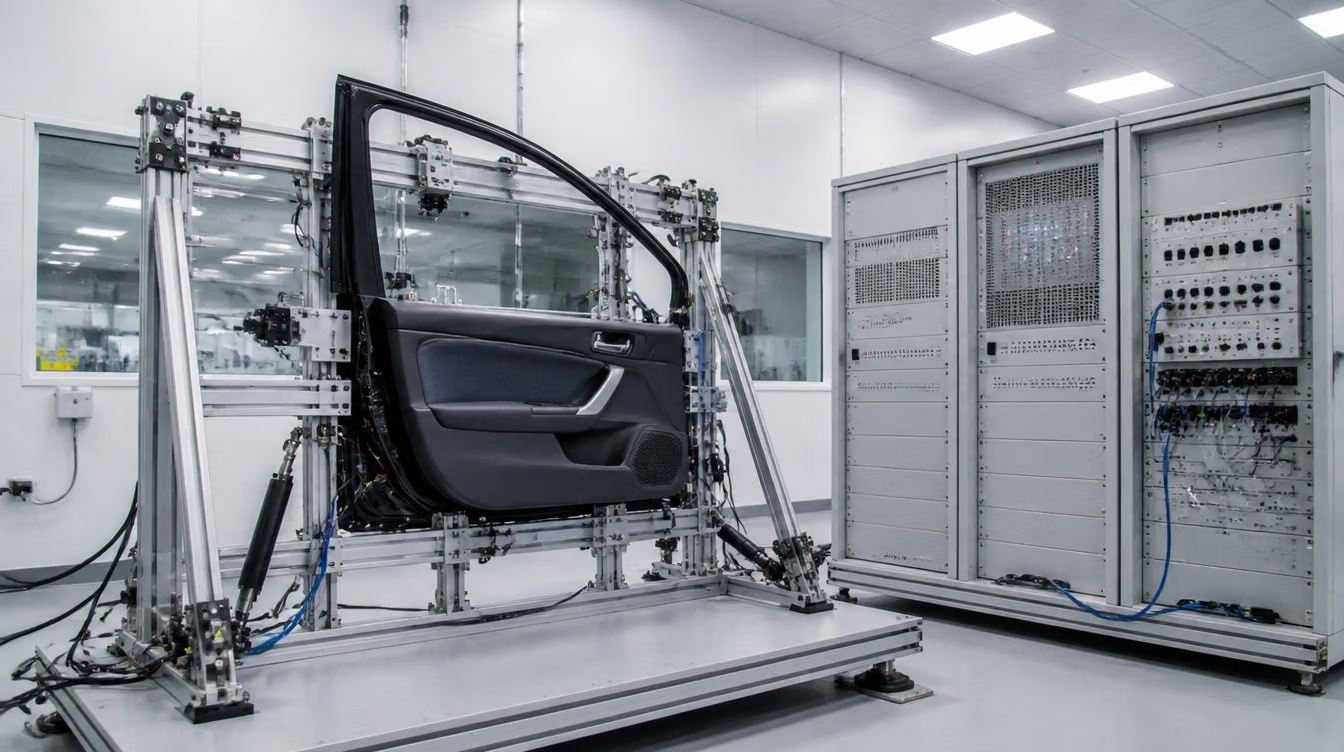
About the Standard
Scope title: cybersecurity engineering in road vehicles
ISO 21434 is a standard published by International Organization for Standardization (ISO). The international standards organisation; it publishes the widest body of management system, test method and product standards.
See the other 310 codes from ISOCoverage areas
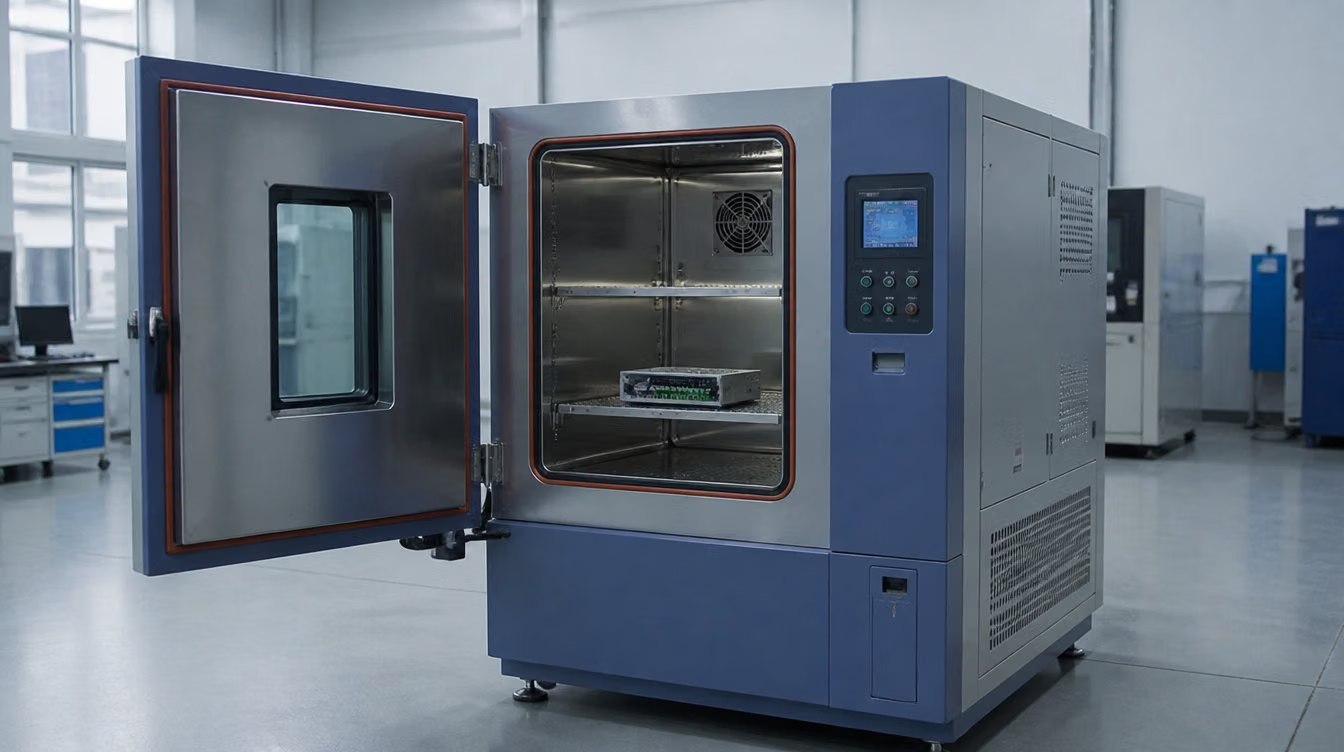
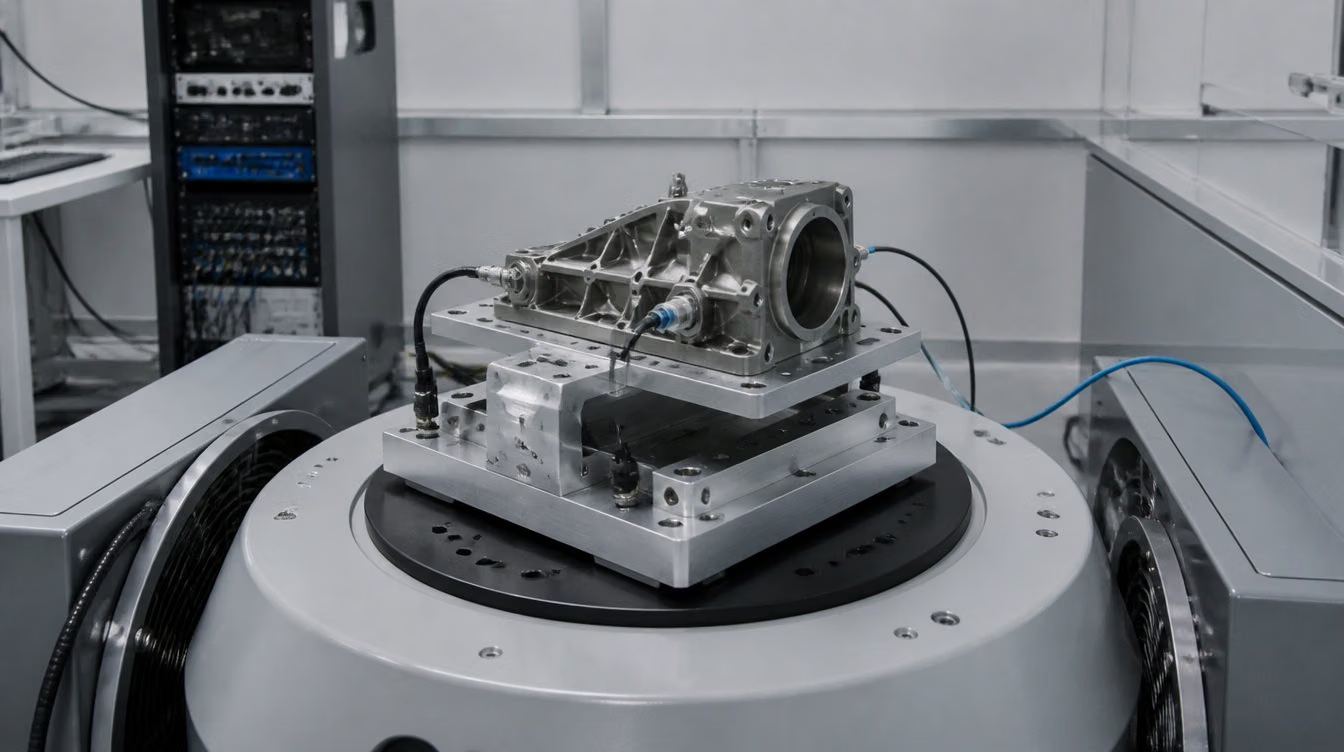
Otomotiv Testleri — What Does This Testing Field Cover?
The section below describes the field that code ISO 21434 belongs to; it is not the text of the standard or the regime itself. The scope title of the code is given above, and technical requirements are shared at the quotation stage.
Automotive testing shows that a component keeps working under conditions representing the loads it will meet over the life of the vehicle. A vehicle is not a single product but an ENVIRONMENT: vibration, temperature cycling, salt water, stone impact, electrical transients and electromagnetic noise are all present at the same time and for years.
What distinguishes this family is that VEHICLE MANUFACTURER SPECIFICATIONS sit on top of the standards. ISO and SAE publications establish the common ground; but Volkswagen, BMW, Ford, Stellantis, Toyota and Renault define different severity levels, additional tests and different acceptance criteria in their own specifications. For a component, the phrase "complies with automotive standards" is not sufficient on its own; which manufacturer's specification, and which revision of it, must be answered.
The family carries three separate processes together and they are often confused. Homologation covers the type approvals a vehicle needs to enter traffic and runs under state authority. Supplier approval means passing the vehicle manufacturer's own quality and testing requirements and is a commercial relationship. The third is design verification: the engineering team demonstrating that its own design meets its targets.
At component level the test plan is built around the LOCATION OF USE. A module in the engine bay and a module in the boot do not go through the same temperature and vibration profile; a component inside a door and one in the roof console do not see the same water and dust exposure. The ISO 16750 series is the common framework for this location-based approach.
The shift to electric vehicles has reshaped the field. High-voltage safety, insulation coordination, battery safety, charging interface conformity and the electromagnetic behaviour of high-voltage components have been added to the classical automotive test set. In a quiet vehicle, acoustic and vibration expectations have changed too; sounds once masked by the combustion engine are now audible.
The quality system side cannot be separated from testing in this field. A manufacturer under IATF 16949 presents test results in the PPAP file; measurement system analysis, process capability study and the control plan stand around the test report. A single good result is not enough — the process must be shown to be able to repeat it.
Method groups in this field
Environmental and climatic
Temperature cycling, thermal shock, damp heat, salt spray, dust and water ingress (IP), solar radiation. Severity levels vary with the mounting location.
Mechanical
Sine and random vibration, shock, mechanical loads, fastener torque and durability cycles.
Electrical
Supply voltage variations, transients (ISO 7637), reverse polarity, overvoltage, short circuit and sleep current measurements.
EMC
Component emissions (CISPR 25), radiated and conducted immunity (ISO 11452 series), electrostatic discharge (ISO 10605).
Materials and emissions
Odour, fogging and VOC emissions from interior materials; flammability; UV ageing; coating durability and stone impact.
Functional safety and cyber security
Functional safety evidence under ISO 26262 and cyber security engineering under ISO/SAE 21434; these are tied to regulation through UNECE R155 and R156.
Commonly confused in this field
- An automotive report without a specification reference is not accepted in the supply chain; which OEM specification and revision was applied must be stated.
- Type approval and supplier approval are different processes. A component with E-Mark approval is not thereby considered to have passed the OEM's own acceptance tests.
- A result obtained on a prototype does not carry over to series production; PPAP is done with series production parts.
- On the EMC side, measuring emissions alone is incomplete; immunity is a separate body of work and is more critical in a vehicle.
- On electric vehicle components, high-voltage safety is a distinct competence; classical 12 V test infrastructure is not sufficient.
Which decisions these results support
- Supplier component approval and the PPAP file
- UNECE type approval and E-Mark marking
- Design verification and durability evidence
- Root cause analysis of field complaints and warranty returns
- Assessing the impact of a design or supplier change
Structure of the Code
- Published by
- ISO
- Serial number
- 21434
- Part
- without partition
Codes in the library without release year is kept. The current version changes over time; If the year is specified in your specification, that version is taken as basis, if not specified, the most current version is applied.
Scope
Related Tests and Services
A separate test page based on this code has not yet been released. The code falls within the scope of the following test families.
Technical Requirements
Standard texts are copyright of the relevant organization; test condition, sample and acceptance criteria cannot be fitted here.
Technical requirements specific to your product, once we clarify the scope At offer stage shared in writing.
Relevant Product Groups and Legislation
This code is included in the standard tag of the product pages below.
- automotive part
- medical device
- Machinery
- Compressor
- Pump
- valve
- pressure vessel
- Toy
- textile product
- Food contact packaging
- building material
- cosmetic product
- food product
These product pages carry notes for the following markets: European Union, United Kingdom, USA. Whether the standard is mandatory in the relevant market varies depending on the product group and the applicable legislation.
Regulations published with this code on the same product pages:
- (AB) 2018/858Vehicle Type-Approval FrameworkApproval of motor vehicles and their components. Component and separate technical unit approval run under this framework; the E mark arises from it.
- UNECEUNECE 1958 AgreementType-approval under component-specific UNECE regulations (e.g. R10 EMC, R30/R54 tyres, R43 glazing).
- UNECE R10UNECE R10Electromagnetic compatibility approval for vehicles and their components.
- 2011/65/EURoHSRestriction of hazardous substances in electrical and electronic equipment.
- 2000/53/ATELVEnd-of-life vehicles. Sets heavy-metal restrictions and recoverability targets.
- (EU) 2017/745MDRThe Medical Device Regulation. Classification (I, IIa, IIb, III), clinical evaluation, technical documentation and post-market surveillance obligations; the notified body's role grows as the class rises.
- (EU) 2017/746IVDRThe In Vitro Diagnostic Medical Devices Regulation. In vitro diagnostic devices fall under this regulation instead of the MDR.
- (AB) 2017/745 art. 33EUDAMEDThe European medical device database. From 28 May 2026, the actor registration, UDI/device, certificate and market surveillance modules are mandatory; placing on the market is not possible without a valid SRN.
- 2006/42/ATMachinery Directive (overlap)Relevant essential requirements also apply to medical devices that also qualify as machinery.
- (EC) 1907/2006REACHRegistration, evaluation, authorisation and restriction of chemicals; SVHC notification.
- (EU) 2023/1230Machinery RegulationReplaces 2006/42/EC and becomes mandatory on 20 January 2027 with no further transition period. Requires notified-body involvement for Annex I high-risk machinery.
- 2014/35/EULVDThe Low Voltage Directive. Governs electrical safety in the 50–1000 V AC range.
- 2014/30/EUEMCThe Electromagnetic Compatibility Directive. Emission and immunity are covered together.
- 2014/34/ABATEXEquipment and protective systems used in explosive atmospheres. The category and conformity route are determined by zone classification.
- 2000/14/ATNoise EmissionNoise emitted into the environment by outdoor equipment. Machinery within scope requires a sound-power-level declaration and marking.
- 2014/68/EUPEDThe Pressure Equipment Directive for pressurised parts; the category is determined by pressure and volume.
- (EU) 2024/573F-GasRefrigerant type, GWP value and leak-tightness obligations for systems containing a refrigerant.
- (AB) 547/2012Ecodesign (water pumps)Ecodesign requirements for water pumps. Sets minimum efficiency index and product-information requirements.
- (AB) 2019/1781Ecodesign (electric motors)Efficiency class requirements for electric motors and variable-speed drives.
- (AT) 1935/2004Food Contact MaterialsGeneral requirements for equipment in contact with food; material conformity is required for valves in food lines.
- (AB) 2020/2184Drinking Water Contact ProductsHygiene requirements for materials in contact with water under the Drinking Water Directive.
- 2014/29/ABSimple Pressure VesselsA separate directive for series-produced simple pressure vessels; its scope must be distinguished from the PED.
- 2010/35/ABTransportable Pressure EquipmentThe pi mark and periodic inspection regime for transportable pressure equipment.
- 2009/48/ECToy SafetyThe Toy Safety Directive. Regulates mechanical, physical, flammability, chemical and electrical safety requirements together; a technical file and safety assessment are mandatory.
- EN 62115Electrical toysSafety for electric toys; applies to mains-connected or battery-powered toys.
- (AT) 1907/2006 Annex XVII item 51-52Phthalate RestrictionRestriction of certain phthalates in toys and childcare articles.
- (EU) 2023/1542Batteries RegulationBattery obligations and a removability requirement for toys containing a battery.
- (AB) 1007/2011Textile LabellingTextile fibre names and labelling. Declaration of fibre composition and regulation of the label language.
- (AT) 1907/2006 Annex XVII item 43Azo Dye RestrictionRestriction of certain azo dyes in textiles in contact with skin.
- (AB) 2019/1021PFAS / PFOA RestrictionRestriction of PFOA and its derivatives under the Persistent Organic Pollutants Regulation.
- (EU) 2023/988GPSRThe General Product Safety Regulation. The safety framework for consumer products not covered by sector-specific legislation.
- (EU) 2016/425Personal Protective Equipment (overlap)The PPE Regulation's scope and category are determined for textiles with a protective function.
- (AB) 10/2011Plastics in Food ContactPlastic materials in contact with food. The list of authorised substances, and overall and specific migration limits.
- (AT) 2023/2006Good Manufacturing PracticeGood manufacturing practice (GMP) for food-contact materials.
- (AB) 2025/40Packaging and Packaging WasteThe Packaging and Packaging Waste Regulation. Recyclability, recycled-content and packaging-reduction obligations; replaces 94/62/EC.
- (AB) 2022/1616Recycled PlasticRecycled plastic materials in contact with food.
- (EU) 2024/3110Construction Products RegulationDeclaration of performance and CE marking for construction products. Most provisions apply from 8 January 2026; it progressively replaces (EU) 305/2011.
- (AB) 305/2011CPR (transition)Continues to apply during the transition period for product groups where a new harmonised standard has not been published.
- EN 13501-1Reaction-to-Fire ClassificationReaction-to-fire class for construction products; a mandatory item of the declaration of performance.
- (EU) 2023/1115Deforestation (wood-based)A deforestation-free supply declaration for wood and derived construction materials.
- (AT) 1223/2009Cosmetic Products RegulationThe Cosmetic Products Regulation. Appointing a responsible person, the product information file (PIF), the safety assessment (CPSR) and CPNP notification are mandatory; there is no product approval, and responsibility rests with the manufacturer.
- (AT) 1223/2009 Annexes II-VIProhibited and Restricted SubstancesLists of prohibited substances, restricted substances, and permitted preservatives, colorants and UV filters.
- (AT) 1223/2009 art. 16Nanomaterial NotificationA separate notification six months before placing on the market for products containing nanomaterials.
- (AT) 1223/2009 art. 18Animal Testing BanA ban on animal testing of finished products and ingredients, and on placing animal-tested products on the market.
- (AT) 178/2002General Food LawThe general principles of food law, traceability and food safety responsibility.
- (AT) 852/2004Food HygieneHygiene rules for food businesses and the obligation for a HACCP-based system.
- (AB) 1169/2011Food Information to ConsumersFood labelling; nutrition declaration, allergen information and origin information.
- (AB) 2023/915ContaminantsMaximum levels of contaminants in food.
- (AT) 396/2005Pesticide residuesMaximum residue limits in food of plant and animal origin.
- (AT) 2073/2005Microbiological CriteriaMicrobiological criteria for foodstuffs.
Related Standards
Frequently Asked Questions
Is this standard mandatory for my product?
Whether it is mandatory depends on the product group, the target market and the applicable legislation. Once you tell us your product and market, we clarify in writing whether this standard is required.
How long does the test process take?
Duration depends on the scope of the standard, the number of specimens and current capacity. The exact duration is shared, together with the specimen and scope details, at the quote stage.
Do you issue certification against this standard?
Which activity is carried out under which accreditation scope is separately confirmed at the application stage. Up-to-date scope information is published on our corporate page.
What happens if the standard I need is not here?
The library is based on a continuously growing inventory. If you cannot find the code you are looking for, you can send it through the quote form; we will assess the relevant scope and get back to you.