

Industrial
Pump testing and certification
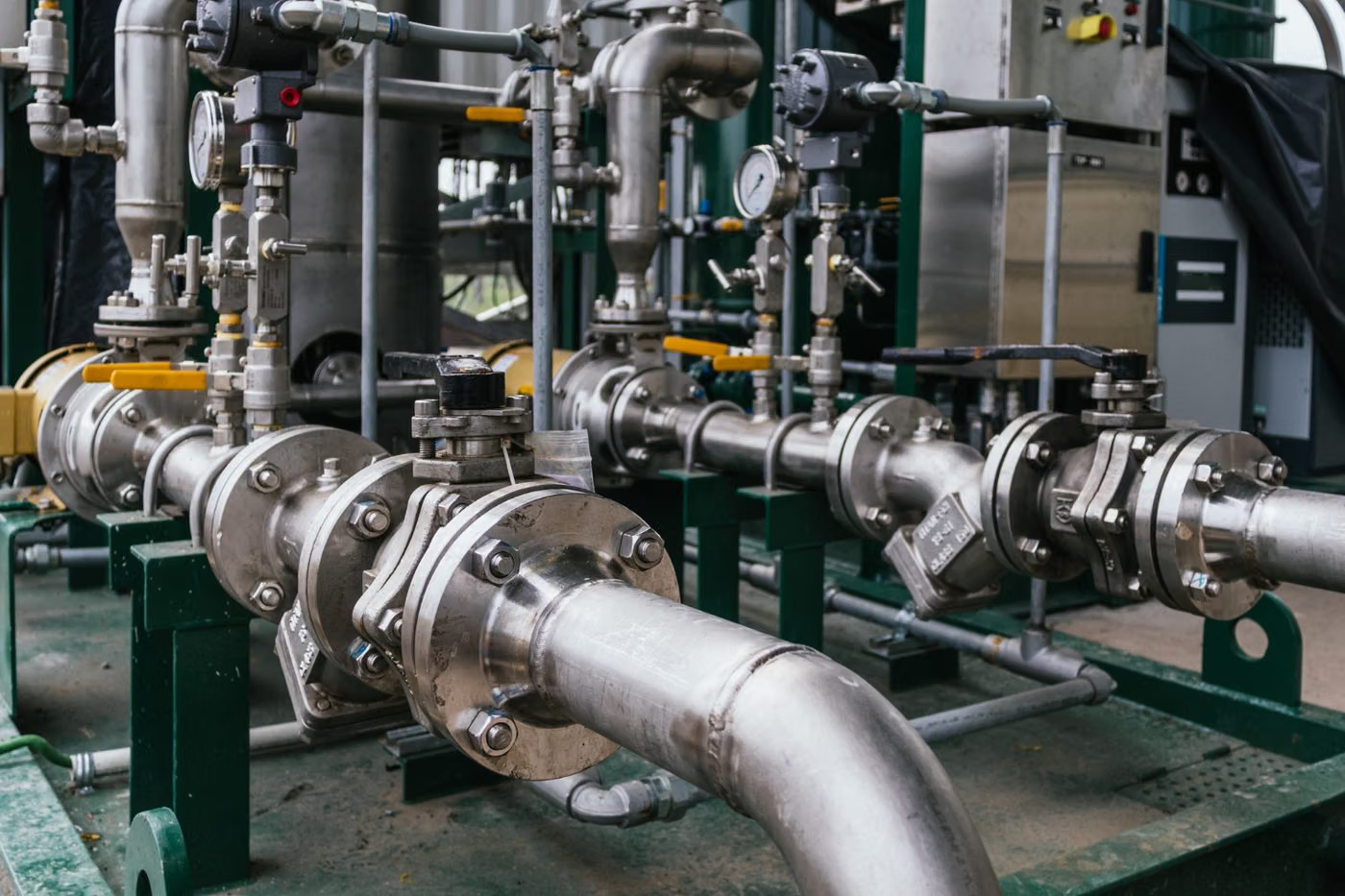
An industrial pump that moves fluid.
Pump — conformity scope
For a pump, the machinery-safety framework is the basis; the drive motor brings electrical safety and efficiency headings, while use in an explosive atmosphere brings a separate regime. The type and pressure of the fluid handled determine the scope.
The list below is the European Union framework. The same product falls under a different mark and approval regime in another market; Smart Service Finder shows that market's requirements when you select it.
Regulation
Pump legislation that typically comes into play for
The following is the European Union framework and shows typical application. Which title actually applies depends on the class, intended use and components of the product; The scope is determined by examining the product.
The current Machinery Directive. Imposes risk assessment, essential health and safety requirements and a technical-file obligation.
The Low Voltage Directive. Governs electrical safety in the 50–1000 V AC range.
The Electromagnetic Compatibility Directive. Emission and immunity are covered together.
Equipment and protective systems used in explosive atmospheres. The category and conformity route are determined by zone classification.
Ecodesign requirements for water pumps. Sets minimum efficiency index and product-information requirements.
Efficiency class requirements for electric motors and variable-speed drives.
What is required?
Each item links to the relevant service page: the legislation entry to the certification scheme, the test family to the laboratory page, and the mark to the market page.
European Union — required mark
5- CE — European UnionThe umbrella for entering the EU market; all regulations applicable to the product are met.
- LVD — European UnionLow Voltage Directive — no notified body; the declaration is made by the manufacturer.
- EMC — European UnionElectromagnetic Compatibility Directive — emission and immunity requirements.
- PED — European UnionPressure Equipment Directive — the NB's role increases as the category rises.
- ATEX — European UnionExplosive atmosphere equipment — NB is mandatory for category 1 and electrical category 2.
Required legislation
4- Machinery Directive
- Pressure Equipment Directive (PED)
- ATEXIf used in an explosive atmosphere
- EMC Directive
Required tests
4- Mechanical TestingStrength and fatigue
- Metals & Metallurgy TestingMaterials and welding
- Vibration & Shock
- Electrical Safety
What must be in the technical file
6- Technical file and risk assessment (ISO 12100)
- The EU declaration of conformity
- Instructions for use and maintenance manual
- Welding procedure qualification (WPS/WPQR)
- Material certificates (EN 10204 3.1/3.2)
- Details of the authorised representative or importer established in the EU
How does the process work?
The flow below is a general order independent of product type; timing and acceptance criteria are determined by the standard the product falls under.
 1
Defining the scope
It is determined which legislation the product falls under based on its technical characteristics and intended use.
 2
Testing and evaluation
Tests are planned for the applicable headings; results are evaluated according to the relevant standards.
 3
Technical file
Design, production and test records are compiled in the technical file, accompanied by a risk assessment.
 4
Declaration or certificate
Depending on the product group, the manufacturer's declaration is prepared or third-party certification is carried out.
Pump which market is it going to?
Who bears the obligation, where the test will be performed, and what customs will require all vary by market.















What changes depending on the market?
Same product, different regimen
- European UnionUnder the CE mark, the Machinery Directive, LVD and EMC; on the efficiency side, the pump and motor ecodesign regulations apply together. If used in an explosive atmosphere, the ATEX category is determined.
- United KingdomThe UKCA regime carries the same technical requirements into its own legislation; CE marking is recognised indefinitely for many product groups.
- United StatesDOE pump-efficiency rules, electrical safety under UL/CSA, and the API 610 specification (process pumps) apply.
Products in the same group



Pump — let's work out the scope together
Share the product's technical characteristics; let us tell you in writing which headings apply to your scope and which tests are required.
This result is a starting roadmap, not a conformity assessment. Which legislation a product falls under depends on its technical characteristics, intended use and user group; it is only finalised by examining the product. You may have an obligation not shown in the list, and an item shown here may not apply to your product.