
About the Standard
Scope title: impact-attenuating playground surfacing
EN 1177 is a standard published by European Standard (EN) (EN). Standards published by the European standardisation organisations and adopted as national standards in member states; they are used as harmonised standards under EU directives.
See the other 194 codes from ENCoverage areas
Oyuncak Testleri — What Does This Testing Field Cover?
The section below describes the field that code EN 1177 belongs to; it is not the text of the standard or the regime itself. The scope title of the code is given above, and technical requirements are shared at the quotation stage.
Toy testing shows that a product is safe in children's use. What sets this family apart is that risk is defined according to the USER: the same product may be hazardous for a child under 36 months and safe for an older child. Age marking is therefore not a marketing preference but a technical decision that determines which requirements apply, and it is justified in the technical file.
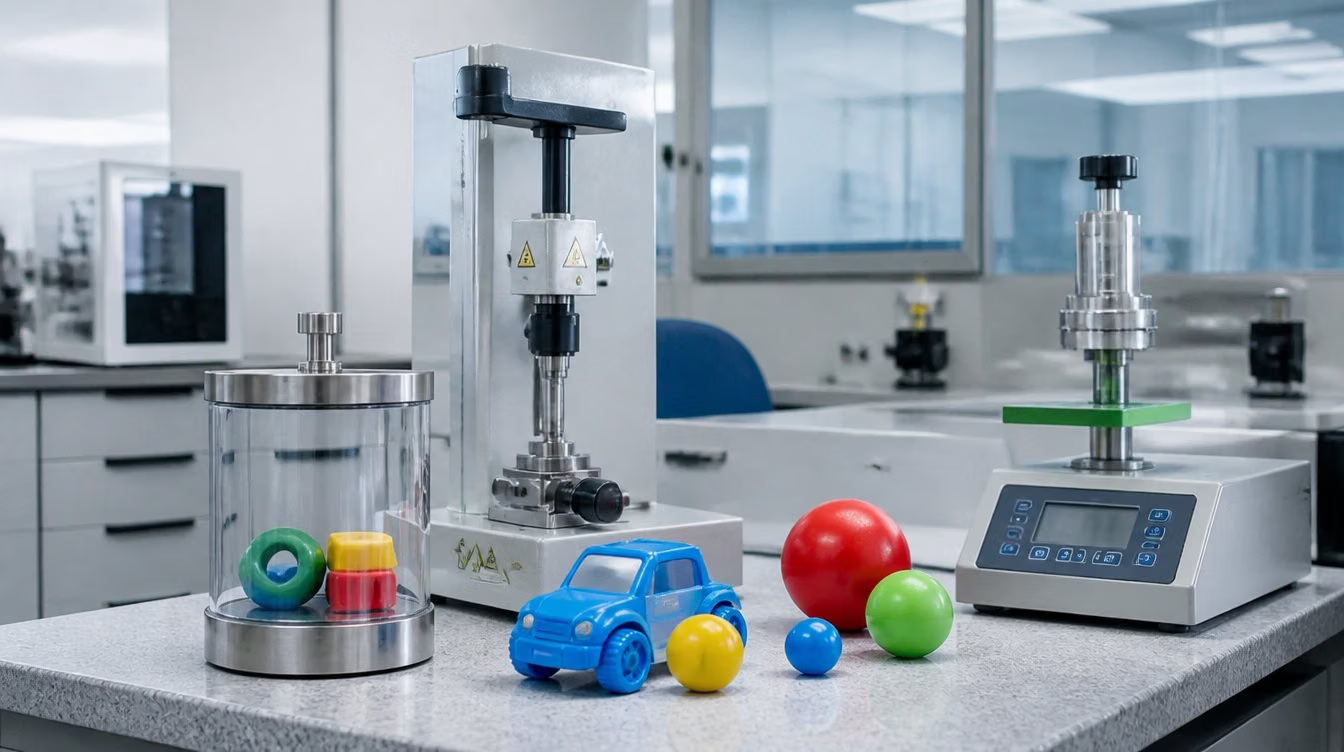
At the centre of the field is the risk of CHOKING. Children under 36 months put objects in their mouths; a part that detaches or is small to begin with can block the airway. Assessment with the small parts cylinder is the fundamental criterion for this group, and the tests examine whether the part detaches after use and misuse.
The logic of the tests is not that the toy must not break but that BREAKING must not produce a hazardous outcome. A child drops, pulls, bites and stands on a toy. Drop, tension, compression, torque, impact and tipping tests are therefore applied, and the resulting new state is then assessed: is the detached part a small part, did the broken surface leave a sharp edge, has the internal mechanism become accessible?
On the chemical axis, MIGRATION is what counts. What is measured in a toy is not how much of an element the material contains but how much of it dissolves and transfers under conditions simulating the mouth. Materials are divided into three categories (dry brittle powder, liquid or sticky, scrapable) and different limits apply to each; the amount of material a child could ingest varies by category.
Flammability is the third axis and is critical particularly for costumes, tents and plush toys: how quickly flame spreads across the surface is measured.
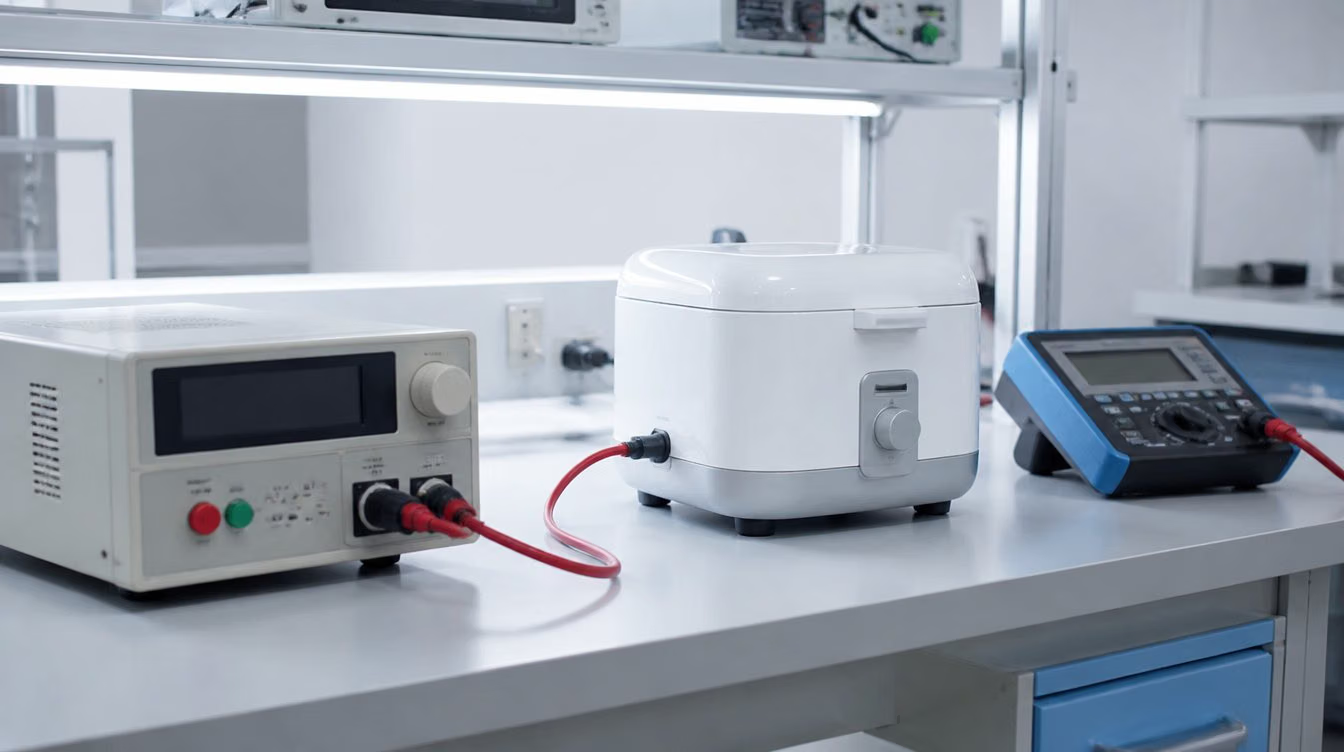
Electrical and battery-powered toys bring additional bodies of work: EN 62115 for electrical safety, the relevant battery standards and Battery Regulation obligations for the battery. For toys containing button cells, making the battery compartment impossible for a child to open has become a separate requirement — a swallowed button cell is a cause of serious injury.
Sound level is an item that is often overlooked. For toys used close to the ear (toy telephones, rattles, cap-firing toys) the sound pressure is limited; the risk of hearing damage is assessed.
Market regimes differ and do not substitute for one another: the Toy Safety Directive and CE marking in Europe, and in the United States the CPSIA with mandatory ASTM F963 and a third-party laboratory certificate (CPC). The United States also looks at total lead content while Europe looks at migration; the two approaches can produce different results.
Method groups in this field
Mechanical and physical
Small parts assessment, sharp edges and points, entrapment, cord and drawstring safety, dynamic strength, drop and tipping (EN 71-1).
Flammability
Rate of flame spread and ignition behaviour (EN 71-2); decisive for costumes and plush toys.
Element migration
Migration of specified elements in the three material categories (EN 71-3).
Organic chemicals
Phthalates, flame retardants, azo dyes, preservatives and fragrances (EN 71-9 and REACH restrictions).
Electrical toys
Electrical safety under EN 62115; heating, insulation, battery compartment and charging safety.
Sound and other
Sound pressure measurements; the requirements of EN 71-4 and EN 71-5 for chemistry sets and chemical toys.
Commonly confused in this field
- Toy safety cannot be demonstrated with a single standard; the mechanical, flammability and chemical parts are assessed together.
- Age marking determines which requirements apply; it must be justified in the technical file and not left to marketing preference.
- An ASTM F963 report is not accepted in a CE file; the requirements and test arrangements of the two regimes differ.
- Migration and total content are different things; the CPSIA looks at total lead while EN 71-3 looks at migration.
- If the material category is chosen incorrectly the limit is applied incorrectly too; the category decision is made before sample preparation.
- For toys containing button cells, battery compartment safety is a separate requirement; passing electrical safety is not sufficient.
Which decisions these results support
- CE marking and the technical file
- Determining age marking and warning texts
- The CPC certificate and mandatory third-party testing for the US market
- Supplier and lot-based acceptance control
- Determining the scope of retesting after a design change
Structure of the Code
- Published by
- EN
- Serial number
- 1177
- Part
- without partition
Codes in the library without release year is kept. The current version changes over time; If the year is specified in your specification, that version is taken as basis, if not specified, the most current version is applied.
Scope
Related Tests and Services
A separate test page based on this code has not yet been released. The code falls within the scope of the following test families.
Technical Requirements
Standard texts are copyright of the relevant organization; test condition, sample and acceptance criteria cannot be fitted here.
Technical requirements specific to your product, once we clarify the scope At offer stage shared in writing.
Relevant Product Groups and Legislation
This code is included in the standard tag of the product pages below.
- Air conditioning
- Television
- LED lighting
- adapter/charger
- power bank
- router/modem
- IoT device
- mobile phone
- laptop
- EV charger
- Compressor
- Pump
- valve
- pressure vessel
- Toy
- Furniture
- textile product
- Food contact packaging
- building material
- food product
These product pages carry notes for the following markets: European Union, United Kingdom, USA, Saudi Arabia, China. Whether the standard is mandatory in the relevant market varies depending on the product group and the applicable legislation.
Regulations published with this code on the same product pages:
- 2014/35/EULVDThe Low Voltage Directive. Governs the electrical safety of equipment operating in the 50–1000 V AC range; the manufacturer makes the declaration, with no notified body involvement.
- 2014/30/EUEMCThe Electromagnetic Compatibility Directive. Covers both the interference a device emits into its environment (emission) and its resistance to interference from outside (immunity).
- (AB) 206/2012EcodesignEcodesign requirements for air conditioners and comfort fans. Sets minimum thresholds and a declaration obligation for seasonal efficiency and sound power level.
- (AB) 626/2011Energy LabelEnergy labelling for air conditioners. The class on the label is based on measurement and is one of the first points examined in market surveillance.
- (EU) 2024/573F-GasThe Fluorinated Greenhouse Gases Regulation. The refrigerant type and its GWP value directly affect the product's placement on the market and labelling obligation.
- 2011/65/EURoHSRestriction of certain hazardous substances in electrical and electronic equipment; an integral part of the CE declaration.
- 2000/14/ATOutdoor NoiseNoise emitted into the environment by outdoor equipment. Whether the outdoor unit falls within scope is assessed according to product type.
- (AB) 2019/2021EcodesignEcodesign requirements for electronic displays. Includes on-mode power consumption, standby mode and repairability requirements.
- (AB) 2019/2013Energy LabelEnergy labelling for electronic displays. Requires a separate class declaration for SDR and HDR modes and EPREL registration.
- 2014/53/EUREDThe Radio Equipment Directive. For a product with a radio interface, spectrum, EMC and electrical safety are assessed together; the 3.3(d)(e)(f) cybersecurity articles also apply.
- 2012/19/ABWEEEWaste electrical and electronic equipment. Requires product marking and registration with the collection system.
- (AB) 2019/2020EcodesignEcodesign requirements for light sources. Covers efficiency, colour consistency, switching-cycle durability and product-information requirements.
- (AB) 2019/2015Energy LabelEnergy labelling for light sources. An A–G class and EPREL registration are mandatory.
- (EC) 1907/2006REACHRegistration, evaluation, authorisation and restriction of chemicals. Creates a notification obligation for SVHC substances in the product's content.
- (AB) 2019/1782Ecodesign (external power supplies)Ecodesign requirements for external power supplies. Sets minimum thresholds for loaded efficiency and no-load power consumption.
- (AB) 2022/2380Common Charging InterfaceA common charging solution for certain radio equipment. Requires a USB-C interface and declaration of charging information on the label.
- (EU) 2023/1542Batteries RegulationSustainability, safety and transparency for batteries. Carbon footprint declaration, recycled content and the battery passport apply on a staged timetable.
- UN Manual of Tests and CriteriaUN 38.3Transport safety of lithium cells and batteries. The T1–T8 test series is applied in the defined order; shipment cannot proceed without a report.
- (EU) 2023/988GPSRThe General Product Safety Regulation. Establishes a safety framework for aspects not covered by sector-specific legislation.
- (EU) 2024/2847CRAThe Cyber Resilience Act. Cybersecurity requirements for products with digital elements; reporting from 11 September 2026, full application from 11 December 2027.
- (AB) 1275/2008Ecodesign (networked standby)Minimum requirements for standby and off-mode power consumption in networked equipment.
- (EU) 2022/2555NIS2 (indirect)Cybersecurity risk management for essential and important entities; a network-equipment supplier is affected through its customers' obligations.
- (EU) 2016/679GDPR (indirect)Devices that process personal data incur a data-protection-by-design obligation.
- (AB) 2023/1670Ecodesign (smartphones)Ecodesign requirements for smartphones and tablets. Sets requirements for durability, repairability, spare parts and software-update duration.
- (AB) 2023/1669Energy Label (smartphones)Energy labelling for smartphones and tablets; battery life, drop resistance and a repair score are declared on the label.
- (AB) 617/2013Ecodesign (computers)Ecodesign requirements for computers and servers. Includes requirements for annual energy consumption, standby mode and power management.
- (AB) 2023/1804Alternative Fuels InfrastructureThe Regulation on the deployment of alternative fuels infrastructure. Governs connector type, payment and data-sharing requirements at public charging points.
- 2006/42/ATMachinery DirectiveRisk assessment, essential health and safety requirements and a technical-file obligation.
- (EU) 2023/1230Machinery RegulationReplaces 2006/42/EC, mandatory on 20 January 2027 with no further transition period.
- 2014/68/EUPEDThe Pressure Equipment Directive for pressurised parts; the category is determined by pressure and volume.
- 2014/34/ABATEXEquipment and protective systems used in explosive atmospheres. The category and conformity route are determined by zone classification.
- (AB) 547/2012Ecodesign (water pumps)Ecodesign requirements for water pumps. Sets minimum efficiency index and product-information requirements.
- (AB) 2019/1781Ecodesign (electric motors)Efficiency class requirements for electric motors and variable-speed drives.
- (AT) 1935/2004Food Contact MaterialsGeneral requirements for equipment in contact with food; material conformity is required for valves in food lines.
- (AB) 2020/2184Drinking Water Contact ProductsHygiene requirements for materials in contact with water under the Drinking Water Directive.
- 2014/29/ABSimple Pressure VesselsA separate directive for series-produced simple pressure vessels; its scope must be distinguished from the PED.
- 2010/35/ABTransportable Pressure EquipmentThe pi mark and periodic inspection regime for transportable pressure equipment.
- 2009/48/ECToy SafetyThe Toy Safety Directive. Regulates mechanical, physical, flammability, chemical and electrical safety requirements together; a technical file and safety assessment are mandatory.
- EN 62115Electrical toysSafety for electric toys; applies to mains-connected or battery-powered toys.
- (AT) 1907/2006 Annex XVII item 51-52Phthalate RestrictionRestriction of certain phthalates in toys and childcare articles.
- (AB) 2023/1464Formaldehyde EmissionRestriction on formaldehyde emission from wood-based products (an amendment to REACH Annex XVII).
- (EU) 2023/1115Wood and Forest ProductsThe Deforestation Regulation. A deforestation-free supply declaration for wood and derived products; 30 December 2026 for large operators.
- (EU) 2024/3110Construction Products (fixed furniture)The Construction Products Regulation's scope is assessed for furniture permanently fixed to a building.
- (AB) 1007/2011Textile LabellingTextile fibre names and labelling. Declaration of fibre composition and regulation of the label language.
- (AT) 1907/2006 Annex XVII item 43Azo Dye RestrictionRestriction of certain azo dyes in textiles in contact with skin.
- (AB) 2019/1021PFAS / PFOA RestrictionRestriction of PFOA and its derivatives under the Persistent Organic Pollutants Regulation.
- (EU) 2016/425Personal Protective Equipment (overlap)The PPE Regulation's scope and category are determined for textiles with a protective function.
- (AB) 10/2011Plastics in Food ContactPlastic materials in contact with food. The list of authorised substances, and overall and specific migration limits.
- (AT) 2023/2006Good Manufacturing PracticeGood manufacturing practice (GMP) for food-contact materials.
- (AB) 2025/40Packaging and Packaging WasteThe Packaging and Packaging Waste Regulation. Recyclability, recycled-content and packaging-reduction obligations; replaces 94/62/EC.
- (AB) 2022/1616Recycled PlasticRecycled plastic materials in contact with food.
- (AB) 305/2011CPR (transition)Continues to apply during the transition period for product groups where a new harmonised standard has not been published.
- EN 13501-1Reaction-to-Fire ClassificationReaction-to-fire class for construction products; a mandatory item of the declaration of performance.
- (AT) 178/2002General Food LawThe general principles of food law, traceability and food safety responsibility.
- (AT) 852/2004Food HygieneHygiene rules for food businesses and the obligation for a HACCP-based system.
- (AB) 1169/2011Food Information to ConsumersFood labelling; nutrition declaration, allergen information and origin information.
- (AB) 2023/915ContaminantsMaximum levels of contaminants in food.
- (AT) 396/2005Pesticide residuesMaximum residue limits in food of plant and animal origin.
- (AT) 2073/2005Microbiological CriteriaMicrobiological criteria for foodstuffs.
Related Standards
Frequently Asked Questions
Is this standard mandatory for my product?
Whether it is mandatory depends on the product group, the target market and the applicable legislation. Once you tell us your product and market, we clarify in writing whether this standard is required.
How long does the test process take?
Duration depends on the scope of the standard, the number of specimens and current capacity. The exact duration is shared, together with the specimen and scope details, at the quote stage.
Do you issue certification against this standard?
Which activity is carried out under which accreditation scope is separately confirmed at the application stage. Up-to-date scope information is published on our corporate page.
What happens if the standard I need is not here?
The library is based on a continuously growing inventory. If you cannot find the code you are looking for, you can send it through the quote form; we will assess the relevant scope and get back to you.