
About the Standard
Scope title: mechanical and physical properties of toys
EN 71-1 is a standard published by European Standard (EN) (EN). Standards published by the European standardisation organisations and adopted as national standards in member states; they are used as harmonised standards under EU directives.
See the other 194 codes from ENCoverage areas
What Is EN 71-1?
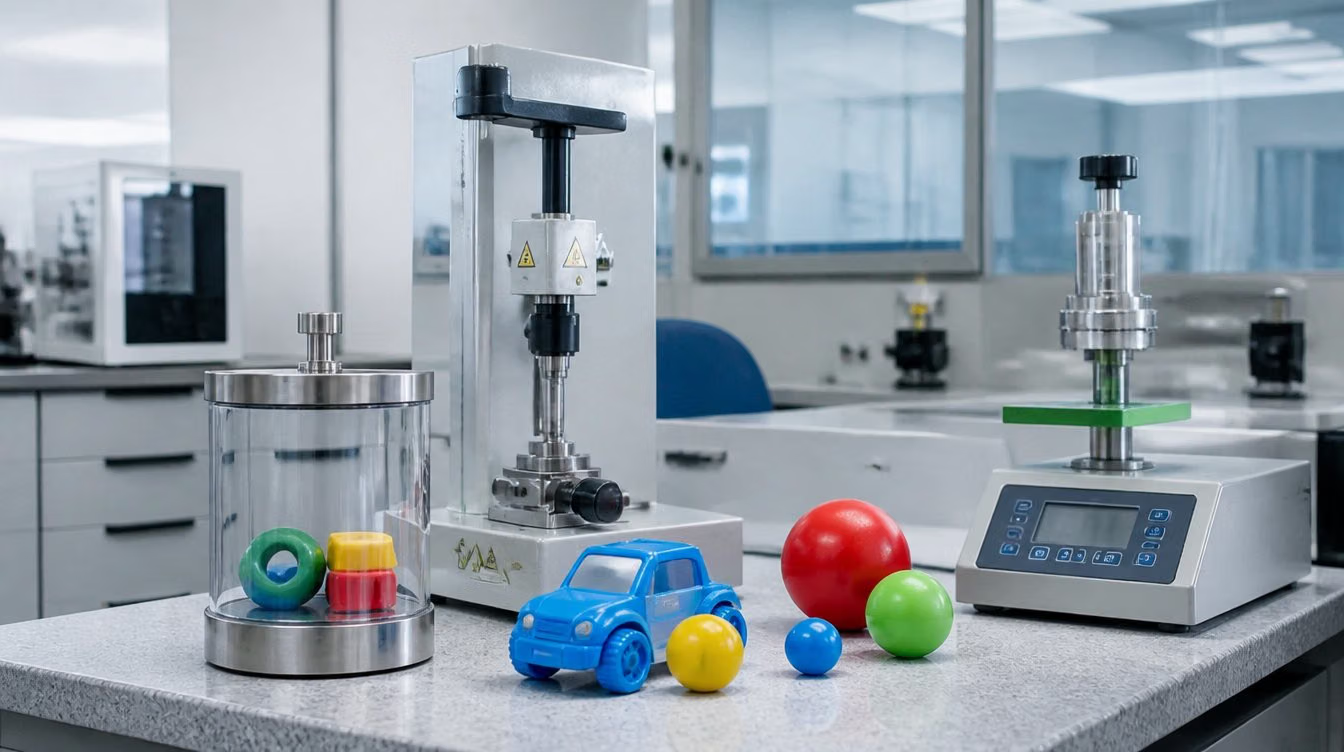
EN 71-1 governs the mechanical and physical safety of toys. It is the harmonised standard most often used under the Toy Safety Directive and addresses the injury risks arising from the physical structure of a toy.
What distinguishes the standard is that its requirements vary by AGE GROUP. For toys designed for children under 36 months, small parts, choking and swallowing risks are central; assessment with the small parts cylinder is the fundamental criterion for this group. For older age groups, sharp edges, points, entrapment, falls and dynamic strength come to the fore.
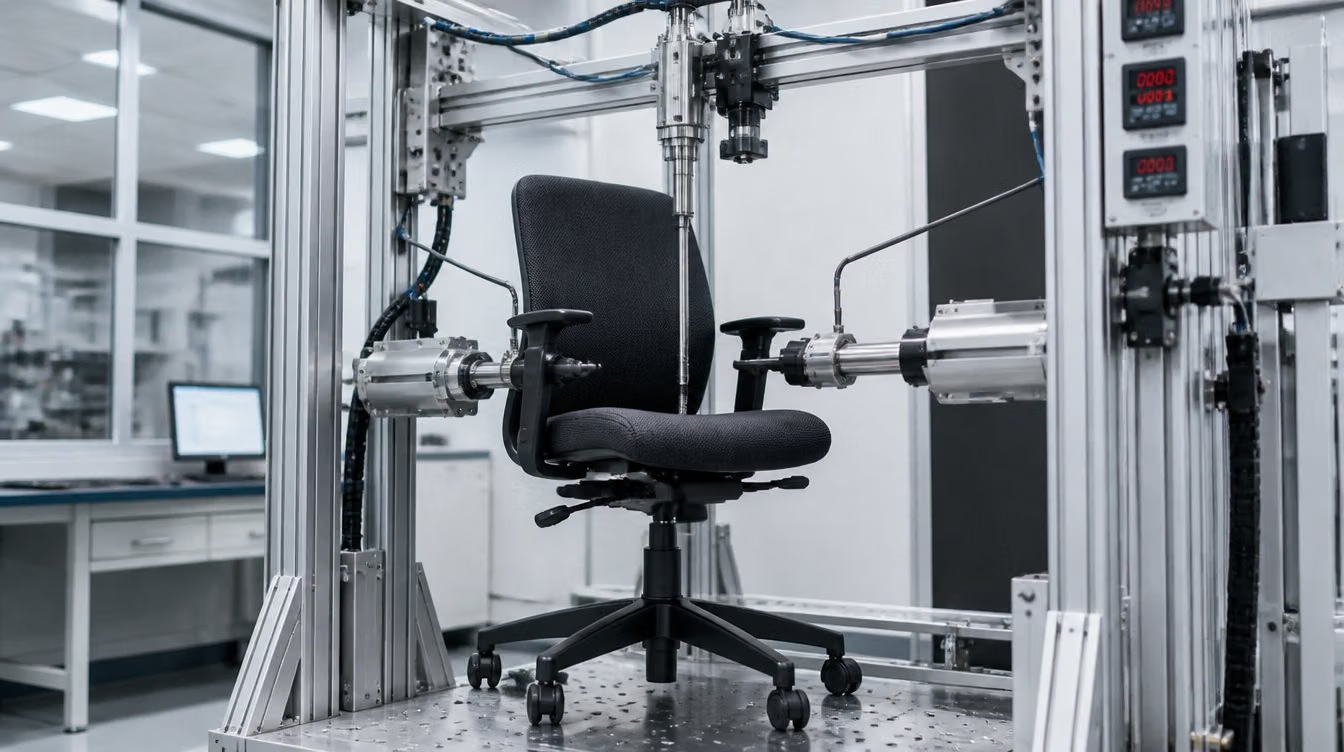
The tests simulate the real use and MISUSE of a toy: drop, tension, compression, torque, impact and tipping. The aim is not that the toy must not break but that BREAKING must not produce a hazardous outcome — the detached part must not create a choking risk, the broken surface must not leave a sharp edge and the internal mechanism must not become accessible.
THE ORDER of testing matters. The misuse tests (drop, tension, torque) are applied first; the resulting new state is then assessed against the sharp edge, point and small parts criteria. It is not enough for a new toy to have no sharp edges; it must have none after being dropped either.
The other parts of the series address different risk groups: EN 71-2 flammability, EN 71-3 migration of certain elements, EN 71-4 chemistry sets, EN 71-5 chemical toys, EN 71-9 organic chemical compounds and EN 71-12 N-nitrosamines. For electrical toys, EN 62115 applies in addition.
Why Does This Standard Exist?
foreseeable misuse
The most serious risk is CHOKING, and that risk is highly age-sensitive. Children under 36 months put objects in their mouths and their airways are small; for this age group a small part is an absolute red line. The same part may be acceptable for a five-year-old.
The small parts cylinder is the concrete measure of that risk: a cylinder of dimensions representing a child's airway is defined and a part that fits entirely inside it counts as a small part. This simple but effective approach removes subjective judgement.
The second risk group is MECHANICAL INJURY: sharp edges and points create cuts and puncture wounds, entrapment points finger entrapment, long cords strangulation and small magnets, when swallowed, the risk of bowel perforation. Magnet risk is a subject added to the standard later; the spread of powerful neodymium magnets brought a new form of injury.
The standard is updated continuously because toy types change. Ride-on toys, scooter-like electric products, smart toys and magnetic construction sets have each given rise to new requirements. An old report may therefore fall short against the current standard.
Which Products Require It
- Products designed for use in play by children under 14
- Baby toys, rattles and teethers
- Ride-on toys and playhouses
- Construction sets and magnetic toys
- Promotional and gift items with the character of toys
- Costumes and role-play products
Related Legislation and Schemes
- It is a harmonised standard under Toy Safety Directive 2009/48/EC
- The chemical side is completed by EN 71-3 and the REACH Annex XVII restrictions
- For electrical toys EN 62115 and for battery-operated toys (EU) 2023/1542 come into play
- In the United States ASTM F963 and the CPSIA, and internationally the ISO 8124 series, are the corresponding frameworks
- Flammability is assessed separately under EN 71-2
How the Assessment Runs
- 1Determining the age group and scopeThe target age group of the toy is determined and justified; the set of requirements to be applied depends on it.
- 2Visual and dimensional assessmentSmall parts, sharp edges and points, entrapment points, cord lengths and the presence of magnets are examined.
- 3Misuse testsDrop, tension, compression, torque, impact and tipping tests are applied at levels appropriate to the age group.
- 4Reassessment after testingThe resulting new state is reassessed against the small parts, sharp edge and accessibility criteria.
- 5Requirements for particular productsAdditional requirements apply to ride-on toys, tents, water toys and projectile toys.
Neighbouring Standards and the Differences
EN 71-2
Flammability. Decisive for costumes, tents and plush toys; mechanical conformity does not cover flammability.
EN 71-3
Migration of certain elements. Chemical safety is a separate body of work and is required alongside.
EN 62115
Safety of electrical toys; applied in addition for battery-operated and mains-connected toys.
ASTM F963 / ISO 8124
The US and international counterparts. Their requirements and test arrangements differ; the reports do not substitute for one another.
What the Report Must Contain
To be usable, a report must carry the information below. An incomplete report may not be accepted in the supply chain or in an inspection even when its result is correct.
- The declared age group and its justification
- The misuse tests applied and their levels
- The results of the small parts assessment (before and after testing)
- Sharp edge, point and entrapment assessments
- Assessments relating to cords, magnets and projectiles
- The edition of the standard applied and references to the other parts of the series
Commonly Confused Points
- Toy safety cannot be demonstrated with a single standard; the mechanical, flammability and chemical parts are assessed together.
- Age marking is not a marketing preference; it determines the requirements to be applied and is justified in the technical file.
- An ASTM F963 report is not accepted in a CE file; the requirements and test arrangements of the two regimes differ.
- It is not enough for a new product to have no sharp edges; it is assessed AFTER the misuse tests as well.
- Small magnets are a separate risk group; swallowed, they produce serious injury and carry particular requirements.
- The standard is updated; an old report may fall short against current requirements.
Structure of the Code
- Published by
- EN
- Serial number
- 71
- Part
- 1
The last "1" is the section number of the standard. Chapters organize different coverages of the same series; The requirements of whichever section is written in the specification are applied.
Codes in the library without release year is kept. The current version changes over time; If the year is specified in your specification, that version is taken as basis, if not specified, the most current version is applied.
Scope
- Toy Testing
- Toy Testing
Related Tests and Services
A separate test page based on this code has not yet been released. The code falls within the scope of the following test families.
Technical Requirements
Standard texts are copyright of the relevant organization; test condition, sample and acceptance criteria cannot be fitted here.
Basis: The part structure of the EN 71 series and the logic of EN 71-1's age-dependent requirements together with the approach of reassessment after misuse testing; the 2009/48/EC, ASTM F963 and ISO 8124 references.
Technical requirements specific to your product, once we clarify the scope At offer stage shared in writing.
Relevant Product Groups and Legislation
This code is included in the standard tag of the product pages below.
These product pages carry notes for the following markets: European Union, United Kingdom, USA. Whether the standard is mandatory in the relevant market varies depending on the product group and the applicable legislation.
Regulations published with this code on the same product pages:
- 2009/48/ECToy SafetyThe Toy Safety Directive. Regulates mechanical, physical, flammability, chemical and electrical safety requirements together; a technical file and safety assessment are mandatory.
- EN 62115Electrical toysSafety for electric toys; applies to mains-connected or battery-powered toys.
- (EC) 1907/2006REACHRegistration, evaluation, authorisation and restriction of chemicals; SVHC notification.
- (AT) 1907/2006 Annex XVII item 51-52Phthalate RestrictionRestriction of certain phthalates in toys and childcare articles.
- (EU) 2023/1542Batteries RegulationBattery obligations and a removability requirement for toys containing a battery.
- 2011/65/EURoHSRestriction of hazardous substances in electrical and electronic equipment.
Other Parts of the Same Series
EN 71 series is also present in the library with the following parts.
Related Standards
Frequently Asked Questions About EN 71-1
How do we determine the age marking?
3+
We did not design it for under 36 months but a small child could play with it — what then?
Foreseeable use is taken into account in the assessment. If the product has features attractive to small children, age marking alone is not a sufficient defence.
We have an ASTM F963 report — is it sufficient for Europe?
It is not. The requirements and test arrangements differ; a CE file requires the EN 71 series.
Does our product count as a toy?
Products designed, or clearly intended, for use in play by children under 14 count as toys. For borderline products, assessment and justification are required.
Frequently Asked Questions
Is this standard mandatory for my product?
Whether it is mandatory depends on the product group, the target market and the applicable legislation. Once you tell us your product and market, we clarify in writing whether this standard is required.
How long does the test process take?
Duration depends on the scope of the standard, the number of specimens and current capacity. The exact duration is shared, together with the specimen and scope details, at the quote stage.
Do you issue certification against this standard?
Which activity is carried out under which accreditation scope is separately confirmed at the application stage. Up-to-date scope information is published on our corporate page.
What happens if the standard I need is not here?
The library is based on a continuously growing inventory. If you cannot find the code you are looking for, you can send it through the quote form; we will assess the relevant scope and get back to you.