
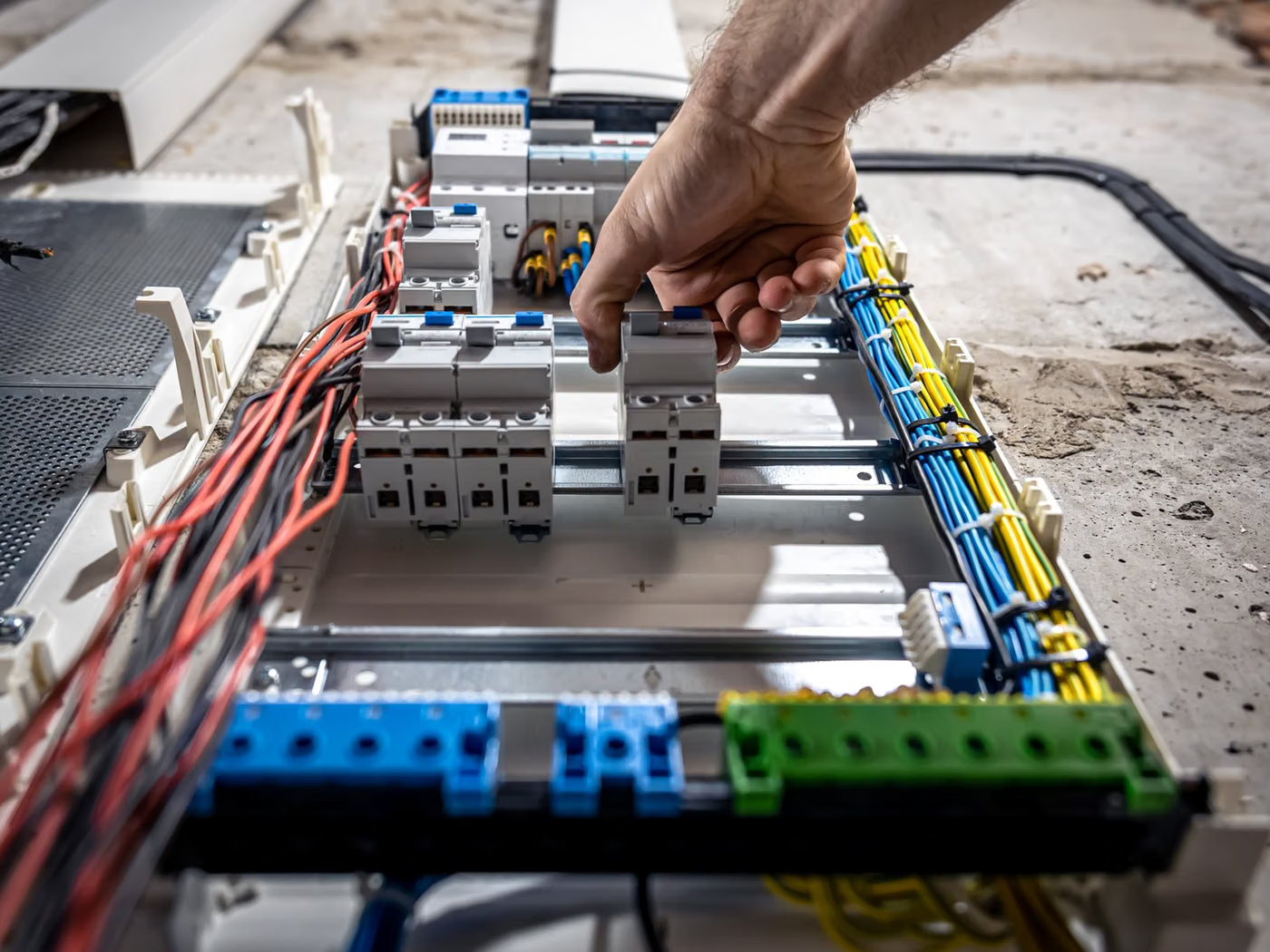
What Is Inspection?
Residual current device inspection verifies by measurement that the RCD trips at its defined residual current and within its defined time. The RCD is the last layer of protection against electric shock; when it does not work, the other protections are not sufficient for human safety.
Why Is It Done?
The aim is to prevent a person from being exposed to a lethal current on direct or indirect contact, and to show that the device has not lost its function over time.
Which Equipment Is Covered?
- Building and facility RCDs
- Socket-outlet circuits and wet-area supplies
- Construction site panels and portable distribution units
- Electric-vehicle charging circuits
- Portable residual current devices (PRCDs)
Legal Basis and Interval
For electrical installations and protective systems the inspection interval follows the applicable electrical installation legislation and the risk class of the environment. In high-risk installations — explosive atmospheres, damp locations, construction sites — the interval is markedly shorter. Every substantial alteration to the installation calls for a new inspection.
Scope of Inspection
- Rated residual current (IΔn) and type (AC, A, F, B) of the device
- Measurement of the tripping current
- Measurement of the tripping time
- Check for non-tripping at half the rated current (false tripping)
- Test-button function
- Measurement of the continuous residual current level in the circuit
- Verification of the circuit scope protected by the device
- Compatibility with the protective conductor and earthing
- Device selection appropriate to the circuit type
Related Standards
- ISO/IEC 17020
- IEC 61008-1
- IEC 61009-1
- IEC 60364-4-41
- IEC 61557-6
Method and Equipment
- RCD test instrument
- Multifunction installation tester
- Residual-current clamp meter
- Calibrated multimeter
Inspection Process
- 1Preliminary Information and PlanningThe single-line diagram, panel list, protective device data and installed capacity are collected; measurement points are defined.
- 2Visual InspectionPanel layout, conductor cross-sections, tightness of connections, labelling and protection against contact are checked visually.
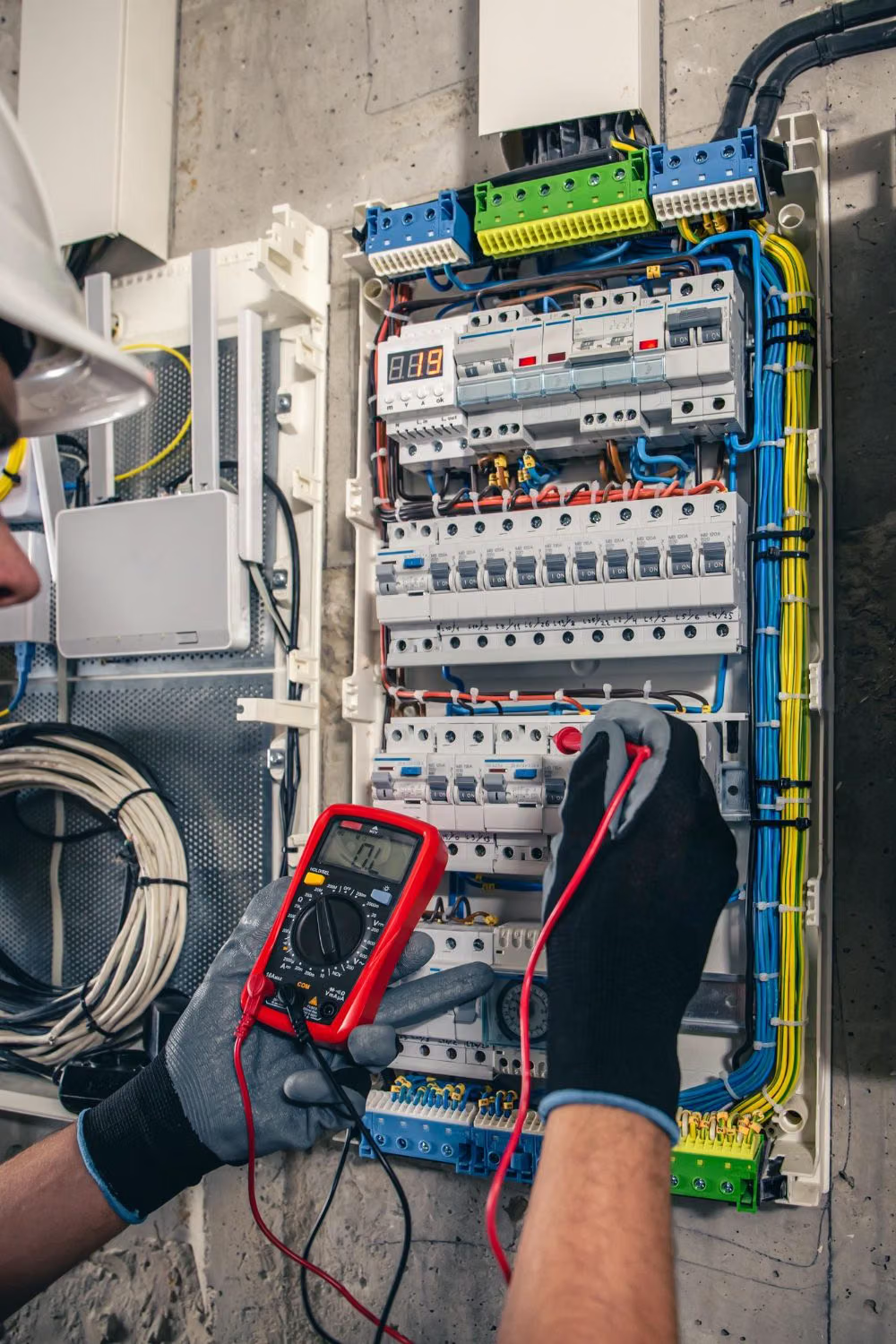
- 3MeasurementsUsing instruments with traceable calibration, earth resistance, insulation resistance, continuity, loop impedance and residual-current device trip values are measured.
- 4Thermographic SurveyAbnormal heating at connections under load is surveyed with an infrared camera and graded against the reference temperature difference.
- 5AssessmentMeasured values are compared with the limits set by the relevant standard and by the design values of the installation.
- 6ReportingMeasurement tables, thermal images and the list of nonconformities are compiled into a report; corrective actions are proposed in order of priority.
Nonconformities
If the device does not trip at its rated residual current, or if its tripping time exceeds the limit set by the standard, the protective function is absent and the device must be replaced. Tripping at half the rated current is a separate nonconformity, since it causes unnecessary outages.
Inspection Report
- Details of the inspection body and the inspection personnel
- Identification of the installation and scope of inspection
- Measuring instruments used and their calibration data
- Tables of measurement points and measured values
- Thermal images and assessment of temperature difference
- Comparison with limit values
- List of nonconformities and their priority order
- Conclusion and the next inspection date
Accreditation
Inspection activities are carried out under ISO/IEC 17020, which requires the impartiality of the inspection body, the competence of its personnel and the validity of the inspection methods. Under the impartiality rule, a party that maintains or repairs an item of equipment cannot carry out the independent inspection of that same equipment. EUROLAB holds internationally recognised accreditation under ISO/IEC 17020, granted by accreditation bodies that are signatories to the ILAC mutual recognition arrangement; because accredited scope is defined per inspection type, it is confirmed in writing at the quotation stage.
Scope and authorisationsRelated Inspections



Frequently Asked Questions
Is pressing the test button sufficient?
No, it is not sufficient. The test button only shows that the mechanism moves; it does not show whether the tripping current and time comply with the standard. These values can only be measured with a test instrument.
Why does the device type matter?
Type AC only detects sinusoidal AC residual current. Loads such as inverter drives, LED drivers or electric-vehicle charging generate residual current with a DC component, and a Type AC device does not detect these. If a type suited to the nature of the circuit has not been selected, protection is effectively absent.
Why does the report state the calibration of the measuring instruments?
The result of an electrical inspection is not an observation but a measured value. For the measurement to be valid, the instrument must have been calibrated traceably; a measured value without calibration data cannot be defended.
Is the installation de-energised during the inspection?
Some measurements are made de-energised (insulation resistance, continuity) and others energised (loop impedance, residual current device, thermography). The inspection is therefore planned with both a short outage window and a period of operation under load.