

About the Standard
Scope title: sterile barrier packaging of the finished product
ISO 11607 is a standard published by International Organization for Standardization (ISO). The international standards organisation; it publishes the widest body of management system, test method and product standards.
See the other 310 codes from ISOCoverage areas
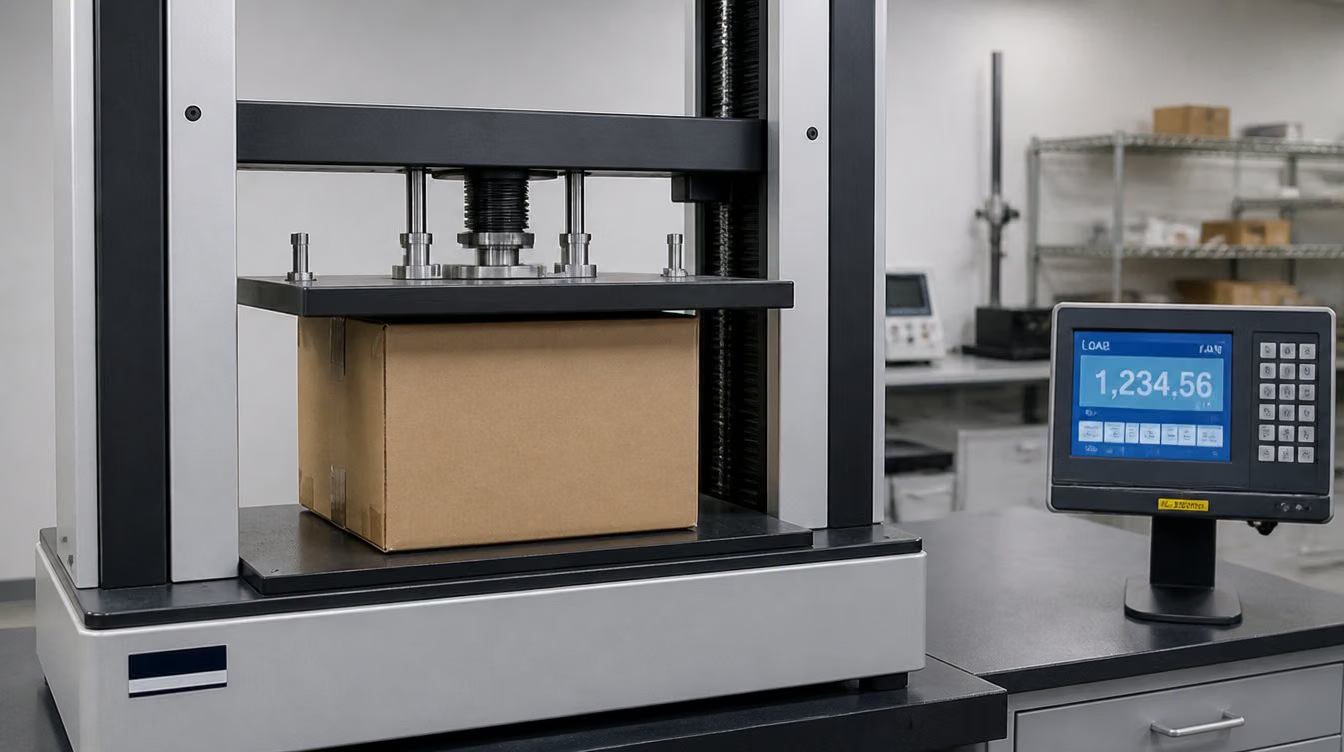
What Is ISO 11607?
ISO 11607 governs the packaging of terminally sterilised medical devices. Here packaging is not a transport container but a barrier MAINTAINING THE STERILITY of the device; the moment the barrier is breached the device is no longer sterile. Packaging is therefore a system requiring validation just as the device itself does.
The standard consists of two parts applied together. Part 1 defines the REQUIREMENTS for materials, sterile barrier systems and packaging systems: microbial impermeability of the barrier, integrity, opening behaviour, biocompatibility and compatibility with the device. Part 2 governs the validation of packaging PROCESSES: verification of the forming, filling, sealing and assembly processes.
SHELF LIFE sits at the centre of the assessment. Whether the packaging maintains sterility over time is demonstrated by real-time ageing; accelerated ageing (ASTM F1980) provides only preliminary evidence and does not replace real-time data. This directly affects the product development timetable: a three-year shelf life claim requires three years of real data.
The second central concept is ASEPTIC PRESENTATION. Packaging does not merely maintain sterility; it must be openable on the operating table without breaking sterility. A pouch tearing and shedding fibres, or the device touching a non-sterile surface while being opened, makes the system a failure even when the protection succeeded. Opening behaviour is therefore assessed as a requirement.
The test methods are defined in separate standards: ASTM F88 seal peel strength, ASTM F1929 leak detection by dye penetration, ASTM F2096 bubble test, ASTM D4169 distribution simulation and ASTM F1980 accelerated ageing. ISO 11607 binds these methods together within one system.
Why Does This Standard Exist?
The reason sterile packaging is critical is that sterility CANNOT BE INSPECTED VISUALLY. Whether a device is sterile cannot be established by looking; the packaging may appear intact while a microscopic channel allows microorganisms through. Assurance therefore comes not from inspecting the product but from validating the system.
The concept of PROCESS VALIDATION arises precisely here. It is not possible to show that a sealing line works correctly by testing every pouch, because testing destroys the pouch. The solution is to validate the process itself: it is shown in advance that as long as the temperature, pressure and time parameters stay within a defined range the seal will be sound, and those parameters are then monitored continuously.
The shelf life problem comes from the ageing of packaging materials. Films become brittle over time, adhesives lose their properties and seal strength falls. Temperature and humidity accelerate the process; storage conditions are therefore part of the shelf life claim.
Accelerated ageing is an approach based on the Arrhenius relationship: time spent at elevated temperature is counted as a longer period at room temperature. The approach is widely used in practice but it is a MODEL, and the material's degradation mechanism may not follow it. The regulatory expectation is therefore confirmation with real-time data.
Distribution simulation has gained weight in recent years. Even if packaging comes out intact in the laboratory, it can be damaged in the real shipping chain (drops, vibration, pressure change, temperature). Ageing and distribution simulation are therefore applied together: aged packaging must also withstand shipping loads.
Which Products Require It
- Sterile single-use device packaging
- Packaging for surgical sets and trays
- Pouch, blister and Tyvek-lidded packaging systems
- In-hospital sterilisation packaging
- Implant packaging and double barrier systems
Related Legislation and Schemes
- It is used to meet the requirements on maintaining sterility under MDR (EU) 2017/745
- On the sterilisation method side, ISO 11135 (ethylene oxide), ISO 11137 (radiation) and ISO 17665 (moist heat) apply
- It is tied to the quality system through process validation under ISO 13485
- On the symbols and labelling side, ISO 15223-1 is used
How the Assessment Runs
- 1Defining the packaging systemThe sterile barrier system and the protective packaging are defined; the materials, seal geometry and direction of opening are established.
- 2Material suitabilityThe microbial barrier, biocompatibility, compatibility with the sterilisation method and compatibility with the device are assessed.
- 3Process validationAn operating range is established for the sealing parameters (temperature, pressure, time) and installation, operational and performance qualification are carried out.
- 4Performance testsSeal strength, leak detection, opening behaviour and, where required, microbial barrier tests are applied.
- 5Ageing and distributionAccelerated and real-time ageing are carried out; aged samples are put through distribution simulation.
- 6Maintaining the validationProcess parameters are monitored; on a change of material or supplier the validation is reviewed.
Neighbouring Standards and the Differences
ASTM F1980
Accelerated ageing. It provides preliminary evidence; it does not replace real-time data.
ASTM F88
Seal peel strength. The numerical indicator of seal quality and the basis of process monitoring.
ASTM D4169
Distribution simulation. It shows the resistance of aged packaging to shipping loads.
ISO 11135 / 11137 / 17665
Sterilisation methods. The packaging must be compatible with the chosen method.
What the Report Must Contain
To be usable, a report must carry the information below. An incomplete report may not be accepted in the supply chain or in an inspection even when its result is correct.
- Description of the packaging system: materials, thicknesses, seal geometry
- Sealing process parameters and the validated operating range
- The tests applied and their methods (ASTM F88, F1929, F2096 and so on)
- The ageing approach: the accelerated model and the status of real-time data
- The distribution simulation specification and its results
- The declared shelf life and storage conditions
Commonly Confused Points
- Accelerated ageing does not replace real-time ageing; a shelf life claim is supported by real-time data.
- A packaging change (film supplier, seal parameter, box design) may require the validation to be repeated.
- Part 1 and Part 2 are applied together; a file containing only material testing is incomplete.
- If the sterilisation method changes, packaging compatibility is reassessed; radiation makes some films brittle.
- Aseptic presentation is a requirement; packaging that breaks sterility while being opened is unsuitable even when the protection succeeded.
- If distribution simulation is carried out on unaged samples it does not show the real risk; it must be applied after ageing.
Structure of the Code
- Published by
- ISO
- Serial number
- 11607
- Part
- without partition
Codes in the library without release year is kept. The current version changes over time; If the year is specified in your specification, that version is taken as basis, if not specified, the most current version is applied.
Scope
- Test
- Medical Device Testing
- Packaging Testing
- Medical Device Testing
Related Tests and Services
Of the 3 pieces of content this code is referenced in, the 1 with their own published page are listed below.
Test · 1
Technical Requirements
Standard texts are copyright of the relevant organization; test condition, sample and acceptance criteria cannot be fitted here.
Basis: The ISO 11607-1 and -2 part structure (requirements and process validation); the references of the test standards it cites (ASTM F88, F1929, F2096, F1980, D4169); the sterilisation standards and the relationship with the MDR.
Technical requirements specific to your product, once we clarify the scope At offer stage shared in writing.
Relevant Product Groups and Legislation
This code is included in the standard tag of the product pages below.
These product pages carry notes for the following markets: European Union, United Kingdom, USA. Whether the standard is mandatory in the relevant market varies depending on the product group and the applicable legislation.
Regulations published with this code on the same product pages:
- (EU) 2017/745MDRThe Medical Device Regulation. Classification (I, IIa, IIb, III), clinical evaluation, technical documentation and post-market surveillance obligations; the notified body's role grows as the class rises.
- (EU) 2017/746IVDRThe In Vitro Diagnostic Medical Devices Regulation. In vitro diagnostic devices fall under this regulation instead of the MDR.
- (AB) 2017/745 art. 33EUDAMEDThe European medical device database. From 28 May 2026, the actor registration, UDI/device, certificate and market surveillance modules are mandatory; placing on the market is not possible without a valid SRN.
- 2006/42/ATMachinery Directive (overlap)Relevant essential requirements also apply to medical devices that also qualify as machinery.
- 2011/65/EURoHSRestriction of hazardous substances in electrical and electronic equipment.
- (EC) 1907/2006REACHRegistration, evaluation, authorisation and restriction of chemicals; SVHC notification.
Related Standards
Frequently Asked Questions About ISO 11607
Do we have to wait three years for a three-year shelf life?
You can place the product on the market on the basis of accelerated ageing, but a real-time study runs in parallel and the claim is confirmed with real-time data.
We changed our film supplier — what should we do?
A change of material reopens the validation. The scope is determined by the new film's sealing window and barrier performance.
What should the seal strength be?
The standard gives no single value. The acceptance range is determined and justified according to your packaging system and aseptic presentation requirements.
Is in-hospital sterilisation packaging within scope?
Yes, the scope of the standard also covers reusable packaging systems; the healthcare facility's own validation is required.
Frequently Asked Questions
Is this standard mandatory for my product?
Whether it is mandatory depends on the product group, the target market and the applicable legislation. Once you tell us your product and market, we clarify in writing whether this standard is required.
How long does the test process take?
Duration depends on the scope of the standard, the number of specimens and current capacity. The exact duration is shared, together with the specimen and scope details, at the quote stage.
Do you issue certification against this standard?
Which activity is carried out under which accreditation scope is separately confirmed at the application stage. Up-to-date scope information is published on our corporate page.
What happens if the standard I need is not here?
The library is based on a continuously growing inventory. If you cannot find the code you are looking for, you can send it through the quote form; we will assess the relevant scope and get back to you.