
About the Standard
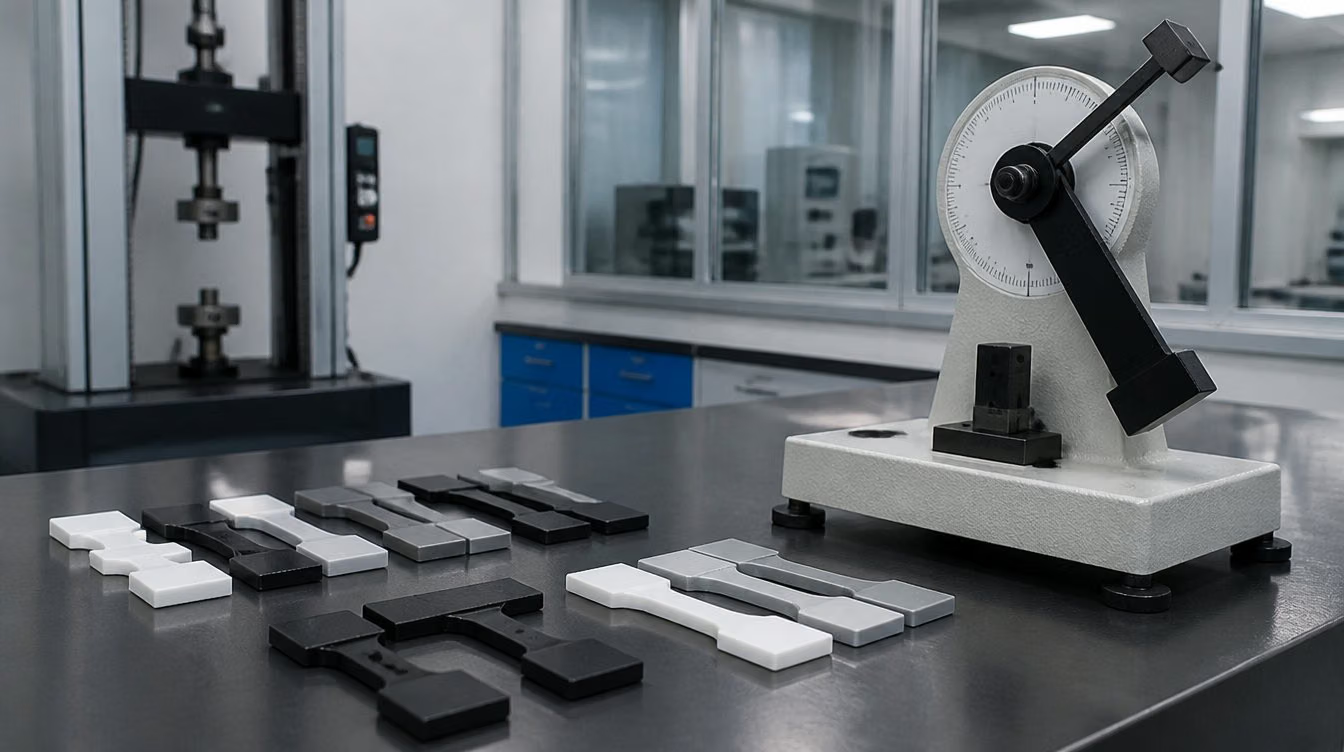
Scope title: limiting oxygen index of plastics (LOI)
ASTM D2863 is a standard published by ASTM International (ASTM). It publishes material, product and test method standards; it is the body most often turned to in corrosion, mechanical and materials testing.
See the other 199 codes from ASTMCoverage areas
Fire Testing — What Does This Testing Field Cover?
The section below describes the field that code ASTM D2863 belongs to; it is not the text of the standard or the regime itself. The scope title of the code is given above, and technical requirements are shared at the quotation stage.
Fire testing measures two different concepts, and confusing them is the most common mistake in the field. REACTION to fire describes how much a material contributes to the start and growth of a fire. RESISTANCE to fire is the ability of a building element to hold a fire back for a defined period. One is a material property, the other a property of an element.
On the reaction side, ignitability, flame spread, heat release, smoke production, flaming droplets and toxic gas release are measured. The result is translated into an EN 13501-1 class in Europe, ASTM E84 indices in North America and a UL 94 class for appliance plastics. These three systems cannot be converted into one another; their scales and set-ups differ.
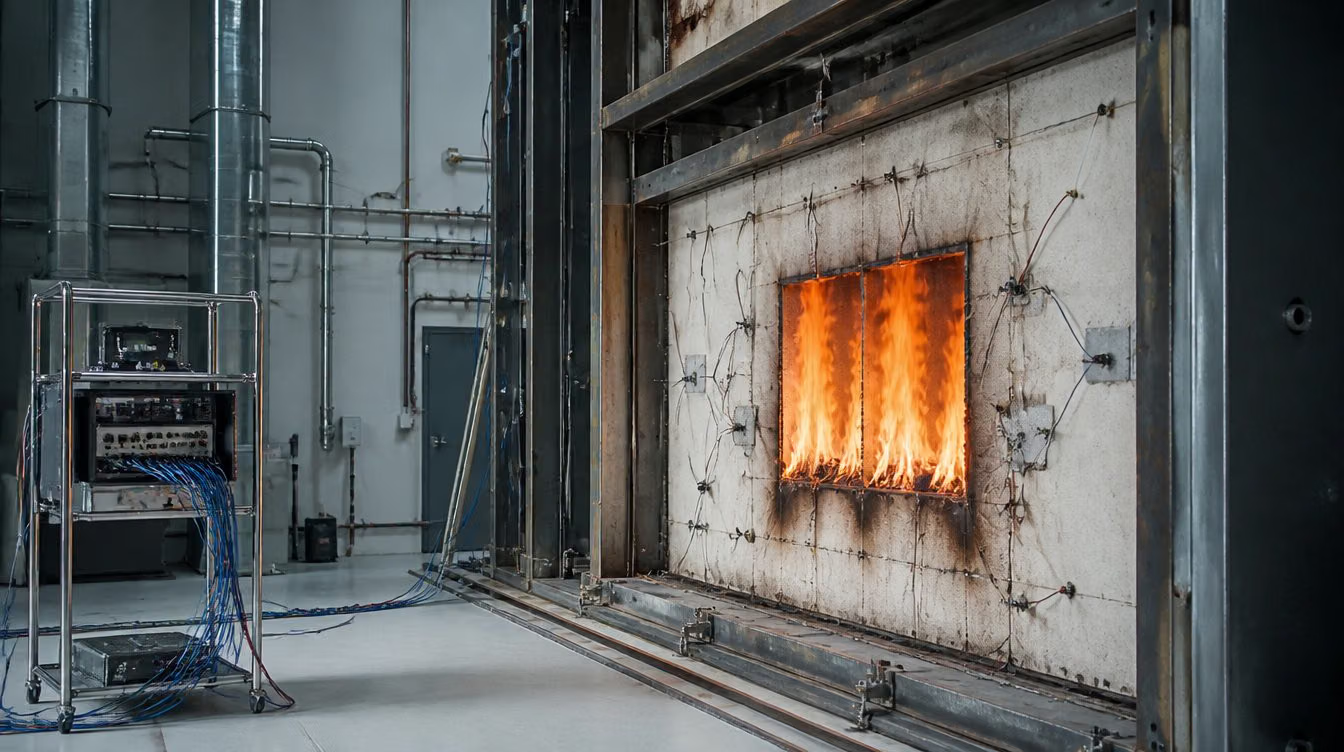
On the resistance side, furnace tests are carried out. The element is exposed to a defined temperature-time curve and it is measured how long it maintains three functions: load bearing (R), integrity (E) and insulation (I). For a fire door, the designation EI 60 says the element maintains its integrity and insulating function for sixty minutes.
SCALE is decisive in this family and directly affects cost. Small flame tests are suitable for screening materials and are fast and inexpensive. But real fire behaviour changes with scale: a material that self-extinguishes on a small specimen may sustain a flame over a large surface. Large-scale set-ups such as the room corner test and full-scale facade tests are therefore indispensable in critical applications.
Facade systems have become the most sensitive subject in the field in recent years. The rapid spread of facade fires in tall buildings has led national regulations to require large-scale facade testing. What is assessed here is not a single material but the SYSTEM: insulation, cladding, air cavity, fixings and fire barriers are tested together.
Smoke and toxicity form a separate body of work, because most deaths in a fire are caused by smoke rather than flame. In rail systems and on ships, smoke density and gas toxicity measurements are mandatory items; in an enclosed space the time available for evacuation depends on these values.
Cables have a sub-body of their own. A cable bundle inside a building can form a serious path for fire to spread between floors; flame spread, smoke production, halogen content and circuit integrity are therefore assessed for cables under separate standards, and in Europe the EN 13501-6 classification is used.
Method groups in this field
Non-combustibility and calorific value
The EN ISO 1182 non-combustibility furnace and EN ISO 1716 gross calorific value; the determinants of classes A1 and A2.
Single burning item (SBI)
EN 13823; heat release, flame spread and smoke production are measured together in a medium-scale corner set-up.
Small flame
Ignitability with a single flame source to EN ISO 11925-2; UL 94 horizontal and vertical burning; needle flame and glow wire.
Cone calorimeter
ISO 5660 / ASTM E1354; heat release rate, total heat release and smoke production are measured. The most informative test in material development.
Fire resistance
Furnace tests with the standard temperature-time curve; separate set-ups for doors, walls, floors, glazing and service penetrations.
Large scale
Room corner test (ISO 9705, NFPA 286), facade fire tests and vertical flame spread tests on cable bundles.
Smoke and toxicity
Optical smoke density, smoke gas analysis and toxicity indices; mandatory in rail systems and marine.
Commonly confused in this field
- Reaction to fire and resistance to fire are different concepts; the specification must be explicit about which is required.
- UL 94, ASTM E84 and EN 13501-1 results cannot be converted into one another.
- A small-scale result is not evidence of large-scale behaviour; large-scale testing is required in critical applications.
- A class is valid together with the end-use installation of the product; a different substrate or air cavity changes the result.
- For facade systems a result for a single material is not sufficient; the system must be tested as a whole.
- The fire class of a product does not show the fire resistance of an assembly made from it.
Which decisions these results support
- The fire class in the declaration of performance for construction products
- Regulatory compliance in the selection of cables, flooring and interior linings
- Approval of interior materials for rail vehicles, ships and aircraft
- Approval of the facade system design
- Meeting insurance and project specification requirements
Structure of the Code
- Published by
- ASTM
- Serial number
- D2863
- Part
- without partition
Codes in the library without release year is kept. The current version changes over time; If the year is specified in your specification, that version is taken as basis, if not specified, the most current version is applied.
Scope
Related Tests and Services
A separate test page based on this code has not yet been released. The code falls within the scope of the following test families.
Technical Requirements
Standard texts are copyright of the relevant organization; test condition, sample and acceptance criteria cannot be fitted here.
Technical requirements specific to your product, once we clarify the scope At offer stage shared in writing.
Related Standards
Frequently Asked Questions
Is this standard mandatory for my product?
Whether it is mandatory depends on the product group, the target market and the applicable legislation. Once you tell us your product and market, we clarify in writing whether this standard is required.
How long does the test process take?
Duration depends on the scope of the standard, the number of specimens and current capacity. The exact duration is shared, together with the specimen and scope details, at the quote stage.
Do you issue certification against this standard?
Which activity is carried out under which accreditation scope is separately confirmed at the application stage. Up-to-date scope information is published on our corporate page.
What happens if the standard I need is not here?
The library is based on a continuously growing inventory. If you cannot find the code you are looking for, you can send it through the quote form; we will assess the relevant scope and get back to you.