
About the Standard
Scope title: elastomer compatibility in vehicle systems
SAE J2643 is a standard published by SAE International (SAE). It publishes engineering standards for automotive, aerospace and heavy machinery; the AS series for aerospace quality management also belongs to this organisation.
See the other 48 codes from SAECoverage areas
Rubber Testing — What Does This Testing Field Cover?
The section below describes the field that code SAE J2643 belongs to; it is not the text of the standard or the regime itself. The scope title of the code is given above, and technical requirements are shared at the quotation stage.
Rubber testing determines the mechanical behaviour of an elastomer and its resistance to environmental effects. Elastomers are assessed with a different logic from metals and plastics: the real question is not strength but ELASTIC RECOVERY and ageing behaviour.
The function of an elastomer is usually to deform and return: a gasket is compressed and provides a seal, a mount absorbs vibration, a hose expands under pressure. What is measured in the field is therefore not "how many newtons does it withstand" but "how far does it recover after deformation, and how long does it keep doing so".
COMPRESSION SET is therefore the most decisive measurement in the field. If a gasket cannot recover after being held compressed for a long period, it has lost its sealing function even though it has not torn at all. This measurement is made together with temperature, because permanent set increases rapidly with temperature.
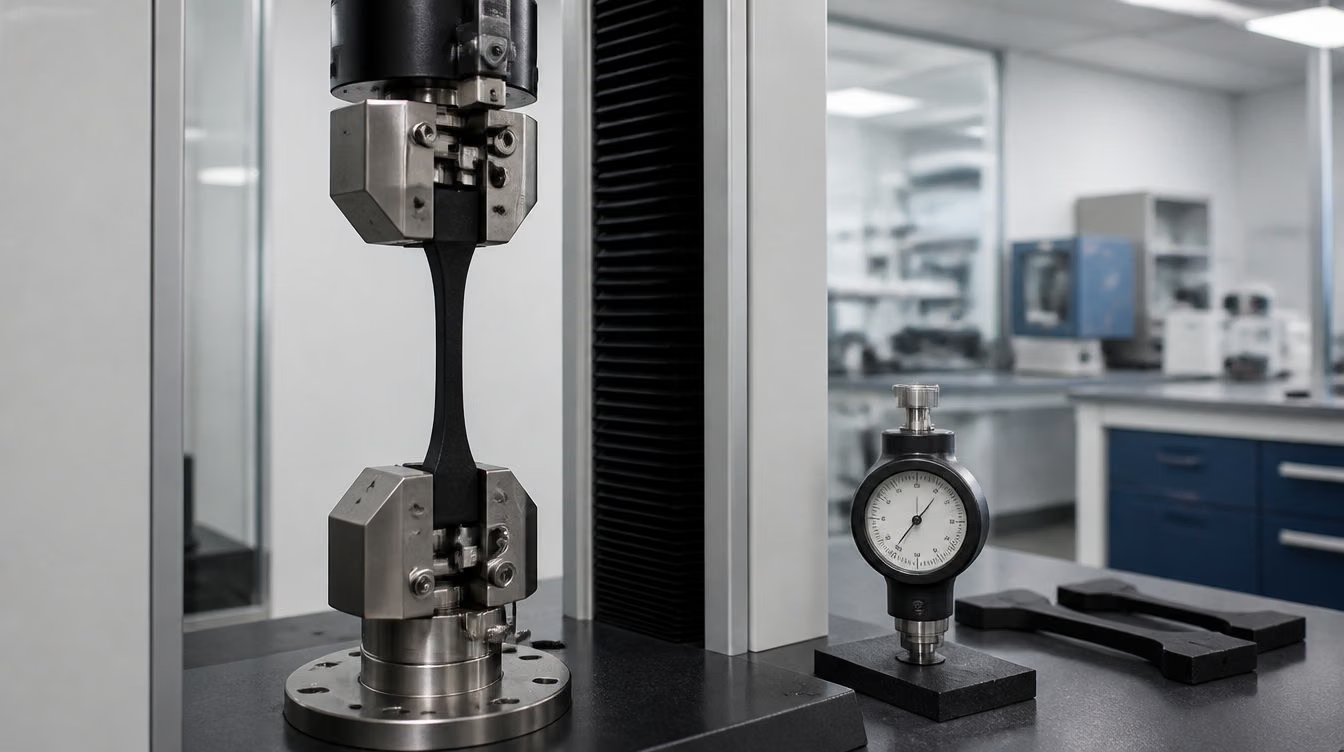
Hardness is the most common measurement in the field, using the Shore A and IRHD scales. It is fast and practical but does not define the material on its own: two different compounds of the same hardness can show completely different ageing and fluid resistance. Hardness is valuable in monitoring compound consistency.
On the environmental resistance side, hot air ageing, swelling in fluids, ozone cracking and low temperature behaviour are examined. FLUID RESISTANCE is particularly critical: the same elastomer behaves differently in fuel, oil, coolant and brake fluid — swelling in one, shrinking in another, hardening in a third. The material is therefore tested with the actual fluid it will contact and at the actual temperature.
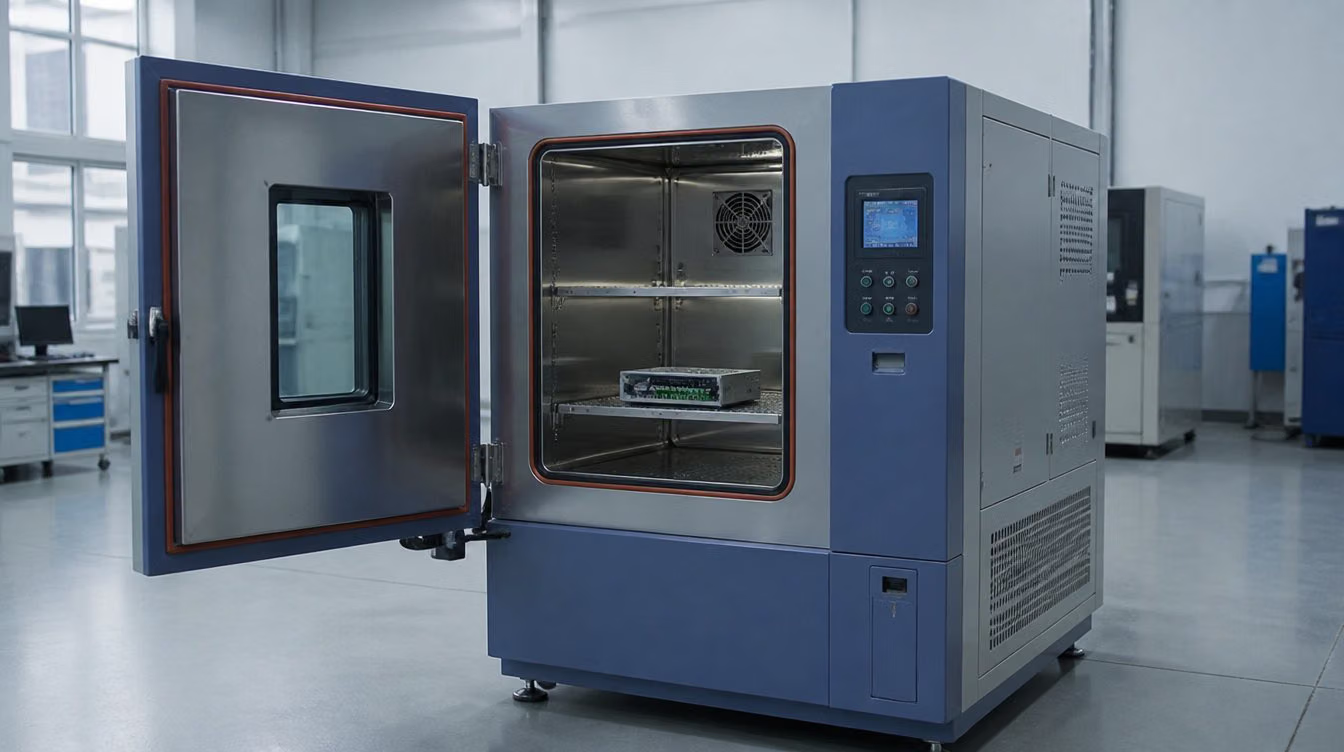
Ozone cracking is a silent cause of failure in parts used outdoors. Low concentrations of ozone in the atmosphere create surface cracks in unsaturated elastomers under strain; the part cracks while appearing to carry no load at all. An ozone chamber accelerates and reveals this behaviour.
Low temperature behaviour is the second silent risk. As an elastomer approaches its glass transition temperature it loses elasticity and behaves like a rigid plastic; a gasket starts to leak in the cold. Low temperature recovery and brittleness tests establish this limit.
A change of compound is not a silent change in this family. When filler content, plasticiser or the vulcanisation system changes, mechanical properties and fluid resistance shift together; verification is repeated.
Method groups in this field
Mechanical
Tensile stress-strain properties, tear strength, abrasion (rotating drum and Pico), fatigue and tear propagation.
Hardness
Shore A and IRHD indentation hardness; a rapid indicator of compound consistency.
Permanent deformation
Compression set and stress relaxation; decisive for sealing components.
Fluid resistance
Swelling in fuel, oil, coolant and chemicals, change in mass and volume, loss of hardness and strength.
Ageing
Hot air ageing, ozone cracking, the effects of UV and humidity.
Low temperature
Low temperature recovery, brittleness temperature and flexibility measurements.
Commonly confused in this field
- Hardness does not define the material; two compounds of the same hardness can show different ageing and fluid resistance.
- Fluid resistance must be tested with the actual fluid and the actual temperature; a general claim of oil resistance is insufficient.
- Without measuring compression set, no decision can be made about sealing life.
- Ozone cracking occurs under strain; a test with an unstrained specimen does not show the real risk.
- A change of compound requires verification to be repeated; a supplier may change its compound silently.
- A gasket whose low temperature behaviour is not stated produces unexpected leaks in cold climates.
Which decisions these results support
- Material selection for gaskets and sealing components
- Automotive and industrial component approval
- Verification of a compound change
- Root cause analysis of field leaks and cracking
- Declaration of the operating temperature range and fluid compatibility
Structure of the Code
- Published by
- SAE
- Serial number
- J2643
- Part
- without partition
Codes in the library without release year is kept. The current version changes over time; If the year is specified in your specification, that version is taken as basis, if not specified, the most current version is applied.
Scope
Related Tests and Services
A separate test page based on this code has not yet been released. The code falls within the scope of the following test families.
Technical Requirements
Standard texts are copyright of the relevant organization; test condition, sample and acceptance criteria cannot be fitted here.
Technical requirements specific to your product, once we clarify the scope At offer stage shared in writing.
Related Standards
Frequently Asked Questions
Is this standard mandatory for my product?
Whether it is mandatory depends on the product group, the target market and the applicable legislation. Once you tell us your product and market, we clarify in writing whether this standard is required.
How long does the test process take?
Duration depends on the scope of the standard, the number of specimens and current capacity. The exact duration is shared, together with the specimen and scope details, at the quote stage.
Do you issue certification against this standard?
Which activity is carried out under which accreditation scope is separately confirmed at the application stage. Up-to-date scope information is published on our corporate page.
What happens if the standard I need is not here?
The library is based on a continuously growing inventory. If you cannot find the code you are looking for, you can send it through the quote form; we will assess the relevant scope and get back to you.