
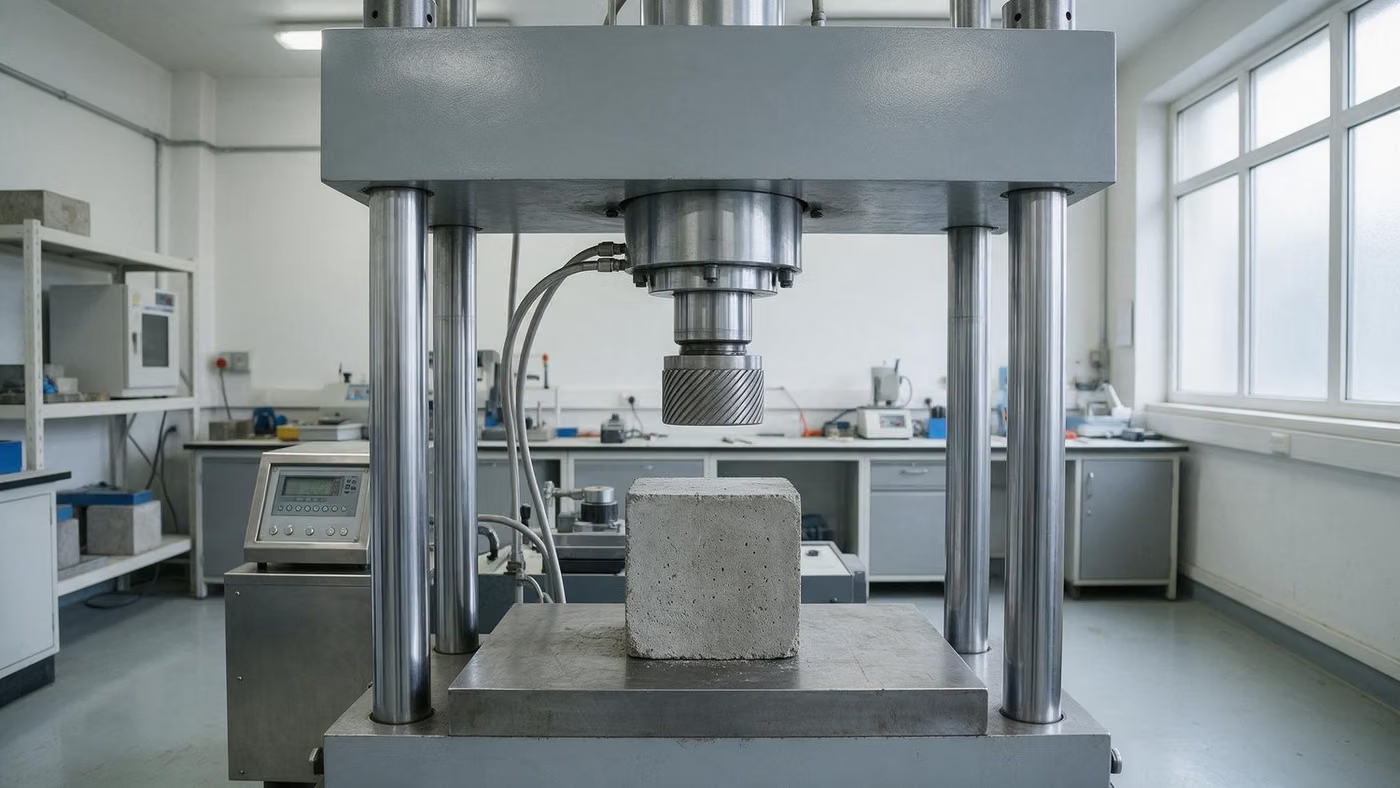
About the Standard
Scope title: water vapour transmission of materials
ASTM E96 is a standard published by ASTM International (ASTM). It publishes material, product and test method standards; it is the body most often turned to in corrosion, mechanical and materials testing.
See the other 199 codes from ASTMCoverage areas

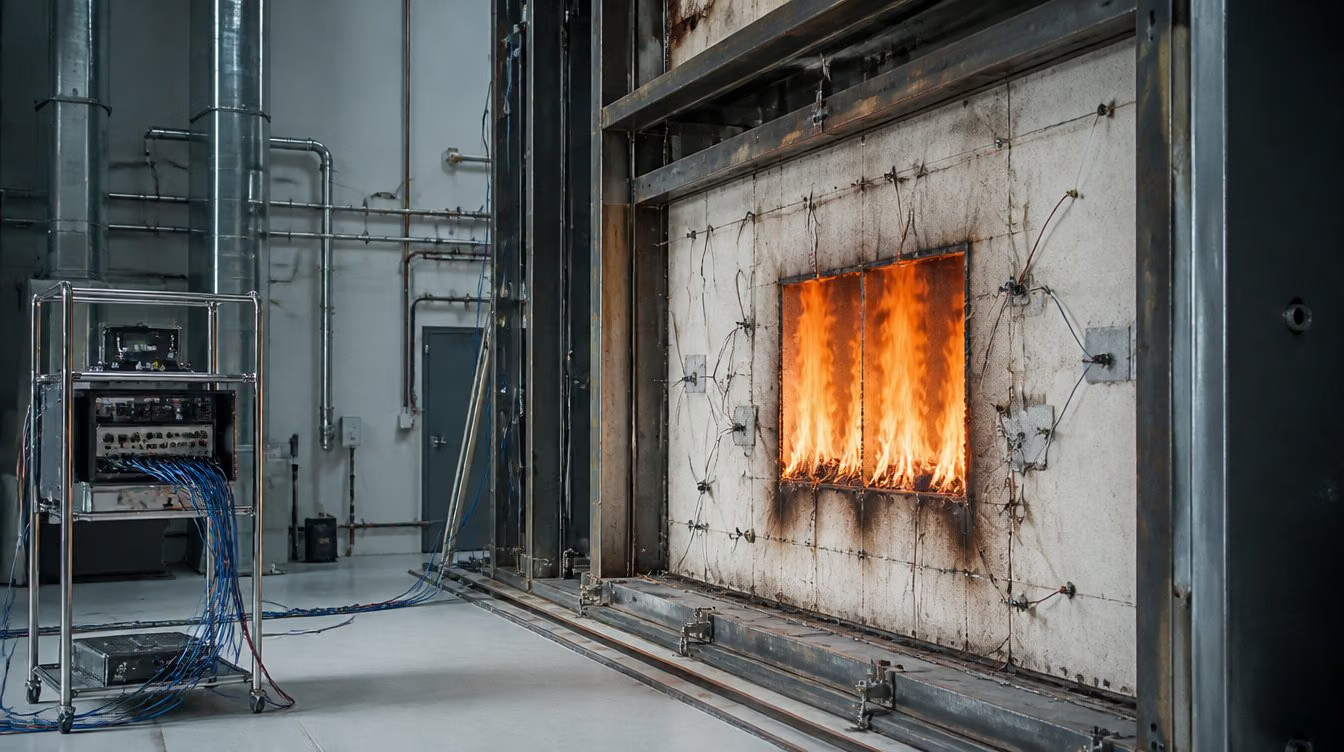
Construction Materials Testing — What Does This Testing Field Cover?
The section below describes the field that code ASTM E96 belongs to; it is not the text of the standard or the regime itself. The scope title of the code is given above, and technical requirements are shared at the quotation stage.
Construction materials testing shows whether a product performs the function it takes on within the structure. A wide field is gathered in this family, from the compressive strength of concrete to the thermal transmittance of glass, from sieve analysis of aggregate to the watertightness of windows.
What sets this family apart from the others is that the result turns directly into a REGULATORY DECLARATION. For products covered by construction products legislation a declaration of performance (DoP) is mandatory, and every essential characteristic in the declaration rests on a test result. Reaction-to-fire class, thermal conductivity, compressive strength, water permeability and release of dangerous substances are declared in this way. The declaration is a legal text carrying the manufacturer's signature; the test record behind it is the first document requested in an inspection.
The second distinguishing feature is that the product is assessed over its SERVICE LIFE. An electronic device runs for five years; a building component stays in place for fifty and is exposed throughout that time to freeze-thaw cycles, UV, moisture, chemical attack and load. Durability tests (freeze-thaw, carbonation, alkali-silica reaction, ageing) therefore carry as much weight in this field as classical strength tests.
Tests are separated by material type and each group has its own set of standards: cement and concrete, aggregate, masonry units, wood-based panels, thermal insulation, glass and glazing units, ceramic tiles, floor coverings, screeds, joint fillers and coating systems. Where the product will be installed determines which set applies — the same panel is assessed against different standards on a wall and on a floor.
Factory production control (FPC) is a continuous component of the field. CE marking on a construction product is not obtained with a single test and then left; the manufacturer must set up a system showing that it monitors production consistency, takes samples regularly and intervenes when there is a deviation. Depending on the product group, this system may have to be audited by a notified body.
Site testing is a separate body of work. In the laboratory the product is approved; on site it is checked that the product really is of the declared class and that it has been applied correctly. Fresh concrete slump, cylinder sampling, aggregate sieve analysis and in-situ watertightness tests fall within this scope.
Method groups in this field
Concrete and cement
Slump, air content and unit weight in fresh concrete; compressive and flexural strength, water permeability and freeze-thaw resistance in hardened concrete. For cement, compressive strength, setting time and composition analysis.
Aggregate
Sieve analysis, particle shape, Los Angeles abrasion resistance, freeze-thaw, alkali reactivity and density/water absorption.
Thermal and energy performance
Thermal conductivity and thermal resistance, calculation of thermal transmittance (U value) in glazing units, solar energy transmittance.
Facade and joinery
Air permeability, watertightness and wind load resistance in windows and doors; fire performance in facade systems.
Fire performance
Reaction-to-fire classification and fire resistance tests; these are two separate concepts and are addressed by separate standards.
Masonry, tile and flooring
Compressive strength, water absorption, abrasion resistance, slip resistance, stain and chemical resistance.
Emissions and dangerous substances
Formaldehyde release from wood-based panels, VOC emissions from construction products, leaching behaviour of aggregates and waste.
Commonly confused in this field
- REACTION to fire and RESISTANCE to fire are different concepts: one describes the material's contribution to a fire, the other how long a component holds the fire back.
- A declaration of performance is not a certificate; it is the manufacturer's declaration. Notified body involvement varies with the product group and the assessment system.
- A test result is valid for the mounting arrangement in which the product was tested. A different substrate, a different thickness or a different joint detail may require reassessment.
- A site sample and a laboratory sample are not the same thing. A concrete cylinder taken on site also reflects application and curing conditions; it does not replace product approval.
- ASTM and EN construction standards measure similar quantities with different specimens and scales; the results cannot be converted one-to-one.
Which decisions these results support
- Declaration of performance (DoP) and CE marking
- Establishing and maintaining the factory production control system
- On-site conformity control of concrete, aggregate and workmanship
- Meeting fire and energy performance requirements
- Verifying the technical items in the project and tender specification
Structure of the Code
- Published by
- ASTM
- Serial number
- E96
- Part
- without partition
Codes in the library without release year is kept. The current version changes over time; If the year is specified in your specification, that version is taken as basis, if not specified, the most current version is applied.
Scope
Related Tests and Services
A separate test page based on this code has not yet been released. The code falls within the scope of the following test families.
Technical Requirements
Standard texts are copyright of the relevant organization; test condition, sample and acceptance criteria cannot be fitted here.
Technical requirements specific to your product, once we clarify the scope At offer stage shared in writing.
Related Standards
Frequently Asked Questions
Is this standard mandatory for my product?
Whether it is mandatory depends on the product group, the target market and the applicable legislation. Once you tell us your product and market, we clarify in writing whether this standard is required.
How long does the test process take?
Duration depends on the scope of the standard, the number of specimens and current capacity. The exact duration is shared, together with the specimen and scope details, at the quote stage.
Do you issue certification against this standard?
Which activity is carried out under which accreditation scope is separately confirmed at the application stage. Up-to-date scope information is published on our corporate page.
What happens if the standard I need is not here?
The library is based on a continuously growing inventory. If you cannot find the code you are looking for, you can send it through the quote form; we will assess the relevant scope and get back to you.