
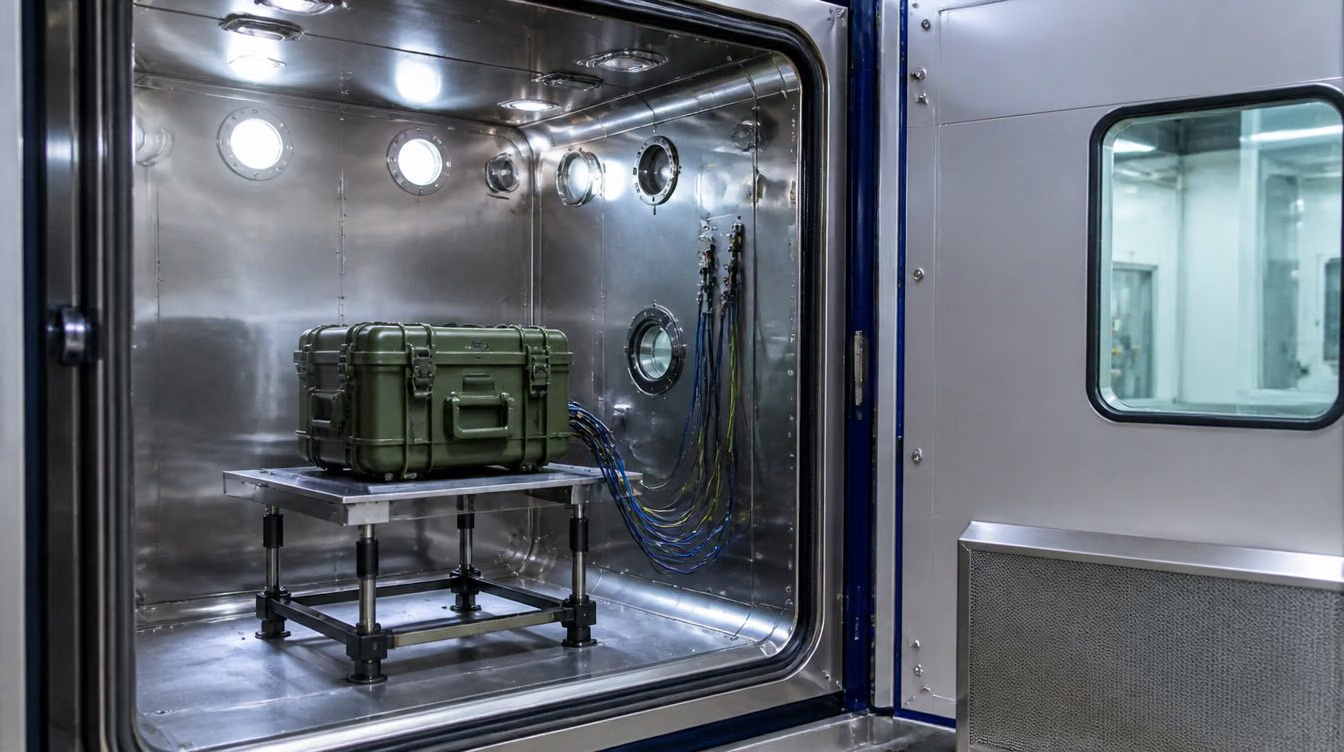
About the Standard
Scope title: electromagnetic interference in military systems
MIL-STD-461 is a standard published by US Department of Defense Military Standards (MIL-STD). It publishes environmental, EMC and qualification standards for military equipment; MIL-STD-810 and MIL-STD-461 are the most widely used.
See the other 11 codes from MIL-STDCoverage areas
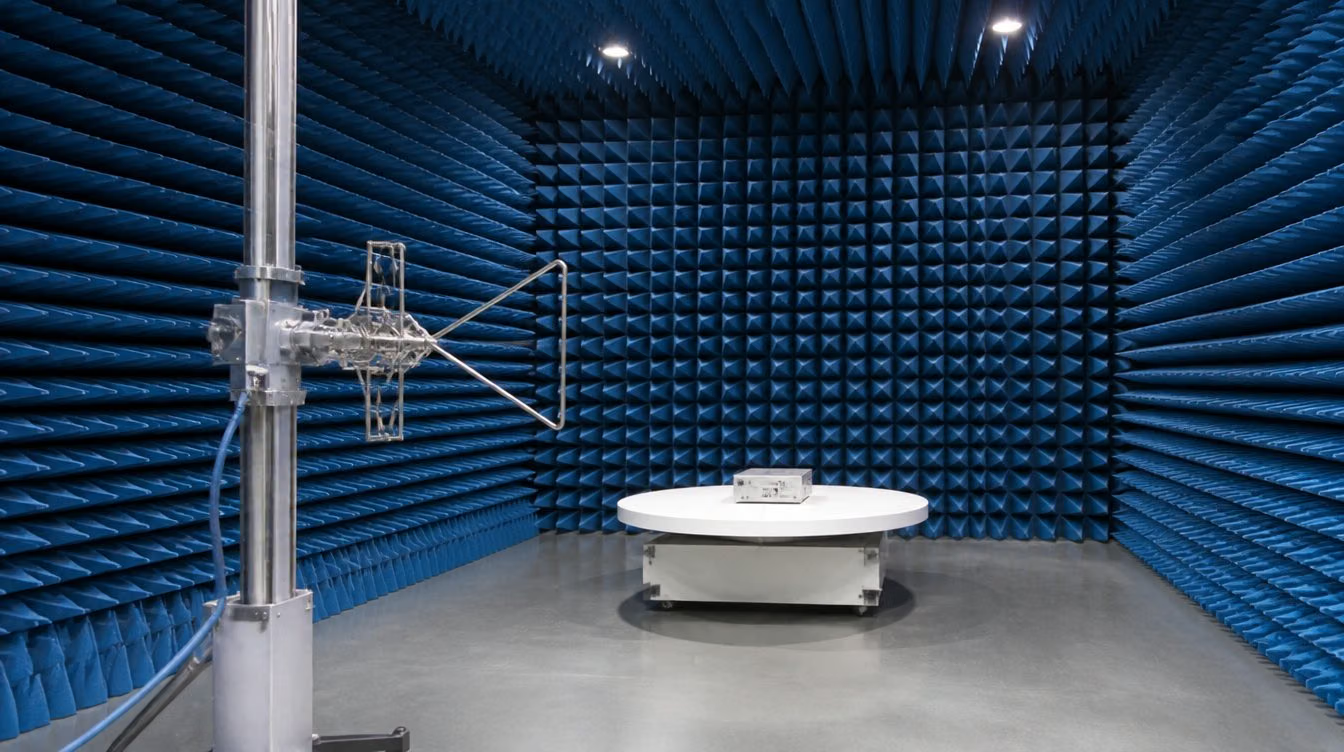
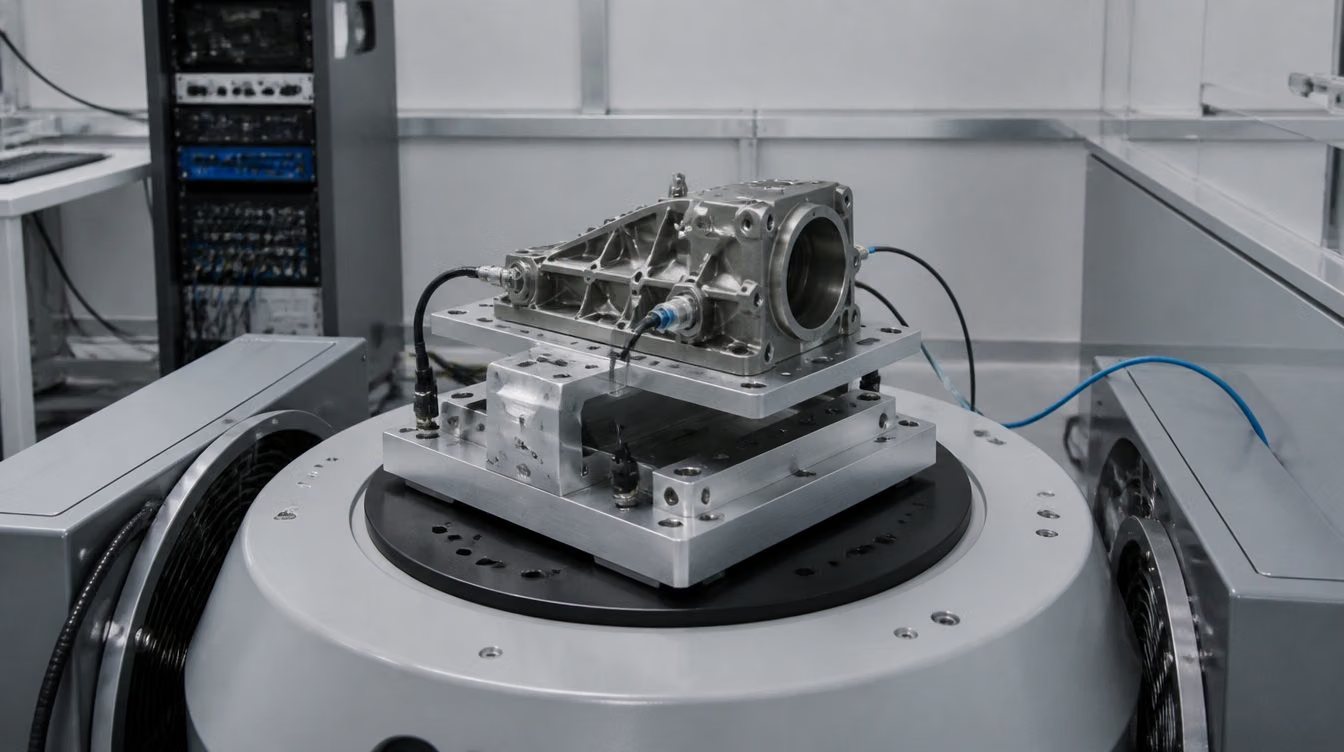
What Is MIL-STD-461?
MIL-STD-461 is the standard controlling the electromagnetic interference characteristics of military subsystems and equipment. It measures the same physics as civil EMC standards but works from a different assumption: the equipment will operate inside a platform (ship, aircraft, tank, submarine) crowded with its own transmitters and receivers, and interference within the platform puts the mission directly at risk.
That assumption tightens the limits markedly. The interference radiated by a civil device is metres away from surrounding receivers and distance provides protection. On a military platform, by contrast, a sensitive radar receiver and a power unit generating interference sit inside the same hull, sometimes in the same cable run. Equipment that passes civil limits can easily fail here.
The requirements are coded with the prefixes CE, CS, RE and RS, and this coding establishes the language of the field. CE is conducted emission, CS conducted susceptibility, RE radiated emission and RS radiated susceptibility. The number after each prefix indicates the quantity measured and the method; which requirements apply is chosen according to the PLATFORM TYPE.
The measurement methods are defined not in a separate document but in the same standard; MIL-STD-462, which previously carried the methods, has given way to this standard. In current projects the single reference is therefore MIL-STD-461, and specifications calling for MIL-STD-462 must be updated.
Requirements at platform level are defined by MIL-STD-464. 461 works at equipment/subsystem level; 464 addresses the electromagnetic compatibility of the whole platform along with lightning, electrostatic discharge and electromagnetic pulse resistance. The two complement one another.
Why Does This Standard Exist?
The origins of the standard rest on concrete mission losses experienced on military platforms. A ship's radio being disturbed by its own generator, an aircraft radar receiver picking up noise from its own avionics, a missile guidance system being affected by a nearby transmitter — these are not theoretical but experienced problems.
The source of the problem is density. A military platform carries many times more electronic systems than a civil vehicle, and some of them are by definition extremely sensitive: radar receivers, electronic warfare systems and communication receivers are designed to detect signals at microvolt level. The same platform also carries power systems switching hundreds of amperes.
MIL-STD-461 establishes a compromise between these two extremes: how much those generating emissions may radiate and what the sensitive ones must withstand are defined. Each item of equipment thus takes its share and the platform as a whole works.
That the choice of requirements depends on the platform is the most practical aspect of the standard. On a submarine, magnetic field emission is critical (the risk of magnetic detection); on an aircraft, cable shielding is limited by weight constraints and conducted emission comes to the fore. The annexes of the standard guide this selection by platform type.
The integration of commercial off-the-shelf (COTS) equipment into military platforms is a growing problem in the field. Cost pressure encourages the use of commercial products, but civil EMC conformity does not meet military limits; a gap analysis and usually additional shielding, filtering or redesign are required.
Classification Scheme
CE — conducted emission
The interference the equipment couples onto its supply and signal lines. CE101 covers the low frequency and CE102 the high frequency band.
CS — conducted susceptibility
Resistance to interference injected into the equipment over its lines; there are pulse and continuous signal variants.
RE — radiated emission
The field radiated from the equipment into the air. RE101 covers magnetic field and RE102 electric field emission.
RS — radiated susceptibility
The equipment's resistance to field strength arriving from outside; military levels are markedly higher than civil limits.
Which Products Require It
- Military vehicle, aircraft, ship and submarine electronics
- Weapon systems and fire control equipment
- Military communication, radar and electronic warfare systems
- Commercially derived equipment (COTS) to be integrated into a military platform
- Unmanned systems and ground control stations
- Military power generation and distribution units
Related Legislation and Schemes
- It is the source of EMC requirements in defence procurement specifications
- At platform level, MIL-STD-464 defines the system requirements
- The civil counterparts are the CISPR and IEC 61000 series; the limits and methods differ
- In aviation, the EMC sections of DO-160 provide a separate framework
- In NATO programmes, STANAG specifications may add further requirements
How the Assessment Runs
- 1Selecting the platform and requirementsWhich platform the equipment will be integrated into and which CE/CS/RE/RS requirements apply are taken from the programme specification.
- 2The test planThe requirements to be applied, levels, frequency ranges, equipment operating modes and functional acceptance criteria are defined.
- 3Setting up the test arrangementThe ground plane, cable layout, supply and load arrangement are set up as defined in the standard; the arrangement determines the result.
- 4MeasurementsEmission measurements and susceptibility tests are applied in sequence; the equipment is monitored in an operating state.
- 5ReportingThe requirements applied, levels, margins and any deviations are reported.
Neighbouring Standards and the Differences
MIL-STD-464
Electromagnetic environment requirements at platform level; 461 works at equipment level, 464 at platform level.
MIL-STD-462
WITHDRAWN. The measurement methods have been consolidated into MIL-STD-461.
RTCA DO-160
The EMC sections for civil aviation; different levels and a different category logic.
The CISPR / IEC 61000 series
The civil counterparts. The limits, measurement distances and set-ups differ and the reports do not substitute for one another.
What the Report Must Contain
To be usable, a report must carry the information below. An incomplete report may not be accepted in the supply chain or in an inspection even when its result is correct.
- The requirements applied: CE/CS/RE/RS codes and numbers
- The platform type selected and the level tables
- The test arrangement: earthing, cable layout, supply and load arrangement
- Equipment operating modes and the parameters monitored
- Measurement results, comparisons against the limits and the margins
- The revision of the standard applied and any approved deviations
Commonly Confused Points
- A civil EMC report does not take the place of MIL-STD-461. The limit levels, measurement distances and test arrangements differ.
- The set of requirements to be applied varies with the platform; not all of them need be applied, and applying a requirement that is not needed inflates cost unnecessarily.
- Specifications calling for MIL-STD-462 are referring to the old text; the measurement methods have been consolidated into MIL-STD-461.
- The test arrangement is an inseparable part of the report; if the cable layout and earthing arrangement change, the result changes.
- If the equipment is not operated during the test, susceptibility testing is meaningless; the functional acceptance criterion must be defined.
- In integrating a commercial product into a military platform, additional shielding and filtering are usually unavoidable; the gap analysis should be done early.
Structure of the Code
- Published by
- MIL-STD
- Serial number
- 461
- Part
- without partition
Codes in the library without release year is kept. The current version changes over time; If the year is specified in your specification, that version is taken as basis, if not specified, the most current version is applied.
Scope
- Test
- Defence Testing
- Defence Testing
- EMC Tests
Related Tests and Services
Of the 3 pieces of content this code is referenced in, the 1 with their own published page are listed below.
Technical Requirements
Standard texts are copyright of the relevant organization; test condition, sample and acceptance criteria cannot be fitted here.
Basis: The MIL-STD-461 requirement coding scheme (CE/CS/RE/RS) and the consolidation of MIL-STD-462 into this standard; platform-based requirement selection and its relationship with MIL-STD-464. Levels and limits are defined in the revision in force.
Technical requirements specific to your product, once we clarify the scope At offer stage shared in writing.
Related Standards
Frequently Asked Questions About MIL-STD-461
Which requirements apply to us?
The platform type and the equipment's location on the platform determine this. The programme specification gives the set of requirements; the annexes of the standard provide platform-based selection tables.
We have a CE declaration of conformity — is it sufficient for a military programme?
It is not. The military limits and set-ups differ; a gap analysis determines which requirements must be remeasured.
Can we obtain a deviation?
The programme authority may approve a deviation for particular requirements; this requires a justified request and formal approval and is stated in the report.
Is MIL-STD-464 required as well?
464 is at platform level and is generally the responsibility of the platform integrator; the equipment manufacturer meets the 461 requirements.
Frequently Asked Questions
Is this standard mandatory for my product?
Whether it is mandatory depends on the product group, the target market and the applicable legislation. Once you tell us your product and market, we clarify in writing whether this standard is required.
How long does the test process take?
Duration depends on the scope of the standard, the number of specimens and current capacity. The exact duration is shared, together with the specimen and scope details, at the quote stage.
Do you issue certification against this standard?
Which activity is carried out under which accreditation scope is separately confirmed at the application stage. Up-to-date scope information is published on our corporate page.
What happens if the standard I need is not here?
The library is based on a continuously growing inventory. If you cannot find the code you are looking for, you can send it through the quote form; we will assess the relevant scope and get back to you.