
About the Standard
Scope title: vibration and shock for railway rolling stock equipment
IEC 61373 is a standard published by International Electrotechnical Commission (IEC). It publishes international standards for electrical, electronic and related technologies; it is the foundation of the EMC and electrical safety body of work. CISPR publications belong to a special committee within the IEC.
See the other 102 codes from IECCoverage areas
Demiryolu Testleri — What Does This Testing Field Cover?
The section below describes the field that code IEC 61373 belongs to; it is not the text of the standard or the regime itself. The scope title of the code is given above, and technical requirements are shared at the quotation stage.
Railway testing shows that vehicles and components operate safely and reliably in the rail environment. The character of this family comes from the ASSUMPTION OF LONG LIFE: a rail vehicle is designed for a service life exceeding thirty years and its components remain under vibration, temperature cycling and intensive use throughout that period.
Long life also shapes the component supply chain. Spare parts must remain available for thirty years, electronic components going out of production must be replaced, and every substitution must be re-verified. This takes railways out of a "certify once and carry on" logic.
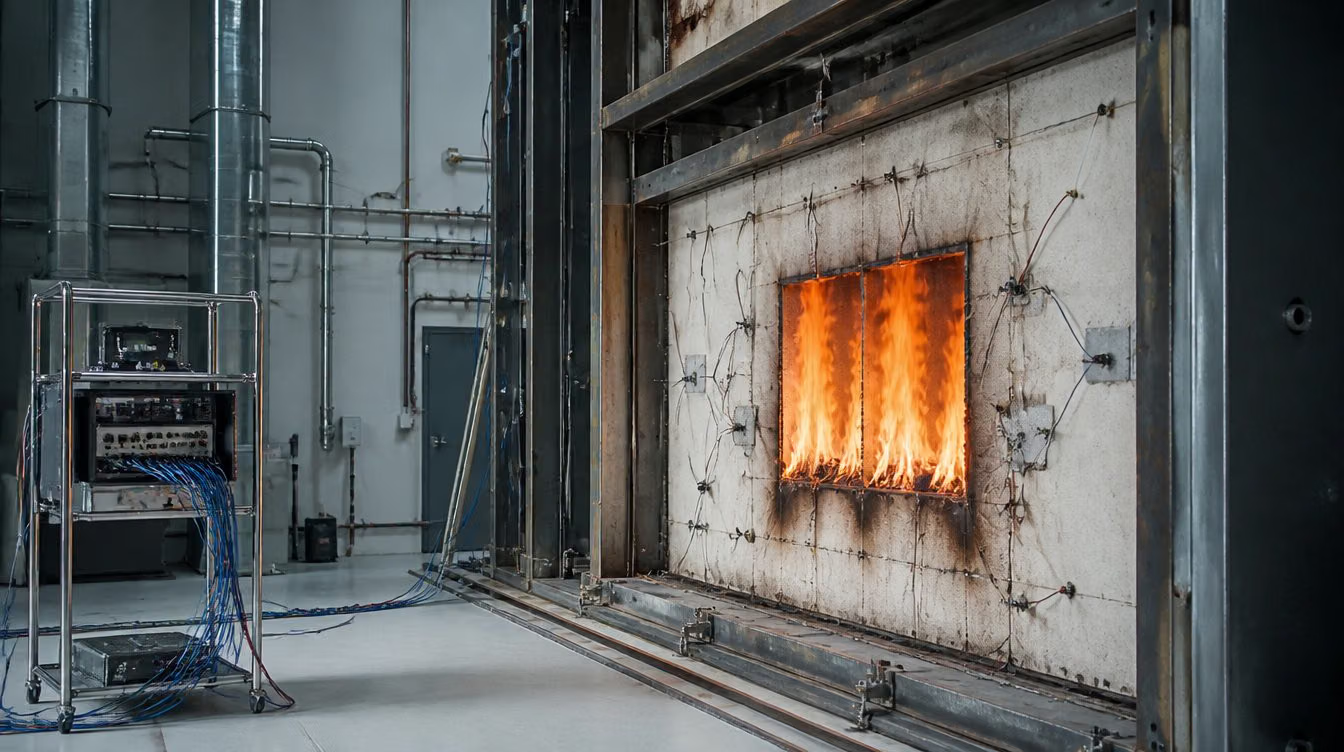
Fire safety is the most tightly regulated part of the field and runs through the EN 45545 series. The logic of the series rests on the LOCATION OF USE and the OPERATION CATEGORY: a metro running in tunnels and an intercity train do not carry the same risk, and seat fabric and cable are not assessed in the same category. Evacuation time is the main factor setting these categories; because evacuation takes longer in an enclosed tunnel, the material requirements become stricter.
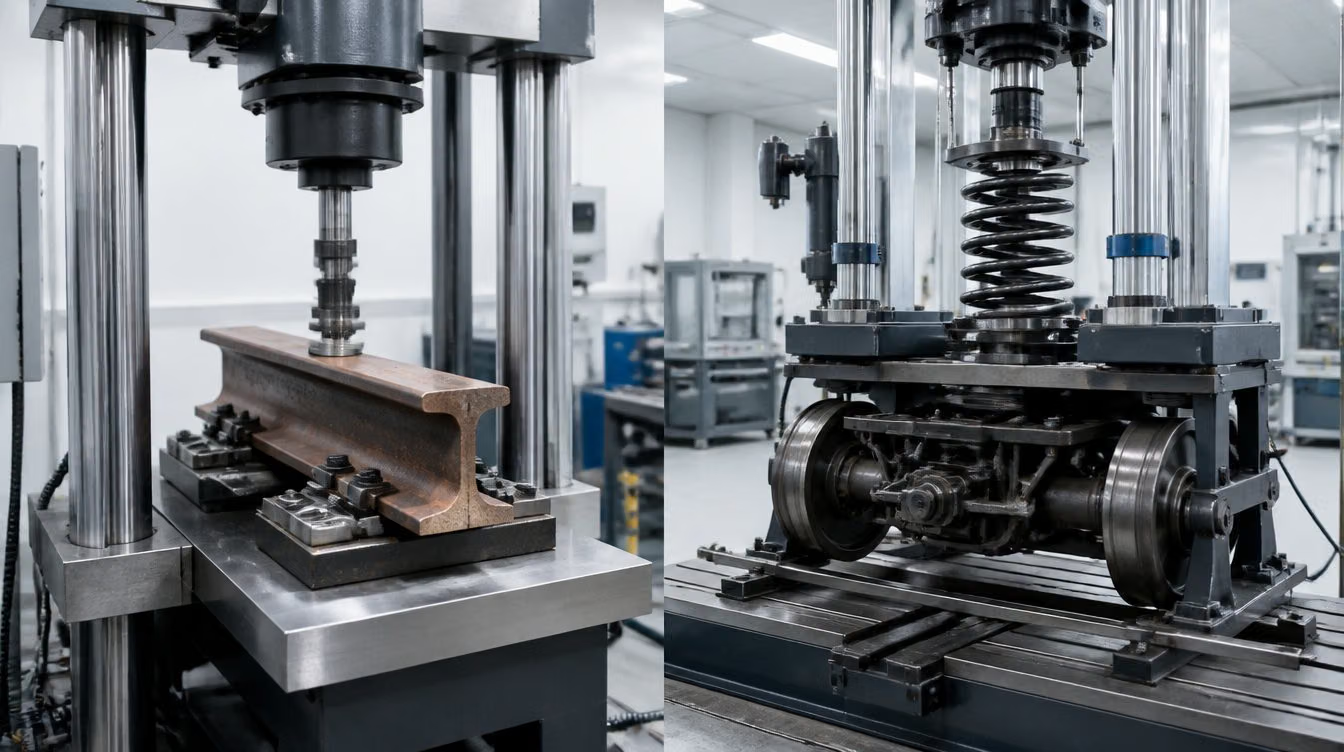
For electronic equipment, EN 50155 is the framework standard and carries environmental, electrical and functional requirements together: supply voltage variations, temperature classes, humidity, vibration and shock. On the vibration and shock side the EN 61373 categories are used and these differ by mounting location — a box mounted on the body and a sensor mounted on the bogie do not go through the same profile.
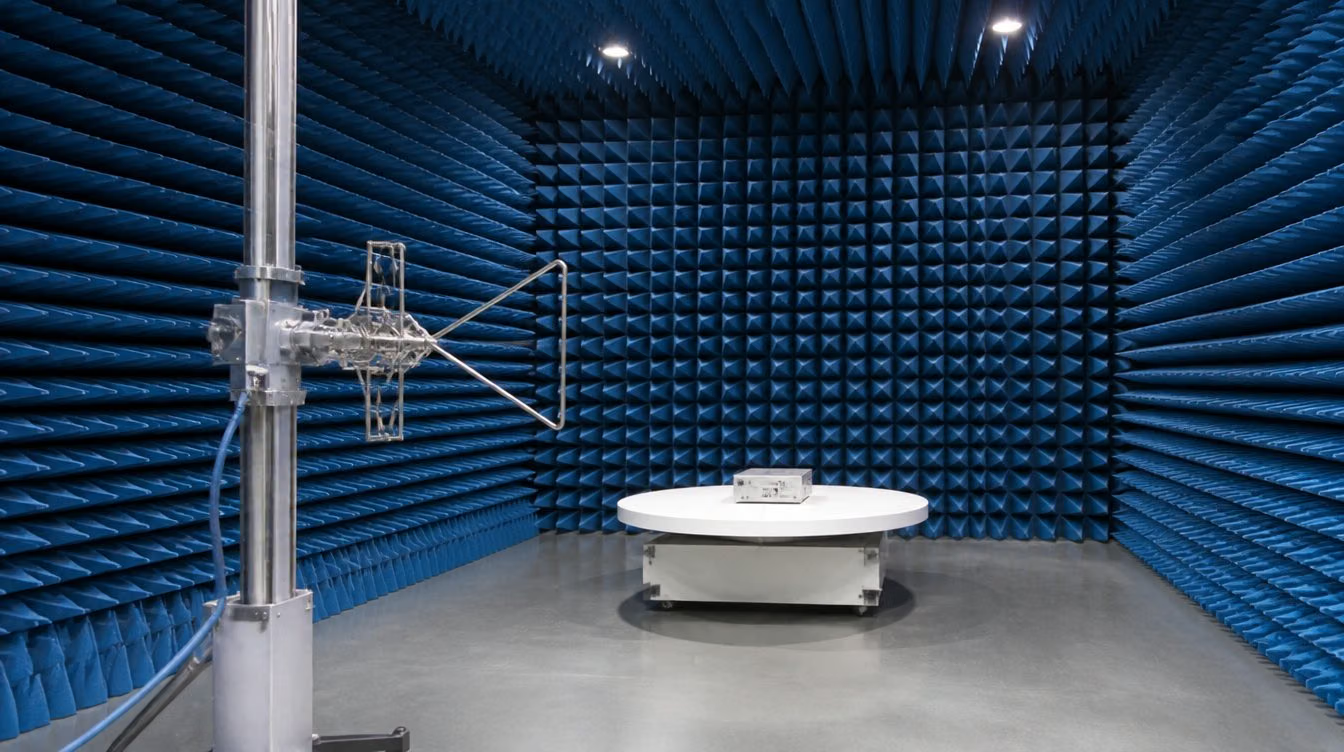
On electromagnetic compatibility the EN 50121 series applies and addresses a problem peculiar to railways: the traction system switches at very high power and can affect both the systems on board and the signalling along the line. The series therefore carries separate parts for the vehicle, lineside installations and signalling.
For safety-related systems a separate body of work applies, and here the evidence is not testing but PROCESS: EN 50126 (RAMS), EN 50128 (software) and EN 50129 (safety-related electronic systems) define the safety life cycle and the safety integrity levels (SIL). Signalling and brake control systems are assessed within this framework.
On the quality side, the sector's own scheme IRIS (ISO/TS 22163) comes into play; major vehicle manufacturers require this certificate from their suppliers.
On the mechanical structure side, the car body and bogie frame have standards of their own: structural verification under static and fatigue loads, weld quality and crashworthiness. These tests are carried out on full-scale rigs and can take months.
Method groups in this field
Fire safety
Classification of materials and components under EN 45545; the requirement set according to operation and design category.
Electronic equipment
EN 50155 environmental and electrical requirements; supply interruptions, temperature classes, humidity and degree of protection.
Vibration and shock
EN 61373 categories; body, bogie and axle-mounted profiles according to mounting location.
Electromagnetic compatibility
The EN 50121 series: separate parts for the vehicle, lineside installations and signalling.
Safety life cycle
EN 50126 RAMS, EN 50128 software and EN 50129 safety-related systems; SIL determination and the safety case.
Structural verification
Static and fatigue loads on the car body and bogie frame, weld quality, crashworthiness.
Commonly confused in this field
- EN 45545 requirements vary with the location of use and the operation category; there is no single "railway fire class".
- Conformity to EN 50155 does not cover the vibration requirements; EN 61373 is applied in addition.
- A civil EMC report is not sufficient for railways; the EN 50121 series defines a different environment and different limits.
- For safety-related systems, testing alone is not evidence; safety life cycle records are required.
- A component change (even one driven by obsolescence) requires re-verification; in long-life projects this is routine work.
- An IRIS certificate is not a product approval; it is a quality system certificate.
Which decisions these results support
- Vehicle and component approval, operator acceptance processes
- Material selection according to the fire safety category
- The safety case and SIL evidence for safety-related systems
- Supply chain quality certification
- Continuity of component supply and change management
Structure of the Code
- Published by
- IEC
- Serial number
- 61373
- Part
- without partition
Codes in the library without release year is kept. The current version changes over time; If the year is specified in your specification, that version is taken as basis, if not specified, the most current version is applied.
Scope
- Railway Testing
Related Tests and Services
A test or service page tied to this code has not yet been published. At offer stage shared in writing.
Technical Requirements
Standard texts are copyright of the relevant organization; test condition, sample and acceptance criteria cannot be fitted here.
Technical requirements specific to your product, once we clarify the scope At offer stage shared in writing.
Relevant Product Groups and Legislation
This code is included in the standard tag of the product pages below.
These product pages carry notes for the following markets: European Union, United Kingdom, USA, China. Whether the standard is mandatory in the relevant market varies depending on the product group and the applicable legislation.
Regulations published with this code on the same product pages:
- 2014/35/EULVDThe Low Voltage Directive. Governs the electrical safety of equipment operating in the 50–1000 V AC range; the manufacturer makes the declaration, with no notified body involvement.
- 2014/30/EUEMCThe Electromagnetic Compatibility Directive. Covers both the interference a device emits into its environment (emission) and its resistance to interference from outside (immunity).
- (AB) 2019/2023EcodesignEcodesign requirements for washing machines and washer-dryers. Sets thresholds for energy and water consumption and washing/rinsing effectiveness.
- (AB) 2019/2014Energy LabelEnergy labelling for washing machines. Class, water consumption and programme duration are declared on the label; EPREL registration is mandatory.
- 2011/65/EURoHSRestriction of certain hazardous substances in electrical and electronic equipment; an integral part of the CE declaration.
- 2012/19/ABWEEEWaste electrical and electronic equipment. Requires product marking and registration with the collection system.
- (AB) 2019/2020EcodesignEcodesign requirements for light sources. Covers efficiency, colour consistency, switching-cycle durability and product-information requirements.
- (AB) 2019/2015Energy LabelEnergy labelling for light sources. An A–G class and EPREL registration are mandatory.
- (EC) 1907/2006REACHRegistration, evaluation, authorisation and restriction of chemicals. Creates a notification obligation for SVHC substances in the product's content.
- (EU) 2023/1542Batteries RegulationSustainability, safety and transparency for batteries. Carbon footprint declaration, recycled content and the battery passport apply on a staged timetable.
- UN Manual of Tests and CriteriaUN 38.3Transport safety of lithium cells and batteries. The T1–T8 test series is applied in the defined order; shipment cannot proceed without a report.
- (EU) 2023/988GPSRThe General Product Safety Regulation. Establishes a safety framework for aspects not covered by sector-specific legislation.
- 2014/53/EUREDThe Radio Equipment Directive. Spectrum, EMC and electrical safety are assessed together on the radio interface; the 3.3(d)(e)(f) cybersecurity articles apply from 1 August 2025.
- (EU) 2024/2847CRAThe Cyber Resilience Act. Cybersecurity requirements for products with digital elements; reporting from 11 September 2026, full application from 11 December 2027.
- (AB) 2022/2380Common Charging InterfaceA common charging solution for certain radio equipment. A USB-C interface and declaration of charging information on the label are mandatory.
- (AB) 2023/1670Ecodesign (smartphones)Ecodesign requirements for smartphones and tablets. Sets requirements for durability, repairability, spare parts and software-update duration.
- (AB) 2023/1669Energy Label (smartphones)Energy labelling for smartphones and tablets; battery life, drop resistance and a repair score are declared on the label.
- (EU) 2017/745MDRThe Medical Device Regulation. Classification (I, IIa, IIb, III), clinical evaluation, technical documentation and post-market surveillance obligations; the notified body's role grows as the class rises.
- (EU) 2017/746IVDRThe In Vitro Diagnostic Medical Devices Regulation. In vitro diagnostic devices fall under this regulation instead of the MDR.
- (AB) 2017/745 art. 33EUDAMEDThe European medical device database. From 28 May 2026, the actor registration, UDI/device, certificate and market surveillance modules are mandatory; placing on the market is not possible without a valid SRN.
- 2006/42/ATMachinery Directive (overlap)Relevant essential requirements also apply to medical devices that also qualify as machinery.
- (EU) 2023/1230Machinery RegulationReplaces 2006/42/EC and becomes mandatory on 20 January 2027 with no further transition period. Requires notified-body involvement for Annex I high-risk machinery.
- 2014/34/ABATEXEquipment and protective systems used in explosive atmospheres. The category and conformity route are determined by zone classification.
- 2000/14/ATNoise EmissionNoise emitted into the environment by outdoor equipment. Machinery within scope requires a sound-power-level declaration and marking.
Other Adoptions of the Same Number
This number is also published by other bodies. Adoptions may carry a national annex; the code named in your specification is the one required.
Related Standards
Frequently Asked Questions
Is this standard mandatory for my product?
Whether it is mandatory depends on the product group, the target market and the applicable legislation. Once you tell us your product and market, we clarify in writing whether this standard is required.
How long does the test process take?
Duration depends on the scope of the standard, the number of specimens and current capacity. The exact duration is shared, together with the specimen and scope details, at the quote stage.
Do you issue certification against this standard?
Which activity is carried out under which accreditation scope is separately confirmed at the application stage. Up-to-date scope information is published on our corporate page.
What happens if the standard I need is not here?
The library is based on a continuously growing inventory. If you cannot find the code you are looking for, you can send it through the quote form; we will assess the relevant scope and get back to you.