

About the Standard
Scope title: VOC emissions from construction products (test chamber)
ISO 16000-9 is a standard published by International Organization for Standardization (ISO). The international standards organisation; it publishes the widest body of management system, test method and product standards.
See the other 310 codes from ISOCoverage areas

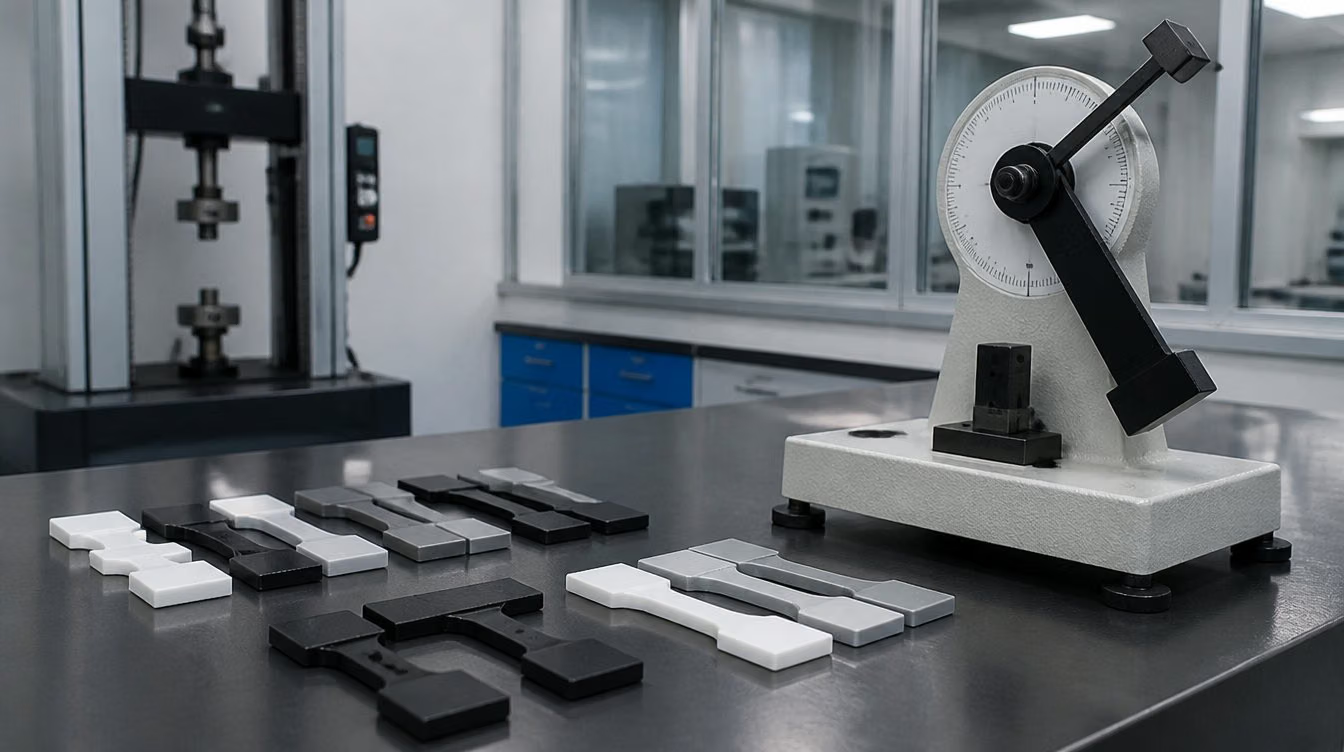
Kimyasal Testler — What Does This Testing Field Cover?
The section below describes the field that code ISO 16000-9 belongs to; it is not the text of the standard or the regime itself. The scope title of the code is given above, and technical requirements are shared at the quotation stage.
Chemical testing determines which substances are present in a material and at what concentrations. The output of this family is usually assessed against a RESTRICTION: is the substance banned, is it below the limit, does it have to be notified?
The most defining feature of the field is that restrictions CHANGE RAPIDLY. The REACH Annex XVII list expands regularly, the SVHC candidate list is updated every six months, the RoHS substance list takes on new items, the scope of the POPs regulation widens, and brand restricted substance lists are revised several times a year. When reading a chemical report it must therefore be stated which version of the list it was assessed against; a report obtained two years ago may fall short against today's list.
Methods are divided according to the type of analyte. ICP-OES, ICP-MS, AAS and XRF are used for elemental analysis; GC-MS, HPLC and LC-MS/MS for organic compounds; FTIR and Raman for structural identification; DSC and TGA for thermal characterisation.
XRF has a special place in the field and is often misused. Because it is fast, non-destructive and suitable for field use, it is very valuable as a screening tool: it answers within minutes whether a product contains lead or bromine. But XRF is an ELEMENTAL screening method and does not distinguish compounds. It sees the presence of bromine but does not say whether that bromine is a restricted flame retardant or a permitted compound. A definitive decision requires confirmation by wet chemistry.
Sample preparation is the invisible half of the result. A multi-component product — an electronic board or a shoe, for example — is not a homogeneous sample; each component must be separated and analysed individually. In a RoHS assessment this separation goes down to the "homogeneous material" level and the limits are applied at that level. Grinding the whole product and analysing it dilutes the restricted substance and hides it.
The detection limit and measurement uncertainty determine the quality of decisions in this field. A result falling just below a limit may be above it once uncertainty is taken into account. Accredited reports therefore declare the uncertainty, and a decision rule is applied in the conformity decision.
Declaration obligations go beyond analysis. SVHC notification, supply chain communication and product composition declarations are usually built from supplier data rather than from analysis; analysis is used to verify that data. A complete conformity file combines the two.
Method groups in this field
Elemental analysis
Trace element determination by ICP-OES and ICP-MS, targeted measurement by AAS, rapid screening by XRF.
Organic compounds
Volatile and semi-volatile compounds by GC-MS, polar compounds and residues by HPLC and LC-MS/MS.
Restricted substance screening
The six RoHS substances, phthalates, brominated flame retardants, PFAS, azo dye amines, short-chain chlorinated paraffins.
Structural identification
Polymer and compound identity by FTIR and Raman, layer analysis under the microscope.
Thermal analysis
Composition, filler content, decomposition temperature and transition temperatures by DSC and TGA.
Migration and release
Migration in food contact materials, element migration in toys, nickel release in contact with skin.
Commonly confused in this field
- XRF is not a method for definitive decisions; it sees elements and does not distinguish compounds. A decision on a restricted compound requires confirmation.
- RoHS limits are applied at the homogeneous material level; grinding the whole product and analysing it dilutes the restricted substance and produces a false conformity.
- A report that does not state the list version may fall short against today's legislation; restrictions are updated continuously.
- Results just below a limit are assessed together with the measurement uncertainty; declaring conformity without a decision rule is risky.
- A supplier declaration does not replace analysis, nor does analysis replace the supplier declaration; a complete file combines the two.
- The phrase "not detected" is not proof of absence; it is read together with the detection limit of the method.
Which decisions these results support
- RoHS and REACH declaration of conformity
- SVHC notification and supply chain communication
- Auditing against the brand restricted substance list
- Responding to customs and market surveillance requests
- Verifying a supplier material change
Structure of the Code
- Published by
- ISO
- Serial number
- 16000
- Part
- 9
The last "9" is the section number of the standard. Chapters organize different coverages of the same series; The requirements of whichever section is written in the specification are applied.
Codes in the library without release year is kept. The current version changes over time; If the year is specified in your specification, that version is taken as basis, if not specified, the most current version is applied.
Scope
Related Tests and Services
A separate test page based on this code has not yet been released. The code falls within the scope of the following test families.
Technical Requirements
Standard texts are copyright of the relevant organization; test condition, sample and acceptance criteria cannot be fitted here.
Technical requirements specific to your product, once we clarify the scope At offer stage shared in writing.
Other Parts of the Same Series
ISO 16000 series is also present in the library with the following parts.
Related Standards
Frequently Asked Questions
Is this standard mandatory for my product?
Whether it is mandatory depends on the product group, the target market and the applicable legislation. Once you tell us your product and market, we clarify in writing whether this standard is required.
How long does the test process take?
Duration depends on the scope of the standard, the number of specimens and current capacity. The exact duration is shared, together with the specimen and scope details, at the quote stage.
Do you issue certification against this standard?
Which activity is carried out under which accreditation scope is separately confirmed at the application stage. Up-to-date scope information is published on our corporate page.
What happens if the standard I need is not here?
The library is based on a continuously growing inventory. If you cannot find the code you are looking for, you can send it through the quote form; we will assess the relevant scope and get back to you.