
About the Standard
Scope title: industrial metallic piping
EN 13480 is a standard published by European Standard (EN) (EN). Standards published by the European standardisation organisations and adopted as national standards in member states; they are used as harmonised standards under EU directives.
See the other 194 codes from ENCoverage areas


Inspection — What Does This Activity Do?
The section below describes the field that code EN 13480 belongs to; it is not the text of the standard or the regime itself. The scope title of the code is given above, and technical requirements are shared at the quotation stage.
Inspection is the determination of the conformity of a product, facility or process to defined requirements through observation, measurement and PROFESSIONAL JUDGEMENT. What distinguishes it from testing is that the decision rests largely on the competence of the inspection personnel and on assessment carried out on site.
This difference has an important consequence. A test standard, if sufficiently defined, gives the same result in different laboratories. In inspection, the experience of the personnel, the quality of observation and their competence in making decisions directly affect the result. In inspection bodies, personnel qualification, the authorisation matrix and continuing training are therefore as central a subject as equipment calibration.
The activity is mostly carried out ON SITE, and this brings its own difficulties: ambient conditions cannot be controlled, access may be limited, equipment must be transported and the decision is often made on the spot. Pre-shipment inspection, in-process checks during manufacture, periodic equipment inspection, inspection of lifting equipment and pressure vessels, weld inspection and non-destructive examination fall within this scope.
The competence of an inspection body is assessed under ISO/IEC 17020, and the body's TYPE OF INDEPENDENCE (A, B, C) determines the context in which the inspection will be accepted. A type A body is entirely independent; a type B body is a separate unit inspecting the parent organisation's own products; a type C body sits within the same organisation as design, manufacturing or maintenance activity. In some areas of legislation only inspection by an independent type A body is accepted; an inspection report issued without reading this distinction may be rejected.
PERIODIC INSPECTION is an obligation arising from legislation and is the backbone of the occupational safety field. Lifting equipment, pressure vessels, electrical installations, fire installations, ventilation systems and construction machinery are inspected at defined intervals. The intervals are defined in legislation or in the relevant standards and keeping the records is the employer's responsibility.
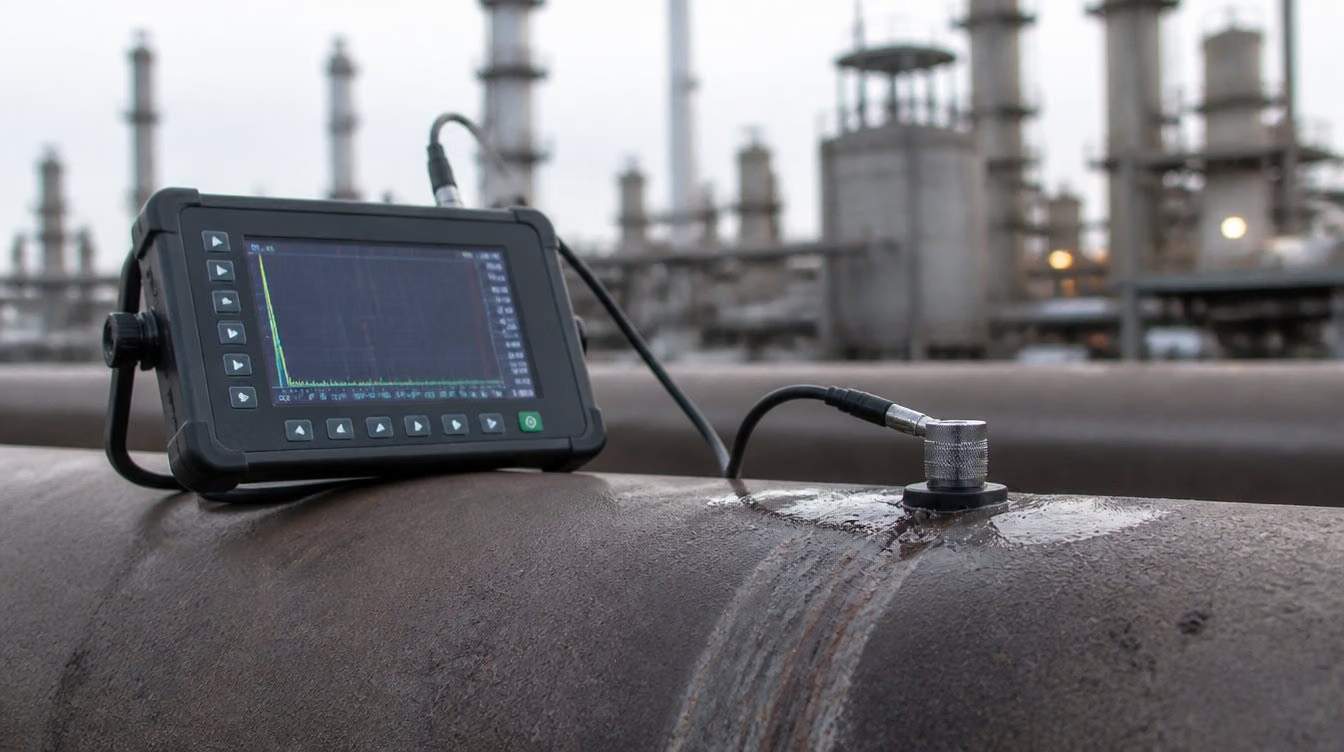
Non-destructive testing (NDT) is the most technical sub-body of the field and has its own personnel qualification system. Radiography, ultrasonic examination, penetrant, magnetic particle and visual examination methods are sensitive to different defect types; the method is chosen according to the defect being sought, and one method "finding no defect" does not mean another method would find none.
An inspection report is NOT A PRODUCT CERTIFICATE; it is the record of an assessment made at a particular time within a particular scope. The scope, the requirement applied, the inspection date and the identity of the sample or equipment appear clearly in the report. The report says nothing about a part that was not inspected, and this boundary is stated in the report.
Pre-shipment inspection also carries a commercial function. The buyer has to pay without seeing the goods; confirmation of quantity, packaging, marking and visible quality by an independent inspection body reduces that risk and can form part of the terms of a letter of credit.
Method groups in this field
Visual and dimensional inspection
Assessment of product and manufacturing quality by eye and with measuring instruments; visual inspection of weld seams.
Non-destructive examination
Radiography, ultrasonic, penetrant, magnetic particle and eddy current methods; the method is chosen according to the defect being sought.
Periodic equipment inspection
Lifting equipment, pressure vessels, boilers, electrical and fire installations, ventilation systems.
In-process inspection
First article approval, in-process checks during manufacture, dimensional verification and final inspection.
Pre-shipment inspection
Confirmation of quantity, packaging, marking and visible quality; sampling according to a sampling plan.
Site and installation inspection
Conformity of installation, pre-commissioning checks and acceptance inspection.
Commonly confused in this field
- An inspection report should not be relied on without reading the type of independence (A, B, C); some areas of legislation accept only type A.
- An inspection report is not a product certificate; it is the record of an assessment at a particular time and within a particular scope.
- The phrase "no defect found" does not mean there is no defect; every method has a detection limit and the report must state it.
- The report says nothing about parts outside the scope of the inspection; the boundary of the scope must be stated explicitly.
- Periodic inspection intervals come from legislation; missing an interval is the employer's responsibility.
- Qualification of NDT personnel is by method and level; a general "NDT competence" is not sufficient.
Which decisions these results support
- Meeting periodic inspection obligations
- Confirmation of quality and quantity before shipment
- Early detection of non-conformities during manufacture
- Equipment checks under occupational safety legislation
- Commissioning and acceptance decisions
Structure of the Code
- Published by
- EN
- Serial number
- 13480
- Part
- without partition
Codes in the library without release year is kept. The current version changes over time; If the year is specified in your specification, that version is taken as basis, if not specified, the most current version is applied.
Scope
- muayene
- Metal and Metallurgy Testing
Related Tests and Services
A separate test page based on this code has not yet been released. The code falls within the scope of the following test families.
Technical Requirements
Standard texts are copyright of the relevant organization; test condition, sample and acceptance criteria cannot be fitted here.
Technical requirements specific to your product, once we clarify the scope At offer stage shared in writing.
Relevant Product Groups and Legislation
This code is included in the standard tag of the product pages below.
These product pages carry notes for the following markets: European Union, United Kingdom, USA. Whether the standard is mandatory in the relevant market varies depending on the product group and the applicable legislation.
Regulations published with this code on the same product pages:
- 2014/68/EUPEDThe Pressure Equipment Directive. The category is determined by fluid group, pressure and volume; the notified body's role grows as the category rises.
- 2014/29/ABSimple Pressure VesselsA separate directive for series-produced simple pressure vessels; its scope must be distinguished from the PED.
- 2010/35/ABTransportable Pressure EquipmentThe pi mark and periodic inspection regime for transportable pressure equipment.
- 2014/34/ABATEXEquipment and protective systems used in explosive atmospheres. The category and conformity route are determined by zone classification.
Related Standards
Frequently Asked Questions
Is this standard mandatory for my product?
Whether it is mandatory depends on the product group, the target market and the applicable legislation. Once you tell us your product and market, we clarify in writing whether this standard is required.
How long does the test process take?
Duration depends on the scope of the standard, the number of specimens and current capacity. The exact duration is shared, together with the specimen and scope details, at the quote stage.
Do you issue certification against this standard?
Which activity is carried out under which accreditation scope is separately confirmed at the application stage. Up-to-date scope information is published on our corporate page.
What happens if the standard I need is not here?
The library is based on a continuously growing inventory. If you cannot find the code you are looking for, you can send it through the quote form; we will assess the relevant scope and get back to you.