
What Is Sulfur?
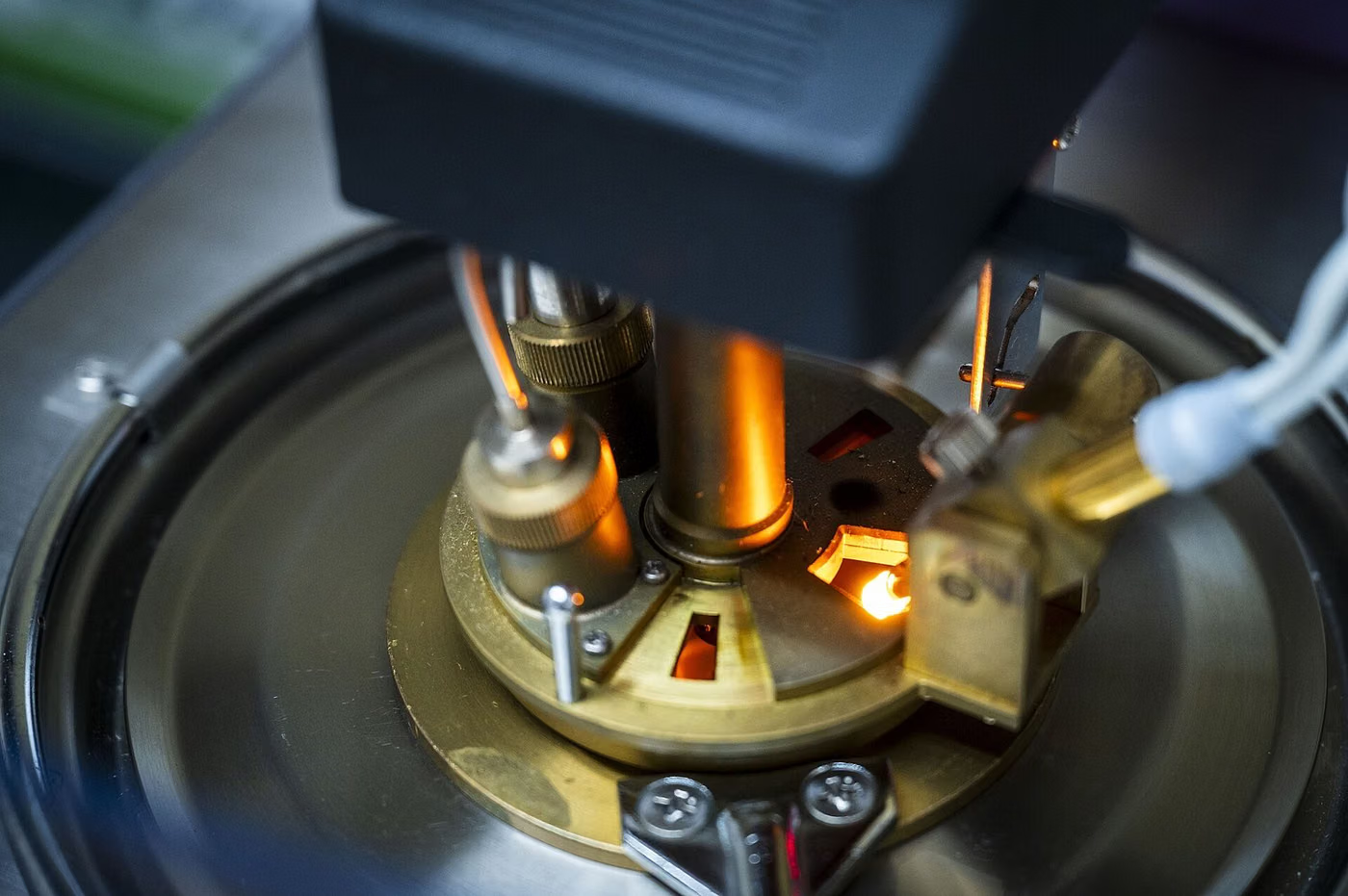
Sulfur determination is the measurement of the total sulfur concentration in the product. At low concentrations, ultraviolet fluorescence method (EN ISO 20846) is used, and at higher concentrations, X-ray fluorescence methods (EN ISO 20884, ISO 8754) are used. The result is given in mg/kg or percent by mass.
Purpose of Sulfur
The purpose is to show that the fuel complies with the sulfur limits. Sulfur is both a source of acid rain and particulate emissions and poisons exhaust aftertreatment systems (catalyst, DPF).
Which Products Is Sulfur Applied To?
- Automotive gasoline and diesel
- Marine fuels
- jet fuel
- Heating fuels
- Crude oil and refinery flows
In Which Sectors Is Sulfur Used?
Standards Related to Sulfur
- TS EN ISO 20846 (ultraviolet fluorescence method)
- TS EN ISO 20884 (wavelength dispersive XRF)
- TS ISO 8754 (energy dispersive XRF)
- TS EN ISO 14596 (WD-XRF — high concentrations)
- ASTM D5453 / D4294
Sulfur Conditions
- Method selection
- According to the expected concentration range; UV fluorescence is preferred at low sulfur
- Attempt
- Matrix and element interferences are evaluated in XRF methods
- Calibration
- With calibration standards suitable for the matrix
Equipment for Sulfur
- UV fluorescence sulfur analyser
- WD-XRF and ED-XRF spectrometers
- Sample preparation and dilution devices
- Certified sulfur reference standards
Sample Requirements for Sulfur
- Sampling determines the validity of the result in fuel analysis: ISO 3170 (manual) and ISO 3171 (automatic in-line) define the sampling rules. The sample must be taken into a clean container of a suitable material, filled with no air gap, and kept cold for volatile products.
- The sample must be in a clean container and must be representative.
- Expected sulfur range should be reported
- For heavy products, the sample must be homogenized
Duration of Sulfur
Measurement is quick and usually results the same day; The number of samples determines the total time.
Sulfur Procedure
- 1The method is chosen according to the expected concentration.
- 2The device is calibrated with appropriate standards.
- 3The sample is prepared and diluted if necessary.
- 4Measurement is made.
- 5Accuracy is confirmed with a control sample.
- 6The result is reported as mg/kg or percent by mass.
Sulfur Acceptance Criteria
The acceptance criterion is the sulfur limit in the product specification and legislation: 98/70/EC for road fuels, MARPOL Annex VI and (EU) 2016/802 define separate limits for marine fuels. In emissions control areas the limit is stricter. Acceptance criteria come from the relevant product specification and vary by season, market and grade. Specification versions are updated; The current limit values to be applied to your product are confirmed in the specification text at the bidding stage.
Evaluation of Results
In measurements close to the low sulfur limits, the detection limit of the method and the measurement uncertainty become decisive; Therefore, the choice of method should be made according to the limit. In XRF methods, matrix difference can create systematic bias, so calibration must be appropriate to the product matrix.
Sulfur Report
- Sample description and product type
- Standard and method applied
- Sulfur result, detection limit and measurement uncertainty
- Calibration and control sample information
- Limit value compared against
Accreditation
EUROLAB holds internationally recognised accreditation obtained from accreditation bodies party to the IAF and ILAC multilateral recognition arrangements, under ISO/IEC 17025 for laboratory testing, ISO/IEC 17020 for inspection and surveillance, and ISO/IEC 17021-1 and ISO/IEC 17065 for system and product certification. This chain ensures the reports and certificates issued are accepted worldwide.
Whether this test can be offered within accredited scope depends on your product and the standard applied; since accreditation is method-based, the scope is confirmed in writing at the quotation stage.
Scope and authorisationsRelated Regulations
- 98/70/EC Fuel Quality Directive
- (EU) 2016/802 Sulphur Content of Liquid Fuels Directive
- MARPOL Ek VI
Petroleum, Fuel and Oil Analysis — What Does This Testing Field Cover?
The section below describes the field that the Sulfur test belongs to; the conditions and acceptance criteria of this particular test are given in the sections above. The scope specific to your product is confirmed in writing at the quotation stage.
Petroleum, fuel and oil analysis determines whether a fluid meets its specification and how it behaves in use. Standards in this field consist largely of ASTM and EN publications, with a separate method defined for each parameter.
What distinguishes this family is that product specifications are written as PARAMETER LISTS. Specifications such as EN 590 (diesel), EN 228 (petrol), EN 14214 (biodiesel) and ISO 8217 (marine fuels) state for each parameter both the limit and the method by which that limit is to be measured. If the method changes the result may change too; the specification therefore binds the method as well, and the use of an "equivalent method" is possible only where the specification allows it.
On the fuel side, parameters describe three different properties of the product. Physical properties (density, viscosity, distillation curve, pour point, cloud point) determine pumpability and cold weather behaviour. Combustion properties (cetane number, octane number, calorific value) indicate performance in the engine. Contaminant and stability parameters (sulphur, water, sediment, oxidation stability, copper strip corrosion) affect both emissions and storage life.
Oil analysis is carried out for two different purposes and the two must not be confused. Analysis of NEW oil verifies the conformity of the product to its specification: viscosity index, additive content, flash point. Analysis of USED oil, by contrast, is done to read the condition of the machine — elemental analysis shows wear metals (iron, copper, chromium, aluminium), water and fuel contamination point to leaks, and oxidation and acid number determine the remaining life of the oil.
Used oil analysis is therefore a PREDICTIVE MAINTENANCE tool. The trend of samples taken at regular intervals is followed; it is the trend rather than a single result that is meaningful. Iron levels climbing over the course of months allow intervention before a failure occurs.
Marine fuels are the most active sub-body of the field. The global tightening of sulphur limits has brought new blended fuels onto the market; for these fuels stability, compatibility (whether two fuels form deposits when mixed) and catalytic fines content have become critical parameters.
Sampling is part of the result in this family too. A sample taken from the bottom of a tank shows different water and sediment content from one taken from the upper level; in commercial deliveries the sampling point and method are set by contract.
Method groups in this field
Physical properties
Density (oscillating U-tube and hydrometer), kinematic viscosity, distillation, pour and cloud point, flash point.
Combustion properties
Cetane number and cetane index, research and motor octane number, calorific value.
Sulphur and elements
Sulphur by UV fluorescence and XRF; elemental analysis and additive content by ICP.
Stability and corrosion
Oxidation stability, copper strip corrosion, water and sediment, filter blocking tendency.
Composition analysis
Boiling range distribution by gas chromatography, hydrocarbon types (FIA), benzene and aromatics content, fatty acid methyl ester content.
Used oil
Wear metals, contamination (water, fuel, soot), oxidation, acid and base number, change in viscosity.
Commonly confused in this field
- The specification binds the method as well; a result measured by a different method may not be accepted for specification conformity.
- A single result on used oil is not meaningful; the decision is made on the trend.
- The sampling point determines the result; the tank bottom and the upper level show different water and sediment.
- The cetane index is a calculated value and is not the same thing as a measured cetane number.
- Fuels blended with biodiesel behave differently in terms of storage life and microbial growth; classical diesel parameters are not sufficient.
- Mixing marine fuels from different sources can cause deposits; compatibility is assessed separately.
Which decisions these results support
- Conformity of a fuel lot to specification and commercial delivery
- Predictive maintenance decisions based on used oil analysis
- Determining parameters for customs and tax classification
- Quality verification after storage, blending and transport
- Compliance with sulphur limits under emissions legislation
Related Tests





Frequently Asked Questions About Sulfur
During the ship inspection, it was said that the sulfur limit was exceeded. Can we object?
MARPOL sampling and verification procedures are defined; The sealed sample and verification analysis process is followed. How to take measurement uncertainty into account is also addressed in these procedures.