
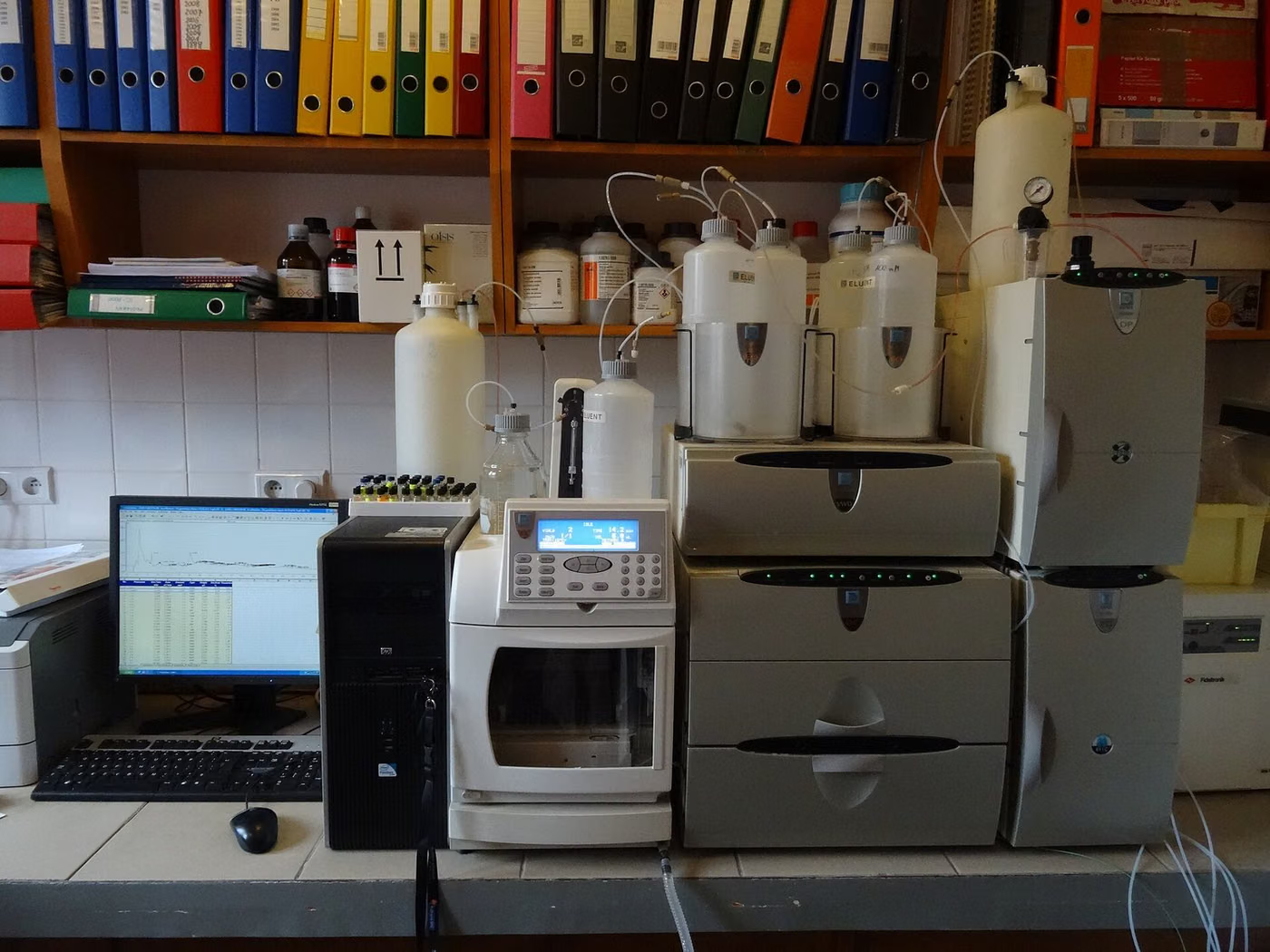
What Is IC Analysis?
Ion chromatography is based on separating ions in solution on an ion-exchange column according to their charge and affinity for the ion-exchange resin. The separated ions are usually measured with a conductivity detector.
Purpose of IC Analysis
The purpose is to measure anions such as chloride, fluoride, nitrate, nitrite, phosphate, sulfate, and cations such as sodium, potassium, ammonium, in a single run and at low concentrations.
Which Products Is IC Analysis Applied To?
- Drinking water, wastewater and process water
- Ionic contamination on electronic boards
- Salt, nitrate and nitrite in food
- Ionic impurities in pharmaceutical products
- Boiler and cooling water control
In Which Sectors Is IC Analysis Used?
Standards Related to IC Analysis
- ISO 10304-1 (determination of dissolved anions in water by ion chromatography)
- ISO 14911 (determination of cations in water)
- IPC-TM-650 2.3.28 (ionic contamination on boards)
- EN 12014 (nitrate and nitrite in food)
IC Analysis Conditions
- Kolon
- Anion or cation exchanger; selected based on target ions
- Eluent
- Defined in the method; carbonate, hydroxide or acid solutions
- suppression
- Suppressor is used to reduce background in conductivity detection
- Calibration
- Separate calibration curve for each ion
Equipment for IC Analysis
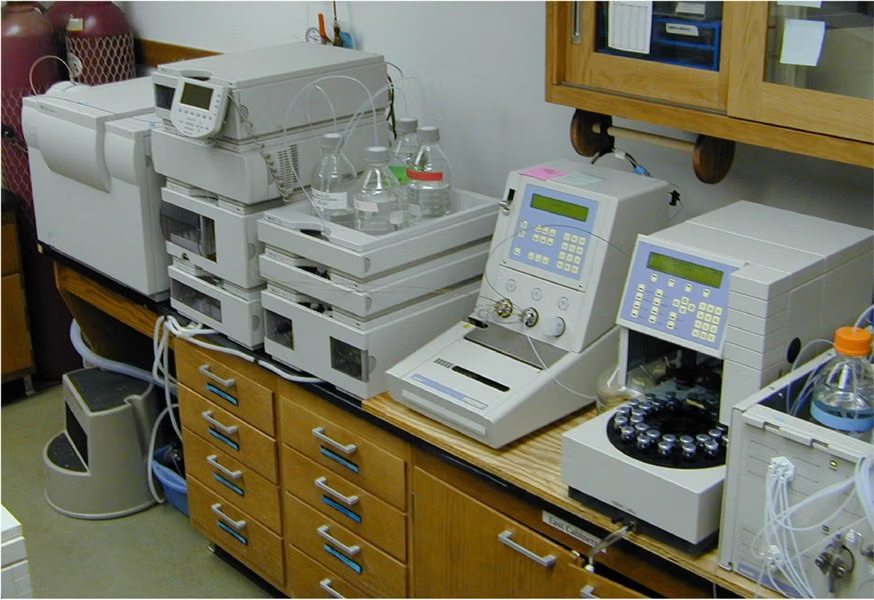
- Ion chromatography system
- Anion and cation exchange columns
- Suppressor unit
- Conductivity detector
- Ultrapure water and eluent preparation unit
Sample Requirements for IC Analysis
- The sample must be clear; turbid samples are filtered
- Water extraction is applied for solid samples
- High-concentration samples are diluted
- The sample must be sent in a suitable container with no headspace
- The sample must be delivered quickly for unstable parameters such as nitrite
Duration of IC Analysis
A run is generally 10–30 minutes. If anions and cations are both requested, two separate analyses are performed.
IC Analysis Procedure
- 1The sample is filtered and diluted if required.
- 2Calibration solutions are prepared.
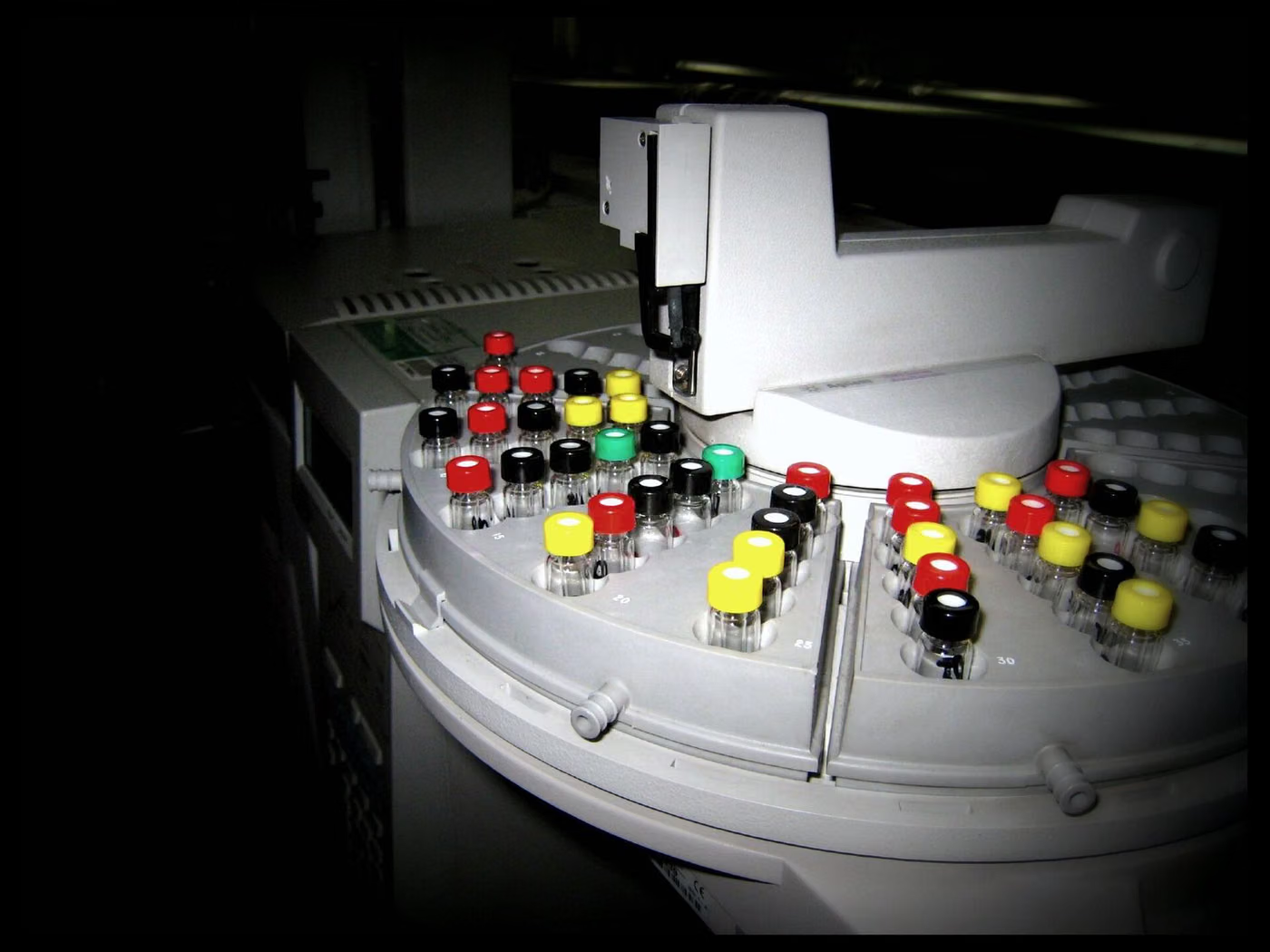
- 3The sample is injected onto the column.
- 4Ions are separated and measured as conductivity.
- 5Peaks are identified by retention time.
- 6Concentrations are calculated from the calibration curve.
IC Analysis Acceptance Criteria
The result's acceptability is assessed against the drinking water regulation, discharge limits, food codex, or IPC cleanliness specifications.
Evaluation of Results
Results are calculated from the calibration curve. In a laboratory where the method has been validated, linearity, recovery, repeatability and the limit of quantification are established beforehand; the value in the report is meaningful within this validated range.
IC Analysis Report
- Sample description, receipt date and laboratory number
- Method applied and reference standard, if any
- Instrument and measurement conditions
- Sample preparation steps
- Measurement results and units
- Measurement uncertainty (if requested)
- A statement that the results relate only to the sample submitted for testing
Accreditation
EUROLAB holds internationally recognised accreditation obtained from accreditation bodies party to the IAF and ILAC multilateral recognition arrangements, under ISO/IEC 17025 for laboratory testing, ISO/IEC 17020 for inspection and surveillance, and ISO/IEC 17021-1 and ISO/IEC 17065 for system and product certification. This chain ensures the reports and certificates issued are accepted worldwide.
Whether this test can be offered within accredited scope depends on your product and the standard applied; since accreditation is method-based, the scope is confirmed in writing at the quotation stage.
Scope and authorisationsRelated Regulations
- Regulation on Water Intended for Human Consumption
- Water Pollution Control Regulation
- Turkish Food Codex communiqué on contaminants
Pages Where This Method Is Used
Analytical Methods — What Does This Group of Methods Do?
The section below describes the field that the IC Analysis test belongs to; the conditions and acceptance criteria of this particular test are given in the sections above. The scope specific to your product is confirmed in writing at the quotation stage.
Analytical method pages are pages about a MEASUREMENT TECHNIQUE rather than about a test. The difference matters: "salt spray testing" is a test and answers one question; "ICP-MS" is a technique and is used in dozens of different tests. Sometimes the user is looking not for the test but for the technique — because the method name is what appears in their specification.
This distinction becomes decisive in choosing a laboratory. When a customer asks for "heavy metal analysis", the real question is by which technique it will be done: XRF is fast and non-destructive but does not distinguish compounds; AAS is economical for a single element; ICP-OES screens multiple elements; ICP-MS sees trace levels. The same sample gives results with different detection limits and different uncertainties across the four techniques.
Method selection is made against three criteria. DETECTION LIMIT: is the concentration sought within the range the method can see? MATRIX COMPATIBILITY: is the sample matrix (plastic, food, soil, metal) one the method can handle, and is pre-treatment required? SPECIFICATION LINK: does the product standard or legislation mandate a particular method? The third often overrides the first two — the specification binds the method.
Method pages build a CHAIN. A technique is linked to the test pages where it is used, to the standards those tests rest on, to the legislation those standards are tied to and ultimately to market access regimes. The example chain in the source document works like this: XRF → metal analysis → RoHS compliance → heavy metal restriction → coating pages. Whichever link the user enters from, they reach the others.
Sample preparation is the invisible half of the result in this family and is a greater source of error than the technique itself. The digestion method, degree of grinding, extraction solvent and dilution ratio change the result markedly. The same sample on the same instrument gives a different result with different preparation; the definition of the method therefore covers preparation too.
Calibration and verification are the third determining component. An instrument is calibrated with certified reference material, the calibration curve is verified periodically and a control sample is run in each batch. Without these steps, a number produced is not traceable even if the instrument is working correctly.
Method groups in this field
Elemental analysis
ICP-OES, ICP-MS, AAS and XRF. They differ in detection limit, matrix tolerance and multi-element capacity.
Chromatography
GC, GC-MS, HPLC, LC-MS/MS and ion chromatography. It separates a mixture into its components and measures each separately.
Spectroscopy
FTIR, Raman, UV-Vis and optical emission. For material identity, functional group identification and alloy composition.
Thermal analysis
DSC, TGA, DMA and dilatometry. Transition temperatures, composition, decomposition and dimensional behaviour.
Microscopy and imaging
Optical microscopy, SEM-EDS, radiography and tomography. Structure, defects and elemental distribution.
Classical (wet) chemistry
Titration, gravimetry and colorimetry. Used as a reference method and in confirming instrumental results.
Commonly confused in this field
- XRF is a screening tool; it sees elements and does not distinguish compounds. A decision on a restricted compound requires confirmation by wet chemistry.
- The phrase "not detected" is not proof of absence; it is read together with the detection limit of the method.
- The specification binds the method. A technically better method is not accepted if the specification calls for another.
- Sample preparation is part of the result; a report that does not state the preparation is not reproducible.
- Results obtained by different techniques cannot be compared directly; their detection limits and uncertainties differ.
- A method page is not a test page; which method applies to which test comes from the product standard.
Which decisions these results support
- Matching the method written in the specification to the laboratory's scope
- Method selection according to detection limit and matrix compatibility
- Confirming an instrumental result with a reference method
- Eliminating deviations arising from sample preparation
Related Tests
Frequently Asked Questions About IC Analysis
Can anions and cations be measured at the same time?
Not with a single column. Since a separate column and eluent are required, two separate analyses are performed; on dual-channel systems they can be run simultaneously.
Why does a nitrite result require a fast sample?
Nitrite can convert to nitrate within the sample. Waiting lowers the result, so the sample must be delivered to the laboratory in the cold chain and quickly.