
What Is HDT?
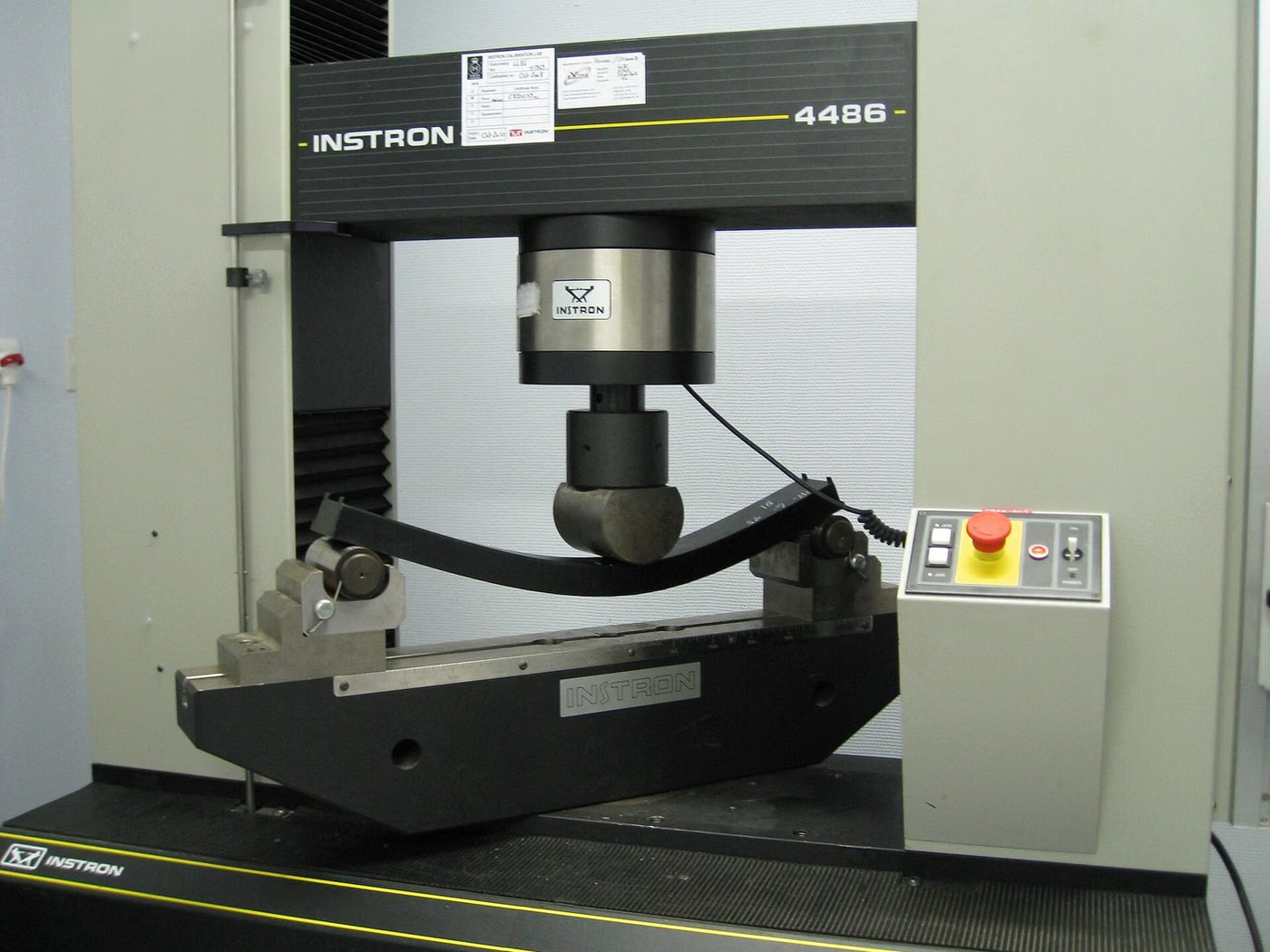
The heat deflection temperature test is the test in which the temperature at which the sample, to which a defined stress is applied in a three-point bending arrangement is applied, is heated at a constant speed and reaches the deflection defined in the standard is determined.
Purpose of HDT
The aim is to obtain a comparative benchmark on the temperature limit at which plastic can be used under load.
Which Products Is HDT Applied To?
- Engineering thermoplastics
- Reinforced plastic parts
- Electrical product housings
- Automotive interior and engine compartment parts
In Which Sectors Is HDT Used?
Standards Related to HDT
- ISO 75-1
- ISO 75-2
- ASTM D648
HDT Conditions
- Strain
- Method defined in the standard: A (1.80 MPa), B (0.45 MPa) or C (8.00 MPa)
- Heating rate
- Constant speed defined in the standard (typically 120 °C/hour)
- deflection criterion
- Temperature at which the deflection value defined in the standard is reached
- Specimen
- In sizes defined in the standard; on flat or side surface
Equipment for HDT
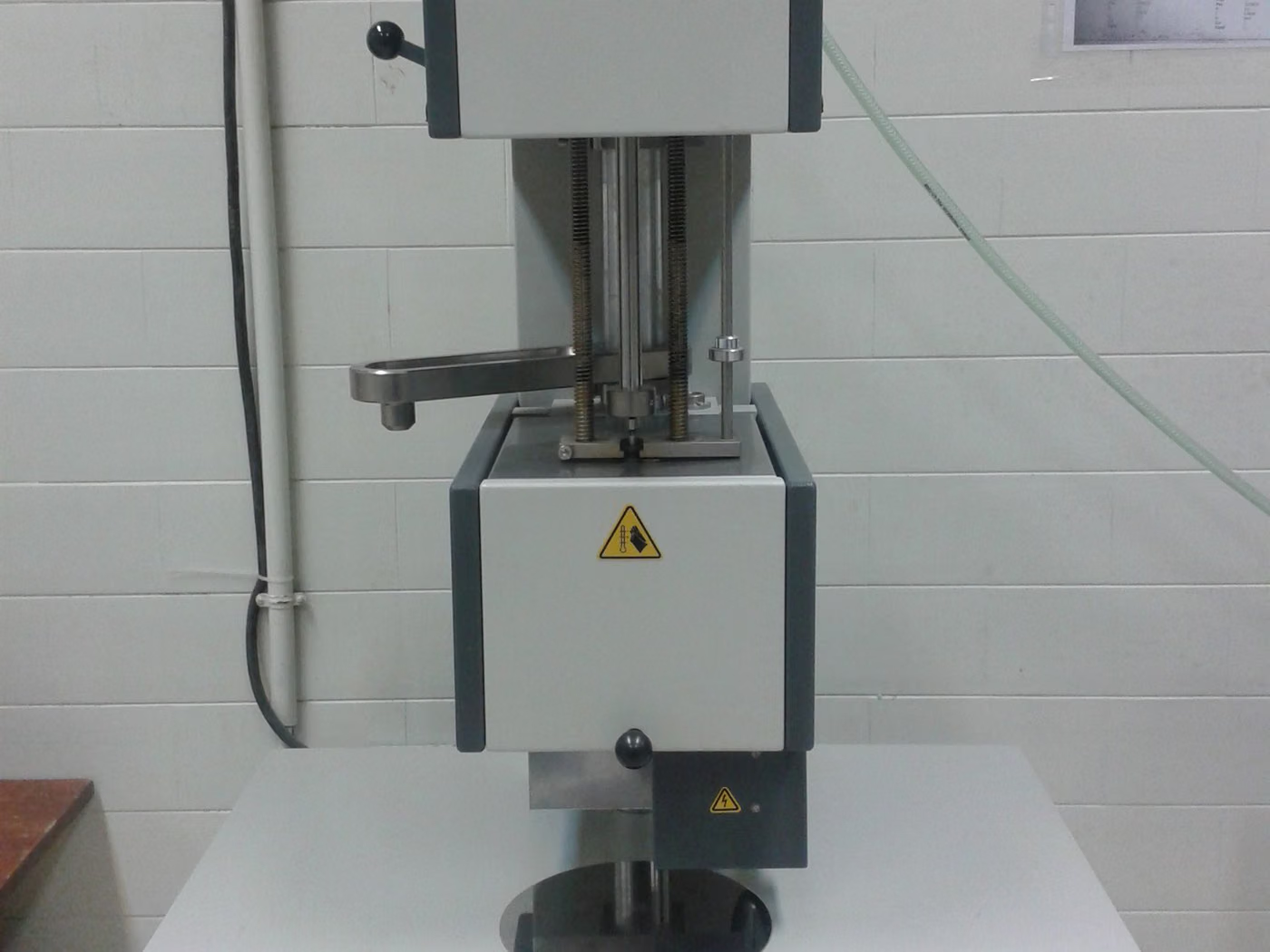
- HDT/Vicat tester and heating bath
- Calibrated load set and deflection measurement setup
- Temperature measurement and recording system
- Specimen-preparation bench
Sample Requirements for HDT
- Sample dimensions and surface smoothness must comply with the standard
- The sample must be conditioned
- The applied method (A/B/C) must be defined in the specification
- The number of specimens is defined in the standard
Duration of HDT
Typically 2–3 days.
HDT Procedure
- 1Samples are prepared and conditioned.
- 2The method and stress to be applied are selected.
- 3Samples are placed in the fixture and load is applied.
- 4The bath is heated at a defined rate.
- 5The temperature at which the deflection criterion is reached is recorded.
- 6The result is reported by specifying the method.
HDT Acceptance Criteria
The acceptance criterion is the minimum HDT value given in the material standard or specification.
Evaluation of Results
HDT is not a service temperature limit; It is a comparative measure taken at a constant heating rate and a single stress. A given HDT value cannot be compared without specifying the method (A/B/C).
HDT Report
- Standard and method applied
- Strain and heating rate
- Sample dimensions and orientation
- Measured HDT values
- Conditioning conditions
Accreditation
EUROLAB holds internationally recognised accreditation obtained from accreditation bodies party to the IAF and ILAC multilateral recognition arrangements, under ISO/IEC 17025 for laboratory testing, ISO/IEC 17020 for inspection and surveillance, and ISO/IEC 17021-1 and ISO/IEC 17065 for system and product certification. This chain ensures the reports and certificates issued are accepted worldwide.
Whether this test can be offered within accredited scope depends on your product and the standard applied; since accreditation is method-based, the scope is confirmed in writing at the quotation stage.
Scope and authorisationsRelated Regulations
- Material product standards
Otomotiv Testleri — What Does This Testing Field Cover?
The section below describes the field that the HDT test belongs to; the conditions and acceptance criteria of this particular test are given in the sections above. The scope specific to your product is confirmed in writing at the quotation stage.
Automotive testing shows that a component keeps working under conditions representing the loads it will meet over the life of the vehicle. A vehicle is not a single product but an ENVIRONMENT: vibration, temperature cycling, salt water, stone impact, electrical transients and electromagnetic noise are all present at the same time and for years.
What distinguishes this family is that VEHICLE MANUFACTURER SPECIFICATIONS sit on top of the standards. ISO and SAE publications establish the common ground; but Volkswagen, BMW, Ford, Stellantis, Toyota and Renault define different severity levels, additional tests and different acceptance criteria in their own specifications. For a component, the phrase "complies with automotive standards" is not sufficient on its own; which manufacturer's specification, and which revision of it, must be answered.
The family carries three separate processes together and they are often confused. Homologation covers the type approvals a vehicle needs to enter traffic and runs under state authority. Supplier approval means passing the vehicle manufacturer's own quality and testing requirements and is a commercial relationship. The third is design verification: the engineering team demonstrating that its own design meets its targets.
At component level the test plan is built around the LOCATION OF USE. A module in the engine bay and a module in the boot do not go through the same temperature and vibration profile; a component inside a door and one in the roof console do not see the same water and dust exposure. The ISO 16750 series is the common framework for this location-based approach.
The shift to electric vehicles has reshaped the field. High-voltage safety, insulation coordination, battery safety, charging interface conformity and the electromagnetic behaviour of high-voltage components have been added to the classical automotive test set. In a quiet vehicle, acoustic and vibration expectations have changed too; sounds once masked by the combustion engine are now audible.
The quality system side cannot be separated from testing in this field. A manufacturer under IATF 16949 presents test results in the PPAP file; measurement system analysis, process capability study and the control plan stand around the test report. A single good result is not enough — the process must be shown to be able to repeat it.
Method groups in this field
Environmental and climatic
Temperature cycling, thermal shock, damp heat, salt spray, dust and water ingress (IP), solar radiation. Severity levels vary with the mounting location.
Mechanical
Sine and random vibration, shock, mechanical loads, fastener torque and durability cycles.
Electrical
Supply voltage variations, transients (ISO 7637), reverse polarity, overvoltage, short circuit and sleep current measurements.
EMC
Component emissions (CISPR 25), radiated and conducted immunity (ISO 11452 series), electrostatic discharge (ISO 10605).
Materials and emissions
Odour, fogging and VOC emissions from interior materials; flammability; UV ageing; coating durability and stone impact.
Functional safety and cyber security
Functional safety evidence under ISO 26262 and cyber security engineering under ISO/SAE 21434; these are tied to regulation through UNECE R155 and R156.
Commonly confused in this field
- An automotive report without a specification reference is not accepted in the supply chain; which OEM specification and revision was applied must be stated.
- Type approval and supplier approval are different processes. A component with E-Mark approval is not thereby considered to have passed the OEM's own acceptance tests.
- A result obtained on a prototype does not carry over to series production; PPAP is done with series production parts.
- On the EMC side, measuring emissions alone is incomplete; immunity is a separate body of work and is more critical in a vehicle.
- On electric vehicle components, high-voltage safety is a distinct competence; classical 12 V test infrastructure is not sufficient.
Which decisions these results support
- Supplier component approval and the PPAP file
- UNECE type approval and E-Mark marking
- Design verification and durability evidence
- Root cause analysis of field complaints and warranty returns
- Assessing the impact of a design or supplier change
Related Tests

Frequently Asked Questions About HDT
Is the HDT value the maximum temperature at which the product can operate?
No. HDT is a comparative value measured at a defined load and heating rate. Long-term thermal aging and RTI/relative thermal index type evaluations are required for sustained service temperature.