
What Is Compass Safe Distance?
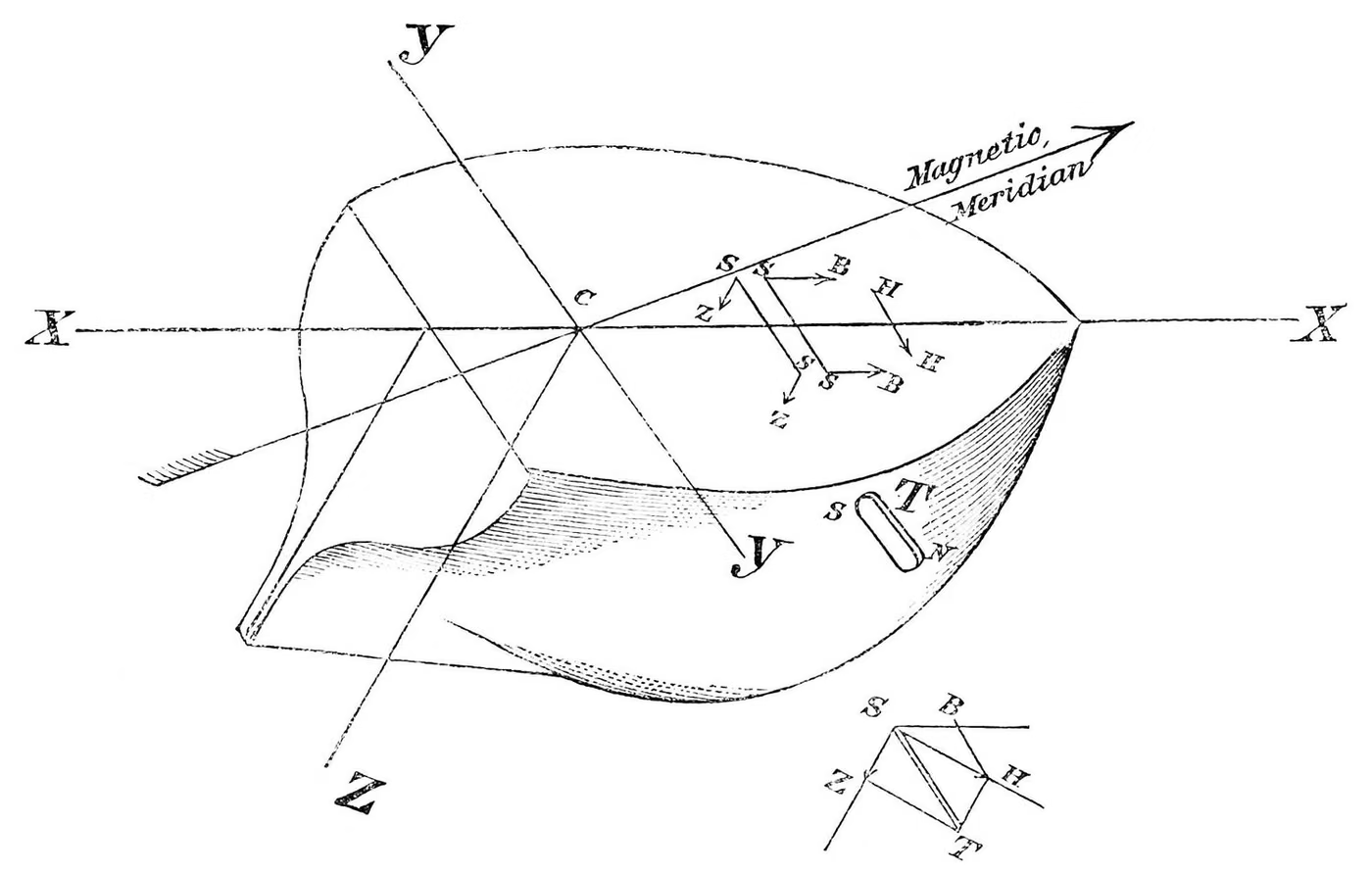
Compass safe distance test is the test in which the smallest distance is measured at which the magnetic field created by the equipment does not cause more than the deviation defined in the standard compass. The result is declared as information on the equipment.
Purpose of Compass Safe Distance
The purpose is to determine the distance at which the equipment can be installed on the bridge relative to the magnetic compass and to maintain navigation safety.
Which Products Is Compass Safe Distance Applied To?
- Bridge electronic equipment
- Radar and navigation units
- Power supplies and converters
- Lighting and display units
In Which Sectors Is Compass Safe Distance Used?
Standards Related to Compass Safe Distance
- IEC 60945maritime navigational and radio communications equipment test
- ISO 25862
- IMO navigation equipment requirements
- Marine Equipment DirectiveEU ship equipment directive test
- IMO RequirementsInternational Maritime Organization requirements test
- SOLAS EquipmentEquipment covered by the safety of life at sea convention test
Compass Safe Distance Conditions
- measurement pattern
- Measurement around equipment with standard compass or magnetometer
- Deviation criterion
- Maximum deviation value defined in the standard
- Operating condition
- Measured with equipment turned off and in all operating modes
- orientation
- Equipment is evaluated at different orientations and distances
Equipment for Compass Safe Distance
- Standart manyetik pusula veya kalibre manyetometre
- Magnetically clear measuring field
- Positioning and distance measurement scheme
- Power supply and load scheme
Sample Requirements for Compass Safe Distance
- The measurement area must be free from magnetic interference
- Equipment must be operated in all operating modes
- Supply cables must be routed in a way that does not affect the measurement.
- Parts of the equipment containing permanent magnets must be specified
Duration of Compass Safe Distance
Typically 2–5 days.
Compass Safe Distance Procedure
- 1The magnetic cleanliness of the measurement area is verified.
- 2The equipment is measured in the off state.
- 3The measurement is repeated in all operating modes.
- 4The distance at which the deviation falls below the criterion is determined.
- 5Separate distances are reported for the standard and leading compass.
Compass Safe Distance Acceptance Criteria
The acceptance criterion is that the declared safe distance is not less than the measured value; Defines the standard deviation measure.
Evaluation of Results
Safe distance is determined in the operating mode in which the equipment produces the highest magnetic effect; Only the measurement in the closed state is incomplete. Separate distances are given for the standard compass and the guiding compass.
Compass Safe Distance Report
- Standard applied
- Measurement pattern and field verification
- Operating modes
- Measured deviation values
- Declared safe distances
Accreditation
EUROLAB holds internationally recognised accreditation obtained from accreditation bodies party to the IAF and ILAC multilateral recognition arrangements, under ISO/IEC 17025 for laboratory testing, ISO/IEC 17020 for inspection and surveillance, and ISO/IEC 17021-1 and ISO/IEC 17065 for system and product certification. This chain ensures the reports and certificates issued are accepted worldwide.
Whether this test can be offered within accredited scope depends on your product and the standard applied; since accreditation is method-based, the scope is confirmed in writing at the quotation stage.
Scope and authorisationsRelated Regulations
- Ship Equipment Directive 2014/90/EU (MED)
- IMO navigation requirements
Denizcilik Testleri — What Does This Testing Field Cover?
The section below describes the field that the Compass Safe Distance test belongs to; the conditions and acceptance criteria of this particular test are given in the sections above. The scope specific to your product is confirmed in writing at the quotation stage.
Marine testing shows that equipment used on board withstands the marine environment and shipboard operating conditions. The character of the environment is decisive: continuous salt-laden humidity, rolling and pitching, engine-borne vibration, limited opportunity for maintenance and the difficulty of evacuation in the event of a failure.
The most distinctive aspect of the field is the CONSEQUENCE OF FAILURE. A device that fails ashore is replaced; a navigation device that fails at sea means the ship does not know its position. Durability expectations and the certification burden for marine equipment are therefore markedly higher than for comparable equipment ashore.
Navigation and communication equipment is assessed under IEC 60945; this standard carries environmental durability, EMC and functional requirements together and distinguishes categories according to where the equipment will be mounted on board: protected, exposed deck and submerged categories are subject to different requirements.
On the digital interface side the IEC 61162 series is used. This is the body of protocols enabling devices on the bridge to talk to one another; in integrated bridge systems it must be shown that data exchange between devices works correctly.
On the shipboard electrical installation side the IEC 60092 series applies: cable types, installation rules, protection coordination and fire behaviour. Flame spread and halogen-free construction carry particular weight for cables on board, because smoke in an enclosed space directly obstructs evacuation.
On the shock side, naval vessels carry their own regime: the MIL-S-901 high-impact shock test simulates the effect of an underwater explosion. Testing at this scale is not required for civil ships, but vibration and inclination/roll tests are standard.
On the regulatory side the Marine Equipment Directive (MED) is decisive: equipment within scope carries the "wheelmark" and this is a regime SEPARATE from CE. Behind the requirements stand the SOLAS convention and International Maritime Organization resolutions; the scope list is updated regularly.
Classification societies add a second layer. DNV, Lloyd's Register, ABS, Bureau Veritas and similar bodies issue their own type approvals; a shipyard usually requires both the wheelmark and the relevant class approval. The two processes do not substitute for one another.
Method groups in this field
Environmental durability
Temperature, humidity, salt fog, vibration, rain and immersion under IEC 60945; levels according to the mounting category.
Electromagnetic compatibility
The EMC sections of IEC 60945; emission and immunity requirements specific to the shipboard environment.
Mechanical
Vibration, shock, inclination and roll tests; MIL-S-901 high-impact shock for naval vessels.
Electrical installation
Cable and installation requirements under the IEC 60092 series; cable fire behaviour and halogen-free construction.
Digital interface
Data interface conformity under the IEC 61162 series and integrated bridge system compatibility.
Fire safety
Reaction to fire, smoke and toxicity for shipboard interior materials; fire resistance for hoses and penetrations.
Commonly confused in this field
- The wheelmark is not the CE marking; it is a different regulatory regime with its own scope list.
- MED approval and classification society type approval do not substitute for one another; a shipyard usually requires both.
- The IEC 60945 category selection depends on the mounting location; an approval obtained for a protected area is not valid for an exposed deck.
- An approval obtained for a civil ship does not satisfy naval shock requirements.
- An onshore EMC report is not sufficient for marine use; IEC 60945 defines its own limits and set-ups.
- Scope lists are updated; equipment once outside the scope may later fall within it.
Which decisions these results support
- Marine equipment type approval and the wheelmark
- Classification society type approval
- Compliance with shipbuilding and shipyard procurement specifications
- Shock qualification in naval programmes
- Verification of integrated bridge system compatibility
Related Tests

Frequently Asked Questions About Compass Safe Distance
According to which standard is Compass Safe Distance made?
Compass Safe Distance is executed in scope IEC 60945, ISO 25862 and IMO navigation equipment requirements. The limit values and acceptance criteria to be applied are defined in the product standard; The version valid for your product is confirmed in writing at the offer stage.
Which products does Compass Safe Distance apply to?
Mainly applied to Bridge electronic equipment, Radar and navigation units, Power supplies and converters and Lighting and display units. Whether your product is included in the scope is determined by examining its technical specifications and intended use.
Under what conditions is Compass Safe Distance done?
The determining parameters are: measurement pattern — Measurement around equipment with standard compass or magnetometer, Deviation criterion — Maximum deviation value defined in the standard and Operating condition — Measured with equipment turned off and in all operating modes. The full terms are in the "Test Conditions" section on the page and vary depending on the product standard.
What kind of sample is needed for Compass Safe Distance?
The measurement area must be free from magnetic interference, Equipment must be operated in all operating modes and Supply cables must be routed in a way that does not affect the measurement.. The number of samples is determined according to the product standard and the scope to be reported.
How long does Compass Safe Distance take?
Typically 2–5 days. This duration belongs to the experiment itself; sample preparation, queuing and reporting are also evaluated. A realistic schedule for your product is given in the offer.
What is the Compass Safe Distance result called "appropriate"?
The acceptance criterion is that the declared safe distance is not less than the measured value; Defines the standard deviation measure.