
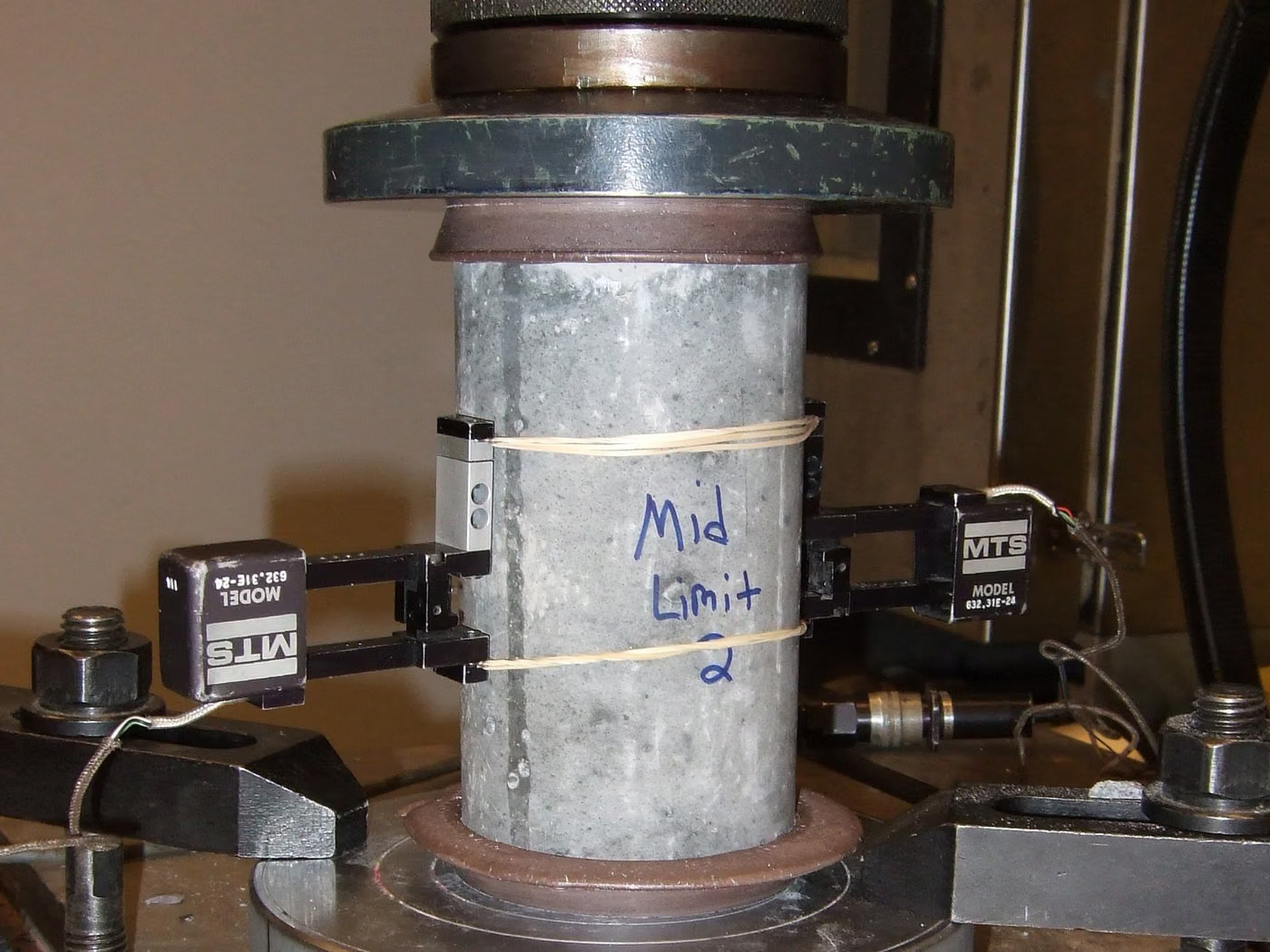
What Is Aggregate?
Aggregate tests determine the geometric, physical, mechanical and chemical properties of the largest component of concrete by volume. EN 933 series grain size distribution, grain shape and fine matter content; EN 1097 series defines abrasion resistance, density, water absorption and freeze-thaw resistance.
Purpose of Aggregate
The aim is to demonstrate that the aggregate is suitable for the application in which it will be used and meets the requirements of product standards such as EN 12620. A problem in the aggregate is reflected in the entire concrete.
Which Products Is Aggregate Applied To?
- Concrete aggregates (sand, gravel, crushed stone)
- Road and bituminous mixture aggregates
- Railway ballast
- recycled aggregates
- Hafif agregalar
In Which Sectors Is Aggregate Used?
Standards Related to Aggregate
- TS EN 12620 (concrete aggregates)
- TS EN 13043 (bituminous mixture aggregates)
- TS EN 933-1 (particle size distribution — sieving method)
- TS EN 933-3/-4 (flatness and shape index)
- TS EN 1097-2 (shatter resistance — Los Angeles)
- TS EN 1097-6 (grain density and water absorption)
- TS EN 1367-1 (freeze-thaw resistance)
Aggregate Conditions
- Sample reduction
- The sample taken from the pile is divided according to the standard and reduced in size.
- Kurutma
- According to the experiment, drying in the oven to constant weight is required.
- Elek serisi
- Screen openings defined in EN 933-2 are used
- Alkali-silika
- Reactivity evaluation is a separate, long-term experiment
Equipment for Aggregate
- Sieve series and shaking machine
- Los Angeles wear machine
- Ovens and precision scales
- Freeze-thaw cabinet
- Sample splitter (riffle)
- Methylene blue experimental setup
Sample Requirements for Aggregate
- Representative samples should be taken from the pile according to EN 932-1
- The sample should be divided and reduced in size in accordance with the standard
- Aggregate source, type and intended use must be declared
- Enough; determined according to the test list
Duration of Aggregate
Screening and density experiments are rapid. The Los Angeles wear test is completed within one business day. Freeze-thaw and alkali-silica reactivity experiments are significantly longer due to the number of cycles or monitoring time.
Aggregate Procedure
- 1A representative sample is taken from the pile and reduced by division.
- 2The sample is dried in an oven and weighed.
- 3Sieve analysis is performed and grain size distribution is extracted.
- 4Grain shape and fine matter content are determined.
- 5Los Angeles wear test is applied.
- 6Density, water absorption and durability tests are carried out.
Aggregate Acceptance Criteria
TS EN 12620 and TS EN 13043 define categories for aggregate properties (grain size, flatness, Los Angeles coefficient, etc.). Practice and national regulation determine which category is required. Within the scope of (EU) 305/2011, the test result is not a pass/fail decision, but the performance value to be announced in the Declaration of Performance (DoP). The national regulations and project specifications of the country where the structure where the product will be used determine which performance level is sufficient.
Evaluation of Results
Sample reduction is the most frequently skipped and error-producing step in aggregate experiments: coarse particles separate in the bulk and a random sample does not represent the true distribution. Alkali-silica reactivity is a damage mechanism that occurs after many years and should be evaluated if there is any doubt.
Aggregate Report
- Aggregate source, type and sampling information
- Grain size distribution and sieving curve
- Grain shape and fines content
- Los Angeles coefficient
- Density and water absorption values
- Durability test results and categories
Accreditation
EUROLAB holds internationally recognised accreditation obtained from accreditation bodies party to the IAF and ILAC multilateral recognition arrangements, under ISO/IEC 17025 for laboratory testing, ISO/IEC 17020 for inspection and surveillance, and ISO/IEC 17021-1 and ISO/IEC 17065 for system and product certification. This chain ensures the reports and certificates issued are accepted worldwide.
Whether this test can be offered within accredited scope depends on your product and the standard applied; since accreditation is method-based, the scope is confirmed in writing at the quotation stage.
Scope and authorisationsRelated Regulations
- Construction Products Regulation (EU) 305/2011
Construction Materials Testing — What Does This Testing Field Cover?
The section below describes the field that the Aggregate test belongs to; the conditions and acceptance criteria of this particular test are given in the sections above. The scope specific to your product is confirmed in writing at the quotation stage.
Construction materials testing shows whether a product performs the function it takes on within the structure. A wide field is gathered in this family, from the compressive strength of concrete to the thermal transmittance of glass, from sieve analysis of aggregate to the watertightness of windows.
What sets this family apart from the others is that the result turns directly into a REGULATORY DECLARATION. For products covered by construction products legislation a declaration of performance (DoP) is mandatory, and every essential characteristic in the declaration rests on a test result. Reaction-to-fire class, thermal conductivity, compressive strength, water permeability and release of dangerous substances are declared in this way. The declaration is a legal text carrying the manufacturer's signature; the test record behind it is the first document requested in an inspection.
The second distinguishing feature is that the product is assessed over its SERVICE LIFE. An electronic device runs for five years; a building component stays in place for fifty and is exposed throughout that time to freeze-thaw cycles, UV, moisture, chemical attack and load. Durability tests (freeze-thaw, carbonation, alkali-silica reaction, ageing) therefore carry as much weight in this field as classical strength tests.
Tests are separated by material type and each group has its own set of standards: cement and concrete, aggregate, masonry units, wood-based panels, thermal insulation, glass and glazing units, ceramic tiles, floor coverings, screeds, joint fillers and coating systems. Where the product will be installed determines which set applies — the same panel is assessed against different standards on a wall and on a floor.
Factory production control (FPC) is a continuous component of the field. CE marking on a construction product is not obtained with a single test and then left; the manufacturer must set up a system showing that it monitors production consistency, takes samples regularly and intervenes when there is a deviation. Depending on the product group, this system may have to be audited by a notified body.
Site testing is a separate body of work. In the laboratory the product is approved; on site it is checked that the product really is of the declared class and that it has been applied correctly. Fresh concrete slump, cylinder sampling, aggregate sieve analysis and in-situ watertightness tests fall within this scope.
Method groups in this field
Concrete and cement
Slump, air content and unit weight in fresh concrete; compressive and flexural strength, water permeability and freeze-thaw resistance in hardened concrete. For cement, compressive strength, setting time and composition analysis.
Aggregate
Sieve analysis, particle shape, Los Angeles abrasion resistance, freeze-thaw, alkali reactivity and density/water absorption.
Thermal and energy performance
Thermal conductivity and thermal resistance, calculation of thermal transmittance (U value) in glazing units, solar energy transmittance.
Facade and joinery
Air permeability, watertightness and wind load resistance in windows and doors; fire performance in facade systems.
Fire performance
Reaction-to-fire classification and fire resistance tests; these are two separate concepts and are addressed by separate standards.
Masonry, tile and flooring
Compressive strength, water absorption, abrasion resistance, slip resistance, stain and chemical resistance.
Emissions and dangerous substances
Formaldehyde release from wood-based panels, VOC emissions from construction products, leaching behaviour of aggregates and waste.
Commonly confused in this field
- REACTION to fire and RESISTANCE to fire are different concepts: one describes the material's contribution to a fire, the other how long a component holds the fire back.
- A declaration of performance is not a certificate; it is the manufacturer's declaration. Notified body involvement varies with the product group and the assessment system.
- A test result is valid for the mounting arrangement in which the product was tested. A different substrate, a different thickness or a different joint detail may require reassessment.
- A site sample and a laboratory sample are not the same thing. A concrete cylinder taken on site also reflects application and curing conditions; it does not replace product approval.
- ASTM and EN construction standards measure similar quantities with different specimens and scales; the results cannot be converted one-to-one.
Which decisions these results support
- Declaration of performance (DoP) and CE marking
- Establishing and maintaining the factory production control system
- On-site conformity control of concrete, aggregate and workmanship
- Meeting fire and energy performance requirements
- Verifying the technical items in the project and tender specification
Related Tests


Frequently Asked Questions About Aggregate
Can we use recycled aggregate?
EN 12620 also covers recycled aggregates but imposes additional requirements: component classification, water absorption and harmful substance content are also evaluated. Usage rate may be limited by national regulations.
When should alkali-silica reactivity be investigated?
If the aggregate source is new, problems have been reported in the past, or the project requires a long service life. Since the experiment takes a long time, it should be included in the project schedule early.