
About the Standard
Scope title: vertical flammability of textiles
ASTM D6413 is a standard published by ASTM International (ASTM). It publishes material, product and test method standards; it is the body most often turned to in corrosion, mechanical and materials testing.
See the other 199 codes from ASTMCoverage areas
Tekstil Testleri — What Does This Testing Field Cover?
The section below describes the field that code ASTM D6413 belongs to; it is not the text of the standard or the regime itself. The scope title of the code is given above, and technical requirements are shared at the quotation stage.
Textile testing answers two questions separately: does the fabric hold up physically over its service life, and does it carry any substance restricted for human health? These two axes require different laboratory infrastructure and different decision mechanisms.
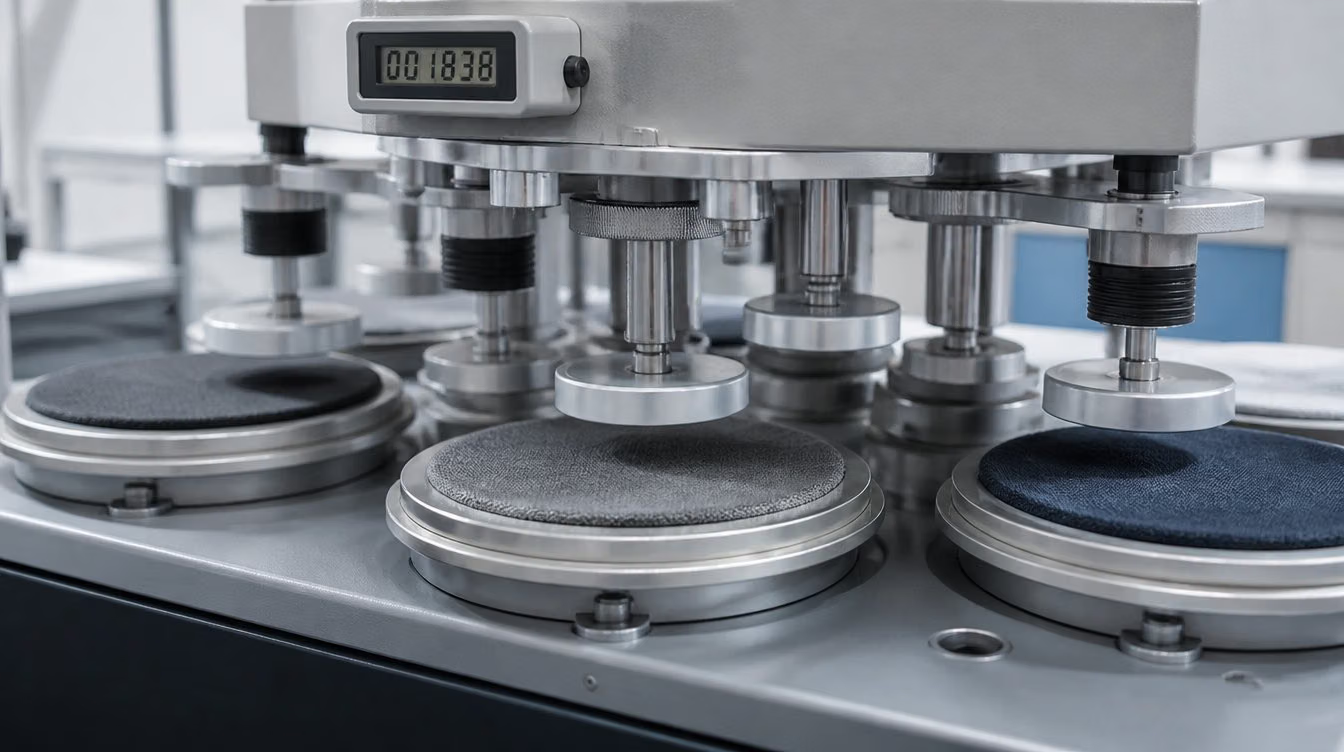
On the physical side, breaking and tear strength, abrasion resistance, pilling, dimensional change, colour fastness and water and oil repellency are measured. Most of these tests depend on the USE SCENARIO: Martindale abrasion cycles are decisive for an upholstery fabric, while dimensional change in washing and colour fastness come to the fore for a shirting fabric. The same fabric goes through a different test set for a different use.
Colour fastness is a body of work of its own in this field and is not a single test. The fastness of the same fabric to light, washing, rubbing, perspiration, saliva, chlorinated water and ironing is measured separately; each represents a different moment of use. Results are rated from 1 to 5 on the grey scale and the specification gives a separate minimum rating for each agent.
On the chemical side, aromatic amines released from azo dyes, formaldehyde, heavy metals, phthalates, short-chain chlorinated paraffins, alkylphenols and PFAS compounds are screened. These items come from REACH restrictions, brand restricted substance lists (RSL) and voluntary schemes such as OEKO-TEX. Brand lists are often stricter than legislation; the target customer is decisive.
There is NO CE marking on consumer textiles. The obligation has three legs: fibre composition and care labelling, compliance with chemical restrictions, and general product safety. Textiles claiming a protective function (workwear, flame-resistant clothing, high-visibility clothing) fall under personal protective equipment legislation, where CE is mandatory — this distinction is commercially critical.
Verifying the label declaration is the most routine work in the field. Quantitative fibre analysis confirms the blend ratio stated on the label; tolerance ranges are defined in legislation. An incorrect fibre declaration both misleads the consumer and affects customs classification.
Sustainability claims have added a new body of work to the field in recent years: verification of recycled content (GRS, RCS), organic content (GOTS), restriction of harmful chemicals and water/energy footprint declarations. These claims now require auditable evidence.
Method groups in this field
Strength and durability
Strip and grab breaking strength, tearing by the Elmendorf and tongue methods, seam strength, bursting strength.
Abrasion and surface
Martindale and rotary platform abrasion, pilling and fuzzing, fabric mass and thread density measurements.
Dimensional stability
Dimensional change in washing and drying, wrinkling behaviour, appearance after ironing.
Colour fastness
Fastness to light (xenon), washing, rubbing, perspiration, saliva, water and chlorinated water; rating on the grey scale.
Functional properties
Water repellency (spray test), oil repellency, waterproofness, air permeability, effectiveness of antibacterial finishes, UV protection factor.
Chemical analyses
Aromatic amines from azo dyes, formaldehyde, pH, heavy metals, phthalates, chlorinated phenols, PFAS and alkylphenols.
Commonly confused in this field
- A brand restricted substance list (RSL) may be stricter than legislation; REACH compliance does not mean compliance with the customer specification.
- Textiles claiming a protective function fall under PPE legislation and require CE; an ordinary textile test report does not satisfy that file.
- Colour fastness is not a single number; a rating cannot be interpreted without stating which agent it relates to.
- A result obtained for a fabric does not cover the whole garment made from it; lining, sewing thread, print and trims are assessed separately.
- Performance claims after washing are valid together with the stated number of wash cycles; the word "permanent" on its own is not verifiable.
Which decisions these results support
- Compliance with the brand restricted substance list (RSL)
- Verification of label declarations: fibre composition and care instructions
- Determining the performance class of upholstery and technical textiles
- Pre-import shipment inspection and lot acceptance
- Supporting sustainability and recycled content claims
Structure of the Code
- Published by
- ASTM
- Serial number
- D6413
- Part
- without partition
Codes in the library without release year is kept. The current version changes over time; If the year is specified in your specification, that version is taken as basis, if not specified, the most current version is applied.
Scope
Related Tests and Services
A separate test page based on this code has not yet been released. The code falls within the scope of the following test families.
Technical Requirements
Standard texts are copyright of the relevant organization; test condition, sample and acceptance criteria cannot be fitted here.
Technical requirements specific to your product, once we clarify the scope At offer stage shared in writing.
Related Standards
Frequently Asked Questions
Is this standard mandatory for my product?
Whether it is mandatory depends on the product group, the target market and the applicable legislation. Once you tell us your product and market, we clarify in writing whether this standard is required.
How long does the test process take?
Duration depends on the scope of the standard, the number of specimens and current capacity. The exact duration is shared, together with the specimen and scope details, at the quote stage.
Do you issue certification against this standard?
Which activity is carried out under which accreditation scope is separately confirmed at the application stage. Up-to-date scope information is published on our corporate page.
What happens if the standard I need is not here?
The library is based on a continuously growing inventory. If you cannot find the code you are looking for, you can send it through the quote form; we will assess the relevant scope and get back to you.