
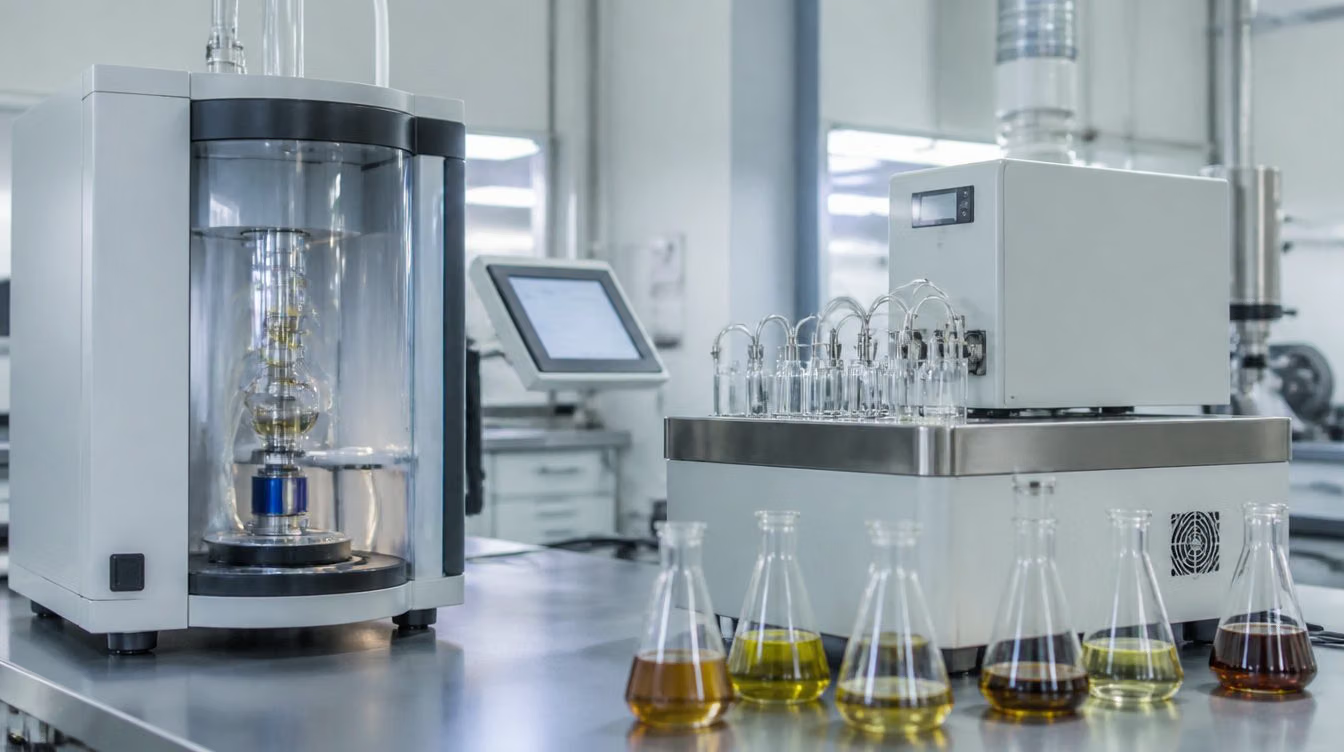
About the Standard
Scope title: API gravity by hydrometer
ASTM D287 is a standard published by ASTM International (ASTM). It publishes material, product and test method standards; it is the body most often turned to in corrosion, mechanical and materials testing.
See the other 199 codes from ASTMPetroleum, Fuel and Oil Analysis — What Does This Testing Field Cover?
The section below describes the field that code ASTM D287 belongs to; it is not the text of the standard or the regime itself. The scope title of the code is given above, and technical requirements are shared at the quotation stage.
Petroleum, fuel and oil analysis determines whether a fluid meets its specification and how it behaves in use. Standards in this field consist largely of ASTM and EN publications, with a separate method defined for each parameter.
What distinguishes this family is that product specifications are written as PARAMETER LISTS. Specifications such as EN 590 (diesel), EN 228 (petrol), EN 14214 (biodiesel) and ISO 8217 (marine fuels) state for each parameter both the limit and the method by which that limit is to be measured. If the method changes the result may change too; the specification therefore binds the method as well, and the use of an "equivalent method" is possible only where the specification allows it.
On the fuel side, parameters describe three different properties of the product. Physical properties (density, viscosity, distillation curve, pour point, cloud point) determine pumpability and cold weather behaviour. Combustion properties (cetane number, octane number, calorific value) indicate performance in the engine. Contaminant and stability parameters (sulphur, water, sediment, oxidation stability, copper strip corrosion) affect both emissions and storage life.
Oil analysis is carried out for two different purposes and the two must not be confused. Analysis of NEW oil verifies the conformity of the product to its specification: viscosity index, additive content, flash point. Analysis of USED oil, by contrast, is done to read the condition of the machine — elemental analysis shows wear metals (iron, copper, chromium, aluminium), water and fuel contamination point to leaks, and oxidation and acid number determine the remaining life of the oil.
Used oil analysis is therefore a PREDICTIVE MAINTENANCE tool. The trend of samples taken at regular intervals is followed; it is the trend rather than a single result that is meaningful. Iron levels climbing over the course of months allow intervention before a failure occurs.
Marine fuels are the most active sub-body of the field. The global tightening of sulphur limits has brought new blended fuels onto the market; for these fuels stability, compatibility (whether two fuels form deposits when mixed) and catalytic fines content have become critical parameters.
Sampling is part of the result in this family too. A sample taken from the bottom of a tank shows different water and sediment content from one taken from the upper level; in commercial deliveries the sampling point and method are set by contract.
Method groups in this field
Physical properties
Density (oscillating U-tube and hydrometer), kinematic viscosity, distillation, pour and cloud point, flash point.
Combustion properties
Cetane number and cetane index, research and motor octane number, calorific value.
Sulphur and elements
Sulphur by UV fluorescence and XRF; elemental analysis and additive content by ICP.
Stability and corrosion
Oxidation stability, copper strip corrosion, water and sediment, filter blocking tendency.
Composition analysis
Boiling range distribution by gas chromatography, hydrocarbon types (FIA), benzene and aromatics content, fatty acid methyl ester content.
Used oil
Wear metals, contamination (water, fuel, soot), oxidation, acid and base number, change in viscosity.
Commonly confused in this field
- The specification binds the method as well; a result measured by a different method may not be accepted for specification conformity.
- A single result on used oil is not meaningful; the decision is made on the trend.
- The sampling point determines the result; the tank bottom and the upper level show different water and sediment.
- The cetane index is a calculated value and is not the same thing as a measured cetane number.
- Fuels blended with biodiesel behave differently in terms of storage life and microbial growth; classical diesel parameters are not sufficient.
- Mixing marine fuels from different sources can cause deposits; compatibility is assessed separately.
Which decisions these results support
- Conformity of a fuel lot to specification and commercial delivery
- Predictive maintenance decisions based on used oil analysis
- Determining parameters for customs and tax classification
- Quality verification after storage, blending and transport
- Compliance with sulphur limits under emissions legislation
Structure of the Code
- Published by
- ASTM
- Serial number
- D287
- Part
- without partition
Codes in the library without release year is kept. The current version changes over time; If the year is specified in your specification, that version is taken as basis, if not specified, the most current version is applied.
Scope
Related Tests and Services
A separate test page based on this code has not yet been released. The code falls within the scope of the following test families.
Technical Requirements
Standard texts are copyright of the relevant organization; test condition, sample and acceptance criteria cannot be fitted here.
Technical requirements specific to your product, once we clarify the scope At offer stage shared in writing.
Related Standards
Frequently Asked Questions
Is this standard mandatory for my product?
Whether it is mandatory depends on the product group, the target market and the applicable legislation. Once you tell us your product and market, we clarify in writing whether this standard is required.
How long does the test process take?
Duration depends on the scope of the standard, the number of specimens and current capacity. The exact duration is shared, together with the specimen and scope details, at the quote stage.
Do you issue certification against this standard?
Which activity is carried out under which accreditation scope is separately confirmed at the application stage. Up-to-date scope information is published on our corporate page.
What happens if the standard I need is not here?
The library is based on a continuously growing inventory. If you cannot find the code you are looking for, you can send it through the quote form; we will assess the relevant scope and get back to you.