
About the Standard
Scope title: performance test code for temperature measurement
ASME PTC 19.3 is a standard published by American Society of Mechanical Engineers (ASME). It publishes the boiler and pressure vessel codes (BPVC) and mechanical engineering standards.
See the other 9 codes from ASMECoverage areas
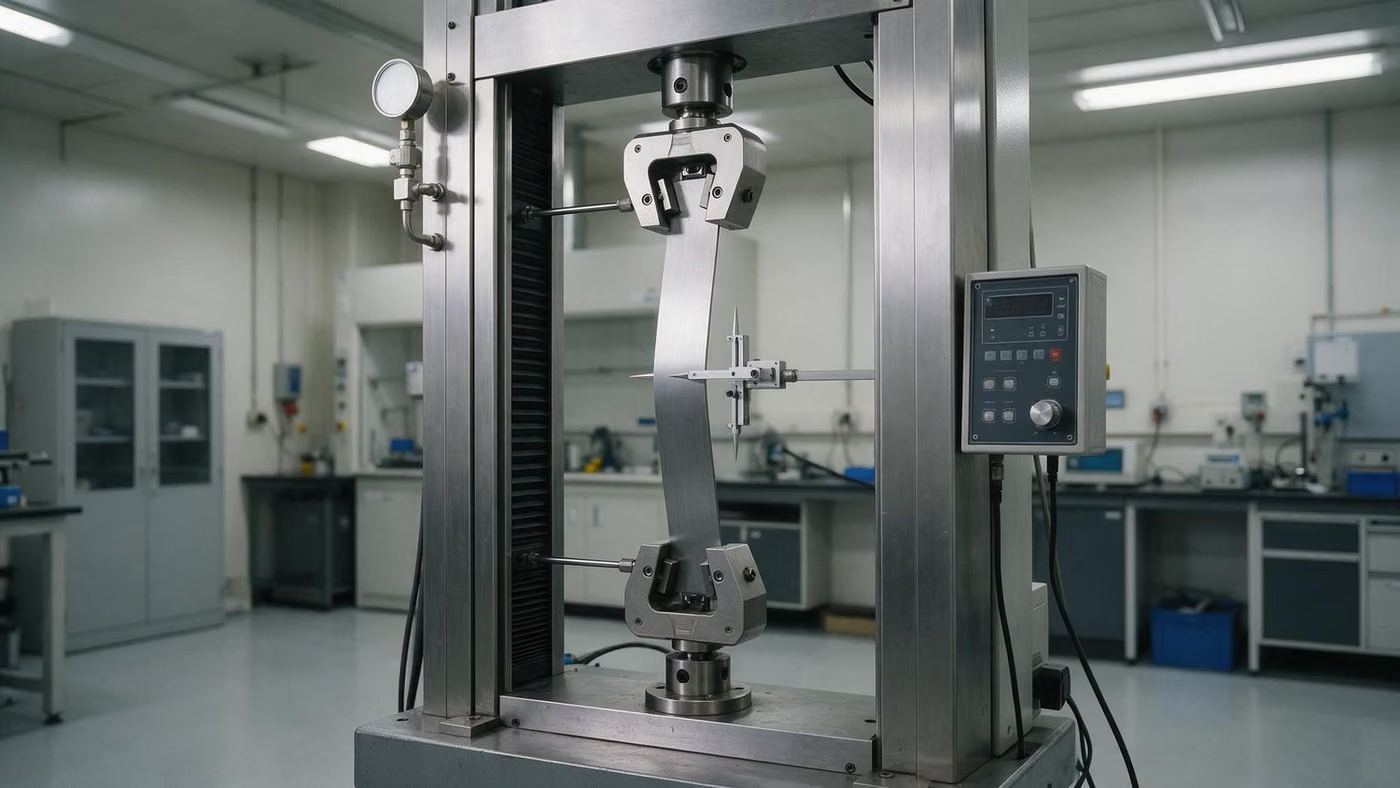
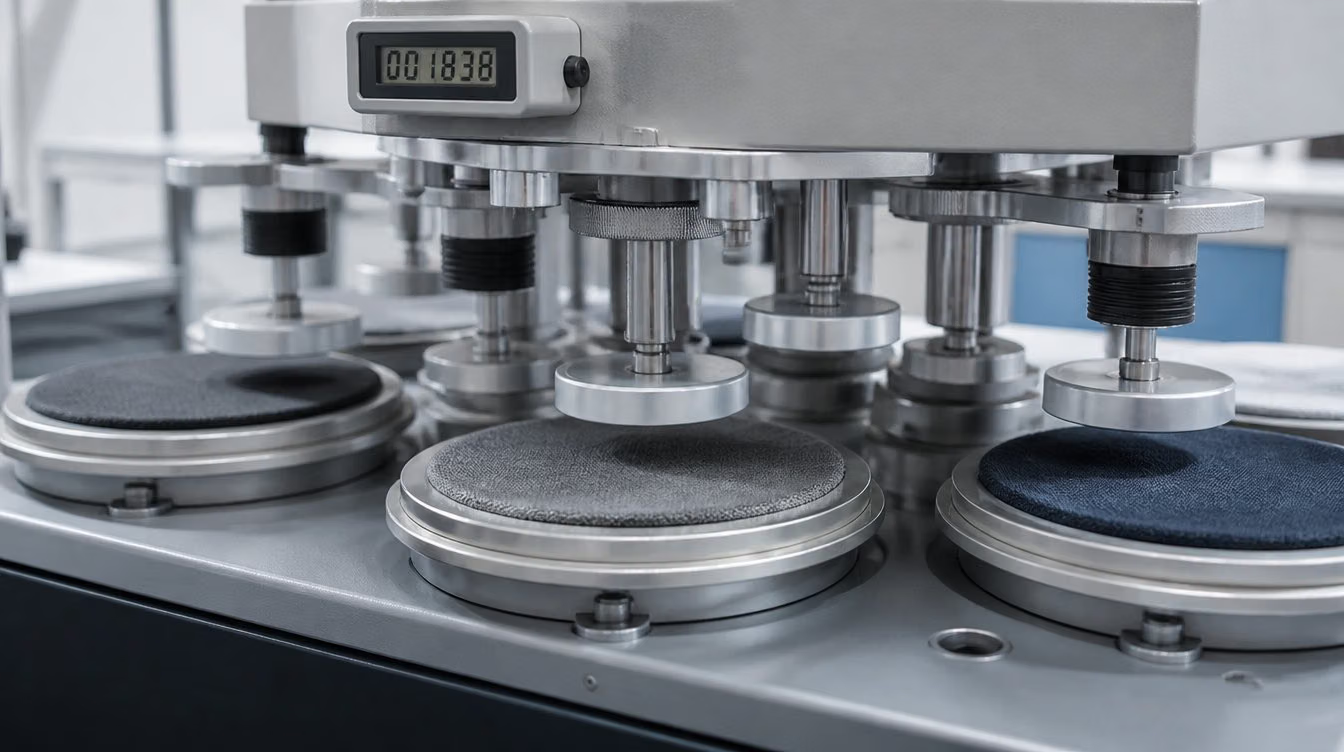
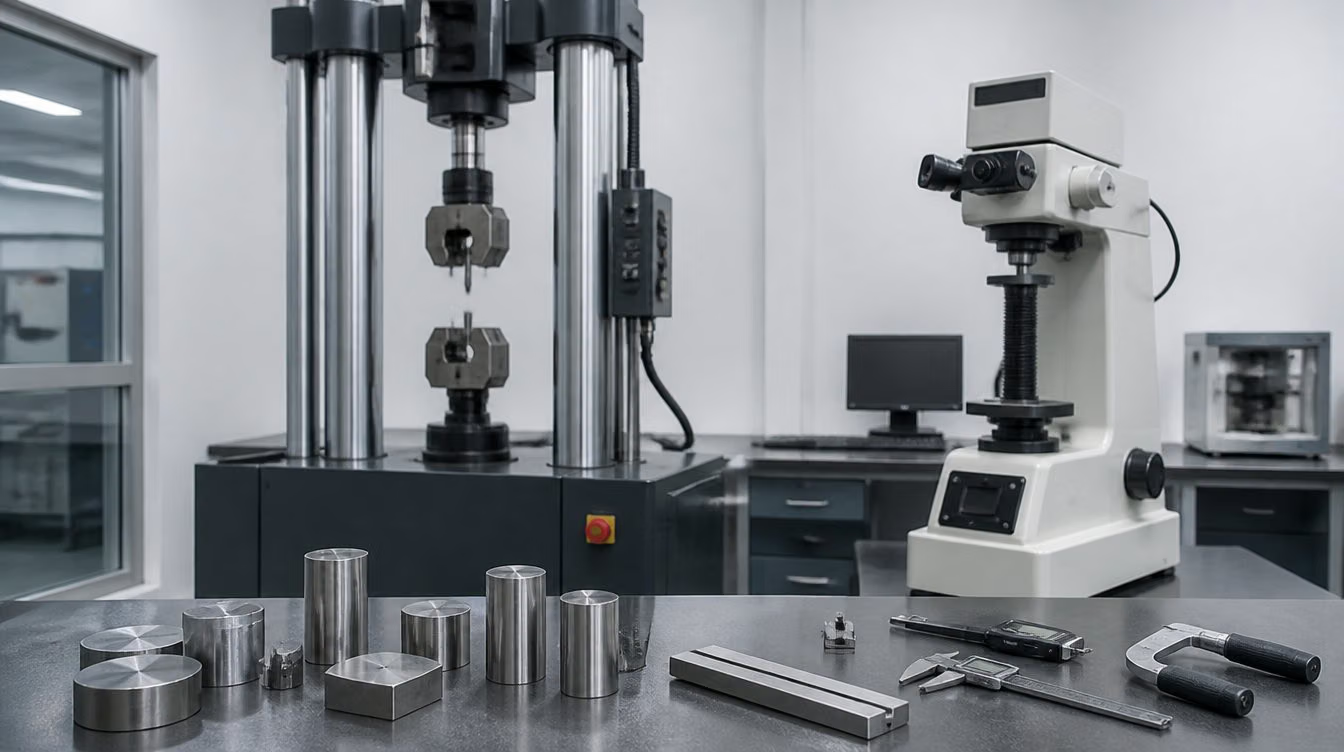
Mekanik Testler — What Does This Testing Field Cover?
The section below describes the field that code ASME PTC 19.3 belongs to; it is not the text of the standard or the regime itself. The scope title of the code is given above, and technical requirements are shared at the quotation stage.
Mechanical testing measures how a material or a part behaves under force. The family ranges from static loading (tension, compression, bending) to time-dependent behaviour (fatigue, creep), and from hardness and wear to fracture toughness.
What these tests have in common is that the result is reported as a MATERIAL PROPERTY. Yield strength or hardness is not a conformity decision; it is numerical data against which the design and the product standard will compare. Mechanical test reports are therefore usually an input to an engineering decision rather than to a product approval — material selection, safety factor, life prediction.
The distinction between static and dynamic behaviour is the key to understanding the field. A part may appear entirely unstressed under a static load yet break under repeated loading; fatigue fracture occurs at stresses well below the yield strength and gives no warning. For rotating, vibrating or cyclically loaded parts, a tensile test alone is therefore not sufficient evidence.
Test conditions determine the result, and this is critical for the readability of the report: specimen geometry, loading rate, temperature, conditioning and the gripping arrangement. The same material gives different values under different conditions. In plastics the rate effect is very pronounced, in metals the temperature effect; in composites the specimen orientation changes the result entirely.
Hardness is the most misused measurement in the field. Because it is fast, close to non-destructive and inexpensive, it is often used in place of strength. Conversion tables from hardness to strength exist, but they are APPROXIMATE and depend on the material group; using them as the sole evidence in material acceptance is wrong.
The fracture mechanics side requires a specific competence. Fracture toughness and fatigue crack growth rate measurements make it possible to calculate how long a cracked structure will last; they are the basis of damage-tolerant design in fields such as pressure equipment, aircraft structures and pipelines.
Method groups in this field
Static tests
Tension, compression, bending, shear and torsion. Yield and tensile strength, elongation and modulus of elasticity are obtained.
Impact tests
Charpy and Izod notch impact; the brittle-to-ductile transition behaviour of the material is determined as a function of temperature.
Hardness
Brinell, Vickers, Rockwell, Shore and micro hardness. Valuable for surface treatment depth and local differences in strength.
Fatigue
Force- and strain-controlled axial fatigue, fatigue in bending; S-N curves and the endurance limit.
Creep and stress relaxation
Behaviour under long-term load at high temperature; decisive for boiler, turbine and pressure equipment materials.
Fracture mechanics
Plane-strain fracture toughness, the J integral, CTOD and fatigue crack growth rate.
Wear and friction
Taber and rotating drum abrasion, coefficient of friction measurements.
Commonly confused in this field
- Calculating strength from hardness is approximate; it cannot be used as the sole evidence in material acceptance.
- Adequate static strength does not demonstrate fatigue strength; a cyclically loaded part requires a separate test.
- If test rate and temperature are not reported, the result cannot be compared — especially for polymers and composites.
- A test specimen and the actual part may not give the same value; moulding orientation, weld lines and differences in surface treatment all have an effect.
- A strength value given for a composite without stating the specimen orientation is meaningless.
- ASTM and ISO counterparts measure the same quantity but use different specimen geometries; the results are not treated as directly equivalent.
Which decisions these results support
- Design verification and material selection
- Incoming material control and supplier approval
- Meeting the mechanical requirements of the product standard
- Failure analysis, life prediction and damage tolerance calculation
- Verifying heat treatment and surface treatment processes
Structure of the Code
- Published by
- ASME PTC
- Serial number
- 19.3
- Part
- without partition
Codes in the library without release year is kept. The current version changes over time; If the year is specified in your specification, that version is taken as basis, if not specified, the most current version is applied.
Scope
Related Tests and Services
A separate test page based on this code has not yet been released. The code falls within the scope of the following test families.
Technical Requirements
Standard texts are copyright of the relevant organization; test condition, sample and acceptance criteria cannot be fitted here.
Technical requirements specific to your product, once we clarify the scope At offer stage shared in writing.
Related Standards
Frequently Asked Questions
Is this standard mandatory for my product?
Whether it is mandatory depends on the product group, the target market and the applicable legislation. Once you tell us your product and market, we clarify in writing whether this standard is required.
How long does the test process take?
Duration depends on the scope of the standard, the number of specimens and current capacity. The exact duration is shared, together with the specimen and scope details, at the quote stage.
Do you issue certification against this standard?
Which activity is carried out under which accreditation scope is separately confirmed at the application stage. Up-to-date scope information is published on our corporate page.
What happens if the standard I need is not here?
The library is based on a continuously growing inventory. If you cannot find the code you are looking for, you can send it through the quote form; we will assess the relevant scope and get back to you.